

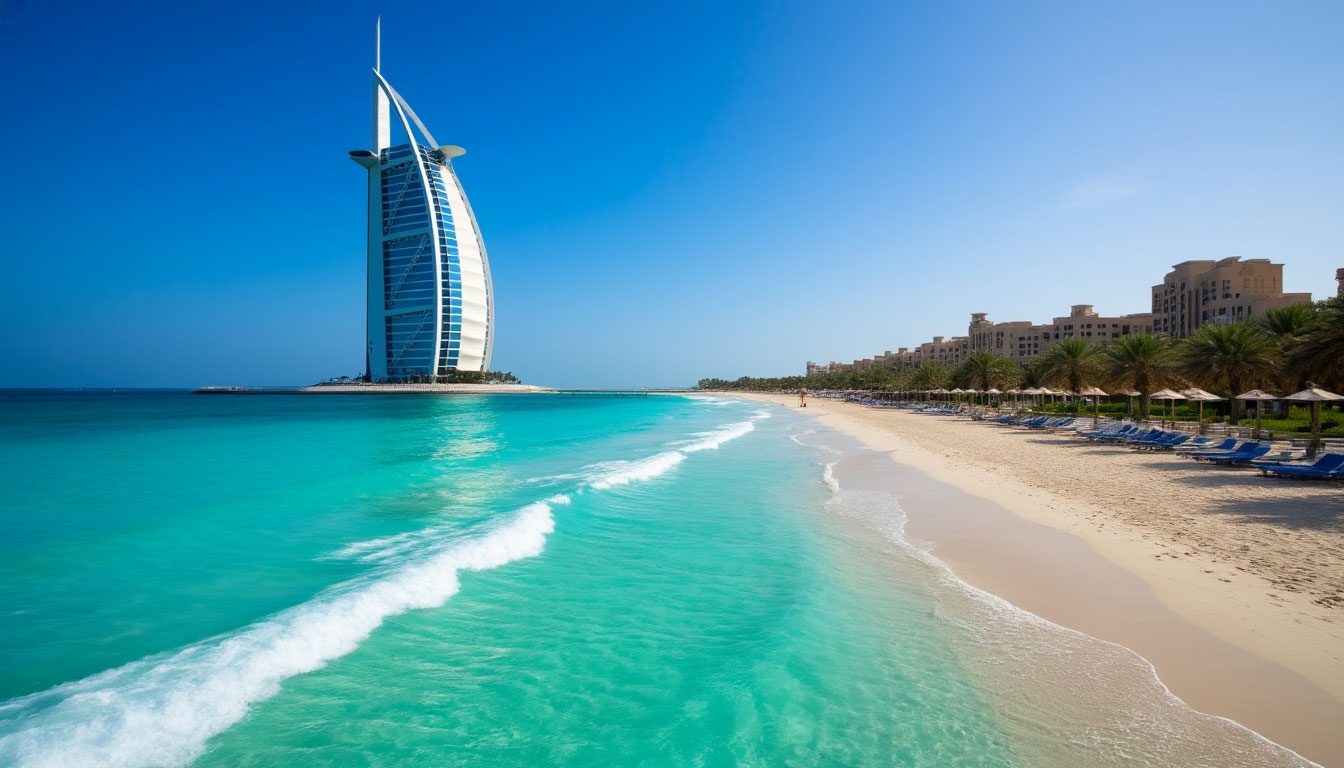

Dubai’s beach clubs charge hundreds of dirhams for a sunbed — but some of the city’s best sand costs nothing at all. The public beach system here is genuinely good: lifeguarded swimming zones, showers, running tracks and food trucks, all free to enter. You just need to know which beach fits your day, what the small print is (parking, rentals, the one beach park that charges a few dirhams), and the local rules so you do not get moved on. Here are the eight free and nearly-free beaches worth your time, and how to do a full beach day for the price of a karak tea.
How Dubai’s Free Beaches Work: Rules and Real Costs
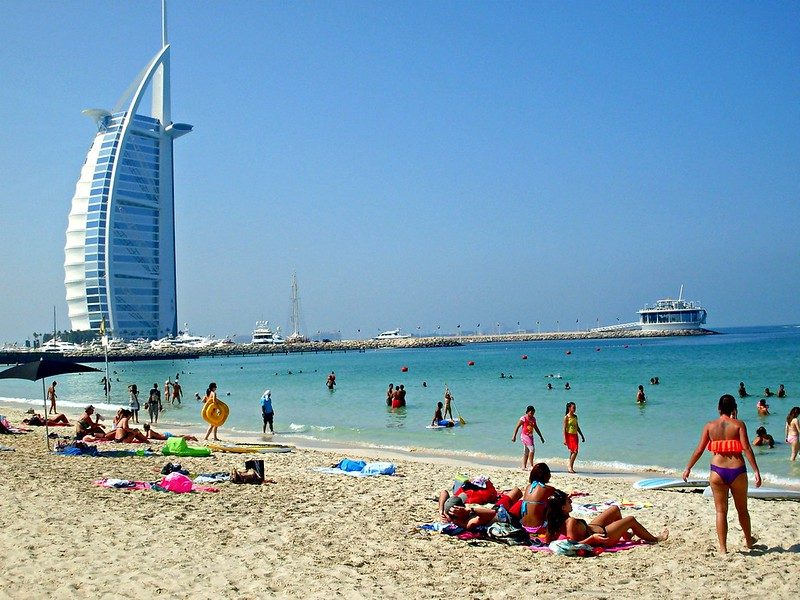
The basics first. Dubai’s main public beaches are free to enter, with lifeguards in season, marked swimming areas and basic facilities (toilets, showers, changing huts) funded by Dubai Municipality. Swim only inside the buoyed zones and respect the flag system — a red flag means no swimming, and the lifeguards do enforce it. Night swimming is allowed only at designated beaches with special lighting and lifeguard coverage; elsewhere, leave the water at sunset.
Where the costs creep in: sunbed and umbrella rentals (privately run concessions, typically the single biggest spend of the day), parking (some beach car parks are paid by the hour), and food. The budget formula is simple — bring your own towel, shade and water, arrive by Metro or bus where possible, and the day costs almost nothing. Swimwear is fine on the beach itself; cover up when you leave for shops and streets, and note that alcohol is only served in licensed venues, never on public sand. For the wider cheap-day context, our free things to do in Dubai and Dubai on a budget itinerary pair beaches with other zero-cost stops.
Kite Beach: The Best All-Rounder
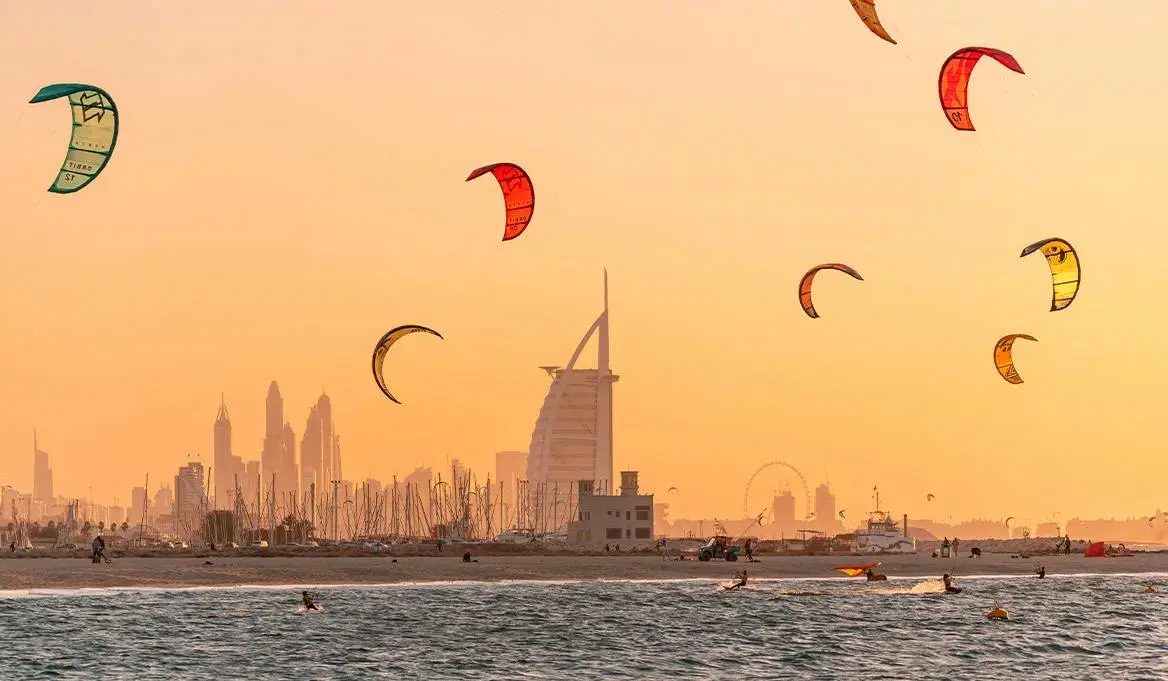
If you only pick one free beach, pick Kite Beach in Umm Suqeim. The sand is wide, the water is clean, and the Burj Al Arab sits offshore like it is posing for you. Kitesurf and paddleboard rentals line the back of the beach for when you want activity, while the food-truck strip (including the famous SALT burger truck) handles lunch without a mall detour. Showers, changing rooms and a proper running and cycling track run along the back of the beach, which makes it as popular with morning joggers as with swimmers.
Practical notes: it gets busy on weekend afternoons, the breeze that kitesurfers love can make winter mornings feel cool, and parking fills early — the Jumeirah bus routes along the beach road are the stress-free way in. Sunset here is a daily local ritual; arrive by 5pm in winter for a good spot on the sand. It also pairs neatly with a visit to the nearby Kite Beach area‘s cafés and the Umm Suqeim park next door.
JBR The Beach: Best for Families and Food
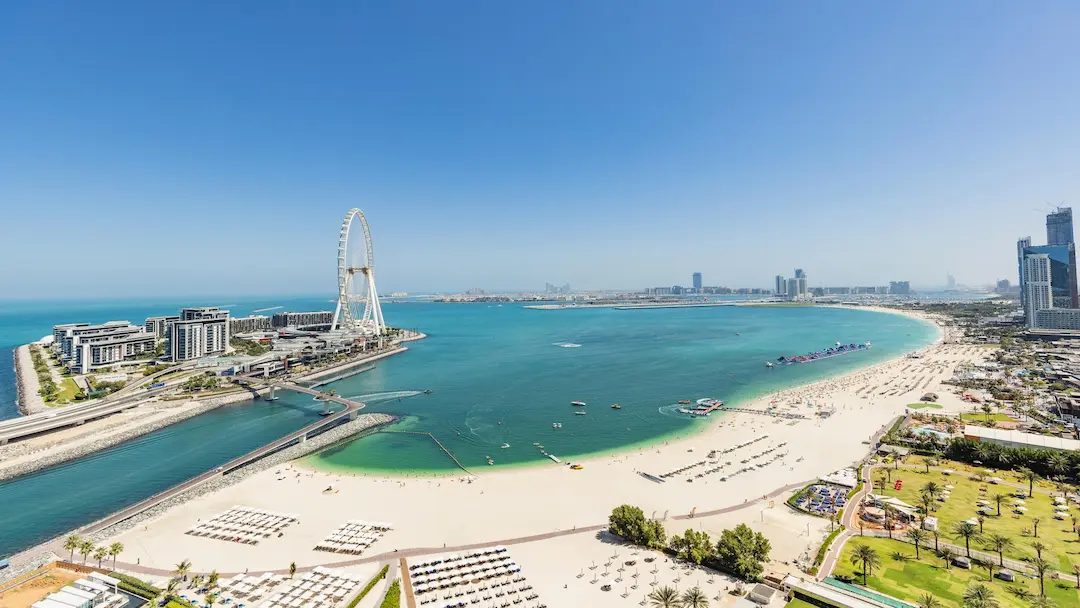
The Beach at JBR is the easiest family beach day in the city. The public sand is free and wide, the water is calm and shallow at the edge, and directly behind you is a full strip of restaurants, cafés, ice-cream shops and a cinema — so nobody has to agree on lunch in advance. Showers, changing cabins and rental concessions are all on site, and the promenade is flat and stroller-friendly. Across the water, Ain Dubai on Bluewaters Island gives you the skyline shot — Visit Dubai keeps the current Bluewaters events calendar if you want to pair the beach with something on the island.
It is also the most connected free beach: the DMCC and Sobha Realty Metro stations plus the tram put you a short walk from the sand, which matters because JBR traffic on weekend evenings is the worst in the city and parking is priced accordingly. Come by train, stay for the evening promenade buzz, and let the day stretch. Our JBR activities guide covers the paid extras (water sports, boat trips, the inflatable water park) if the free version stops being enough.
Sunset Beach and Jumeirah Open Beach: Best for Burj Al Arab Views
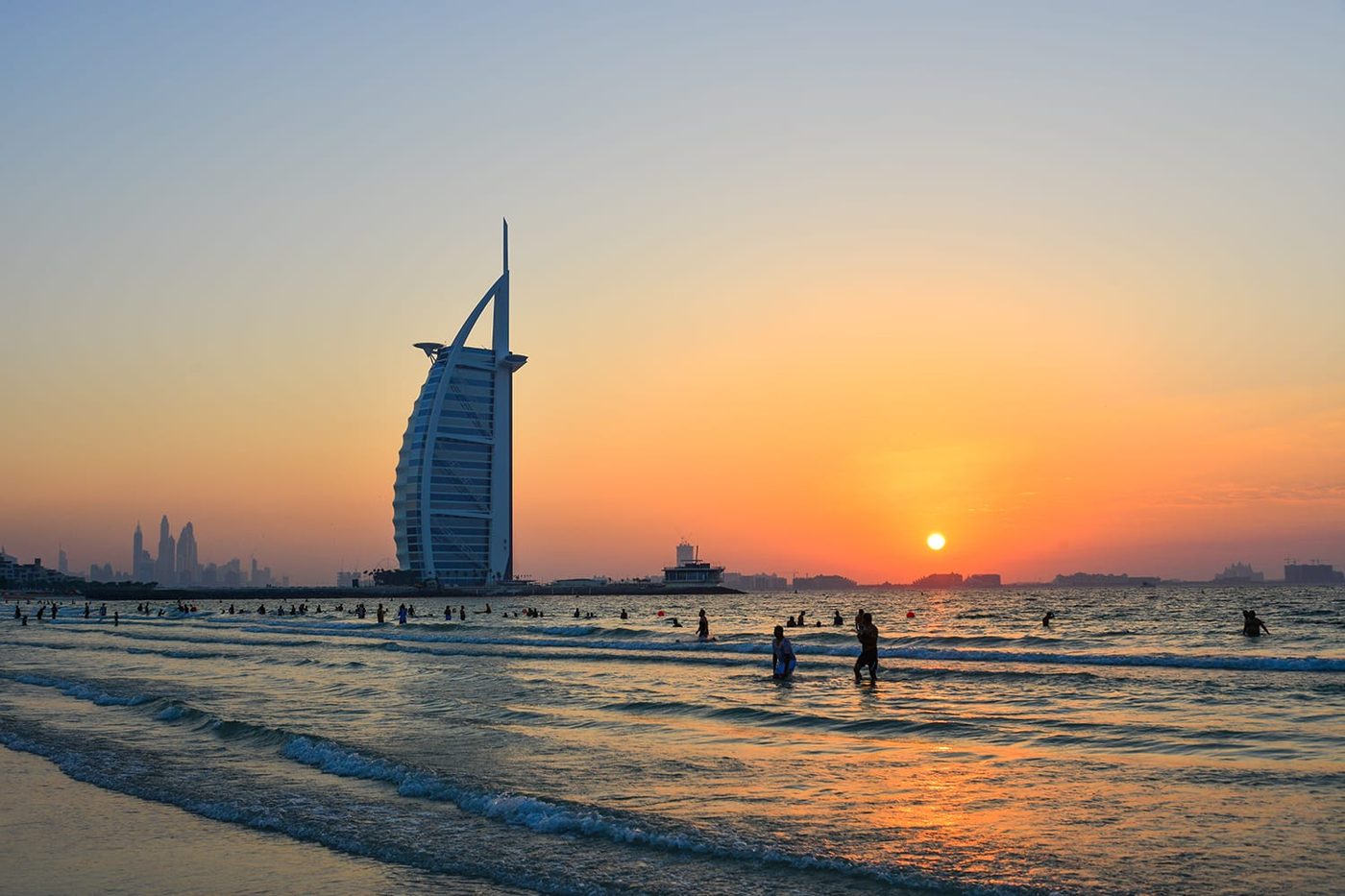
Just along the coast in Umm Suqeim, Sunset Beach (also called Umm Suqeim Beach) is the quieter, more local sibling of Kite Beach. The draw is the view: this is the beach directly in front of the Burj Al Arab, and at golden hour the whole place turns into a photo session. It is also one of Dubai’s few surf spots when the winter swell arrives, with board rentals nearby. Facilities are simpler than Kite Beach — bring what you need — and that simplicity is exactly its charm.
A little further north, Jumeirah Open Beach near Jumeirah 1 is a long, no-frills stretch popular with residents for morning swims and runs, with the La Mer development (shops and restaurants by the water) at its northern end adding food options. Both beaches are free, both are reached along the Jumeirah beach road bus routes or by taxi, and both are at their best before 10am or after 4pm outside the winter months.
Al Sufouh and Jebel Ali: The Quiet, Local Beaches

Between the Burj Al Arab and the Palm, Al Sufouh Beach — long nicknamed Black Palace Beach for the palaces behind it — is a narrow, peaceful strip with views to the Palm Jumeirah and the Burj. There are almost no facilities and no rental strip, which is why it stays calm: bring water, shade and everything else with you, and take your rubbish away. It is the best free beach in the city for reading a book undisturbed on a weekday morning.
At the far southern end of the city, Jebel Ali Beach and the newer Dubai Islands Beach (one of the few beaches with a designated dog-friendly section, popular with pet owners) round out the list. Jebel Ali is a long drive from central Dubai, so it suits residents and travellers staying in the south; Dubai Islands, near Deira, is easier to reach and still feels new and spacious. Both are free, both are quieter than the Jumeirah strip, and both reward an early start. Check our dog-friendly beaches guide before bringing a pet — rules differ by beach and are enforced.
Al Mamzar Beach Park: Almost Free, and Worth the Small Fee
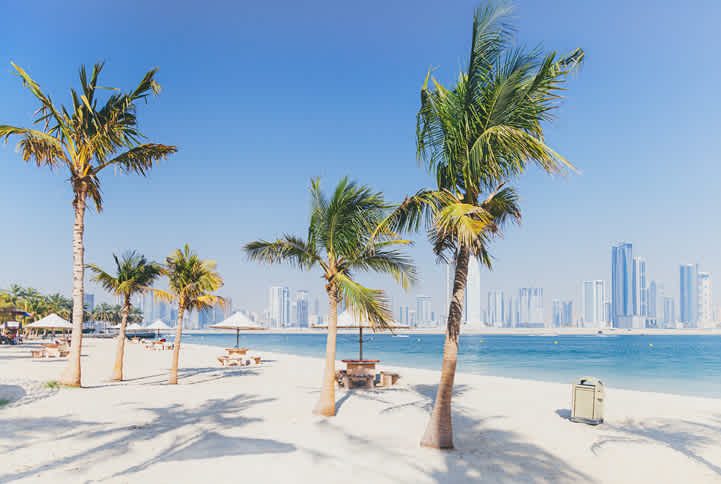
The one exception to “free” on this list earns its place: Al Mamzar Beach Park, on the peninsula between Dubai and Sharjah, charges a small entry fee (historically AED 5 per person, paid by Nol card — check the current amount before you go, as municipal fees are revised from time to time). For that you get five sheltered cove beaches around a big green park, barbecue areas, playgrounds, changing rooms and optional extras like swimming pools and rentable chalets.
For families and groups, it is unbeatable value: pack a picnic and the whole day costs less than one beach-club coffee. Weekdays are calm; Fridays and Saturdays fill with family groups, so arrive before 10am to claim a good barbecue spot. It is also the most practical beach for travellers based in Deira. One caution: traffic on the Sharjah corridor at evening peak can be slow, so leave before the rush or stay for the park’s later closing and make a full day of it.
Frequently Asked Questions
Are Dubai’s public beaches really free?
Yes — Kite Beach, JBR, Sunset Beach, Jumeirah Open, Al Sufouh and the other municipal beaches charge no entry fee. You only pay for extras: sunbed rentals, parking in some car parks, food, and the small entry fee at Al Mamzar Beach Park.
Can tourists swim at public beaches in Dubai?
Yes. Swim inside the marked zones during lifeguard hours and follow the flags. Swimwear is normal on the beach; cover up when leaving the beach area, and use only designated beaches for night swimming.
Which free beach is best for families?
JBR The Beach for facilities and food on the spot; Al Mamzar Beach Park for space, shade and a full picnic day for a few dirhams. Kite Beach suits active families with older children.
What should I bring to save money at a free beach?
Your own towel, umbrella or shade, water and snacks. Rentals and café lunches are where a free day quietly becomes a AED 200 day.
When is the best time of year for Dubai beaches?
October to April, when the sea is warm and the air is comfortable. In summer, go at sunrise or after 5pm, keep swims short and treat midday sun as a hard limit.
0 Comment