

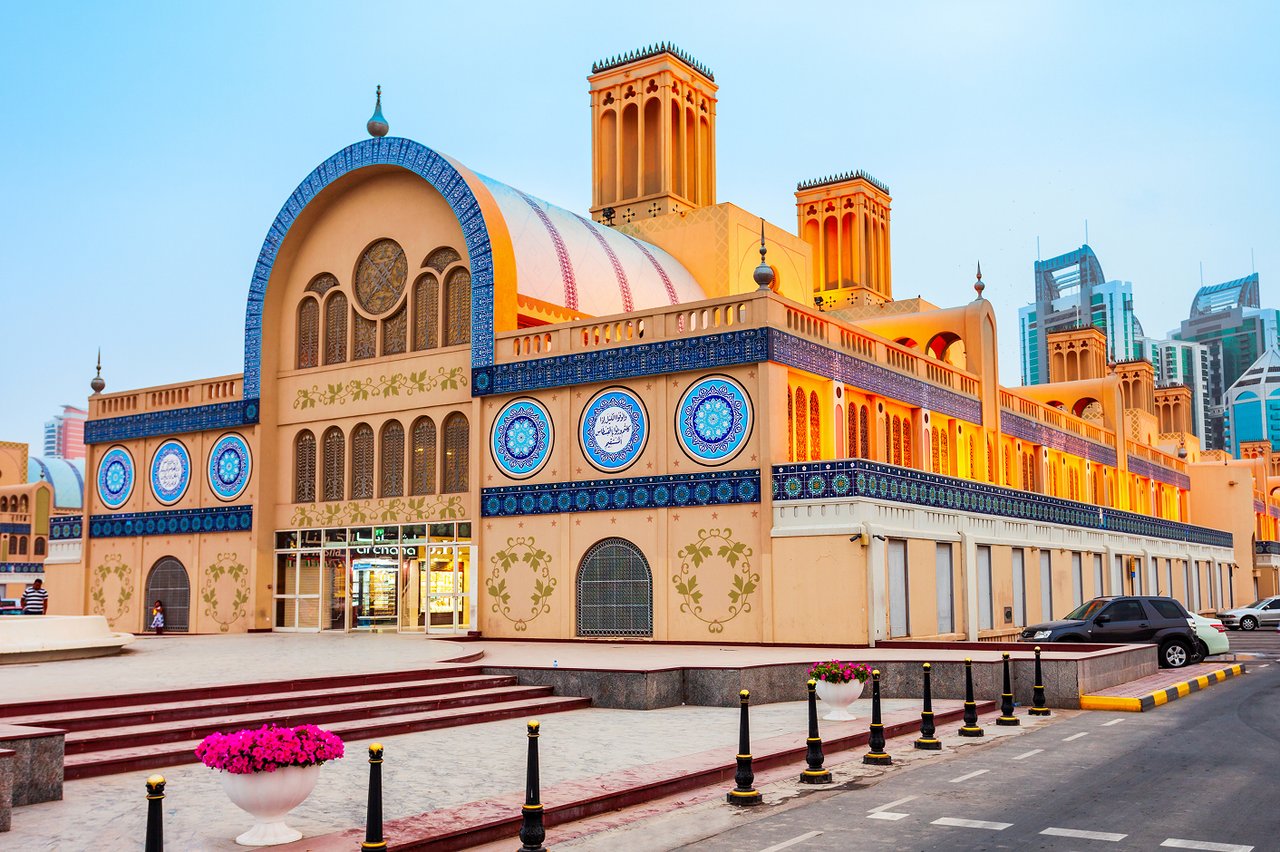

Sharjah is barely half an hour from Dubai, but it feels like a different country — and in a way it is: a different emirate, with its own rules, its own pace and its own idea of what the UAE should be. Dubai builds higher; Sharjah digs deeper. It’s the country’s cultural capital, packed with museums, souqs and heritage districts, and it’s one of the easiest day trips you can make from Dubai. Here’s what to see and how to fit it into a day.
Getting to Sharjah from Dubai
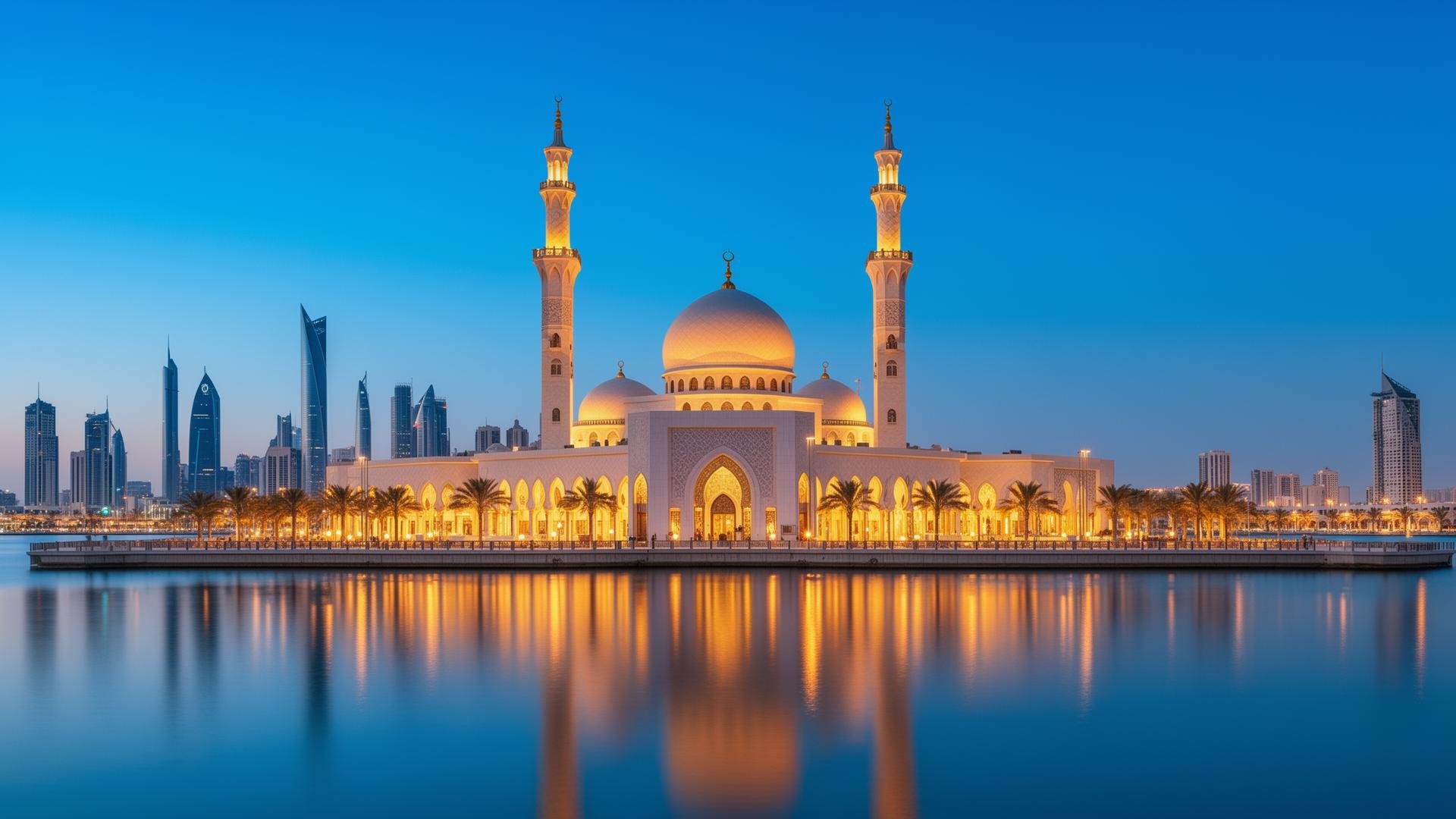
Getting there is the easy part. Several RTA intercity buses run from Dubai to Sharjah’s Al Jubail Bus Station: the E303 from Union Square (about 50 minutes, AED 12), the E306 from Al Ghubaiba (about 30 minutes, AED 10) and the E307 from Deira City Centre (about 44 minutes, AED 10). You’ll need a nol card — there’s no cash payment on board — and buses run frequently through the day. Check routes and timings on the RTA site before you go.
Driving or taking a taxi is faster when traffic cooperates — around 30 to 45 minutes — but the Dubai–Sharjah corridor is one of the busiest commuter routes in the country, so avoid the morning and evening rush if you can. There’s also a far more pleasant option: the ferry between Dubai and Sharjah, which turns the commute into a little cruise. We cover it in detail in our Dubai–Sharjah ferry guide. Once you’re in Sharjah, the main sights cluster around the corniche and the heritage area, so taxis between them are short and cheap.
Sharjah Museum of Islamic Civilization
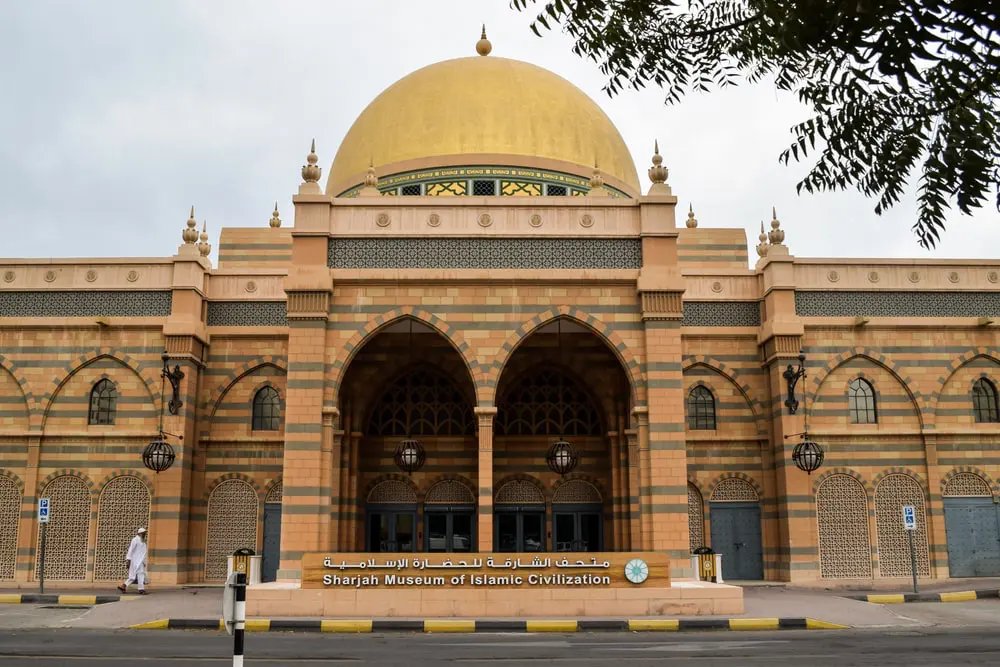
Start here, because it’s the single best museum in the emirate and arguably the best in the country for its subject. The Sharjah Museum of Islamic Civilization sits in a converted traditional souq on the corniche, crowned by a golden dome you can spot from across the water. Inside are more than 5,000 artifacts spanning fourteen centuries: astrolabes and medical instruments from the Islamic Golden Age, centuries-old Qur’an manuscripts, ceramics, textiles and jewellery.
Head straight for the upper galleries under the dome, where an intricate zodiac mosaic covers the ceiling and the science exhibits show just how much of modern astronomy, medicine and mathematics traces back to this tradition. It’s spacious, cool and quiet — which makes it the perfect midday stop when the outdoor heat peaks. Allow around two hours; rushing it would be a shame.
The Blue Souk and the Heart of Sharjah
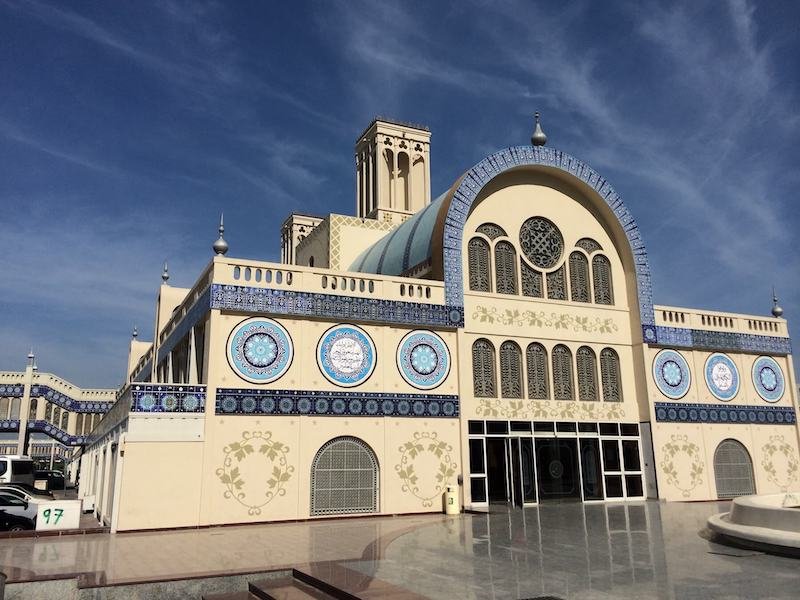
From the museum, walk to Souq Al Markazi — better known as the Blue Souk — and you’ll understand why it’s on every Sharjah itinerary. The building itself is the attraction: a long, low market hall decorated with blue tilework, arched windows and wind towers, housing hundreds of shops across two wings. One side leans toward gold, carpets, antiques and traditional crafts; it’s the best place in the emirate to buy a carpet or haggle over oud. Prices are rarely fixed, so bargain politely and be ready to walk away — the second offer is always better than the first.
Right behind the souq lies the Heart of Sharjah, the emirate’s heritage district and its most atmospheric quarter. This is a living restoration project: coral-stone houses, narrow lanes, small museums and old merchant homes being brought back to life one by one. Don’t miss Al Hisn Fort, the former residence of Sharjah’s ruling family and the old seat of government, and Souq Al Arsah, one of the oldest marketplaces in the UAE, where the wooden doors and cool shaded alleys feel a world away from Dubai’s malls. The Sharjah Art Museum and the Calligraphy Museum are both in this area if you want to keep the culture going. Museum opening hours vary through the week, so it’s worth checking the latest timings on visitsharjah.com before you set out.
Al Noor Island
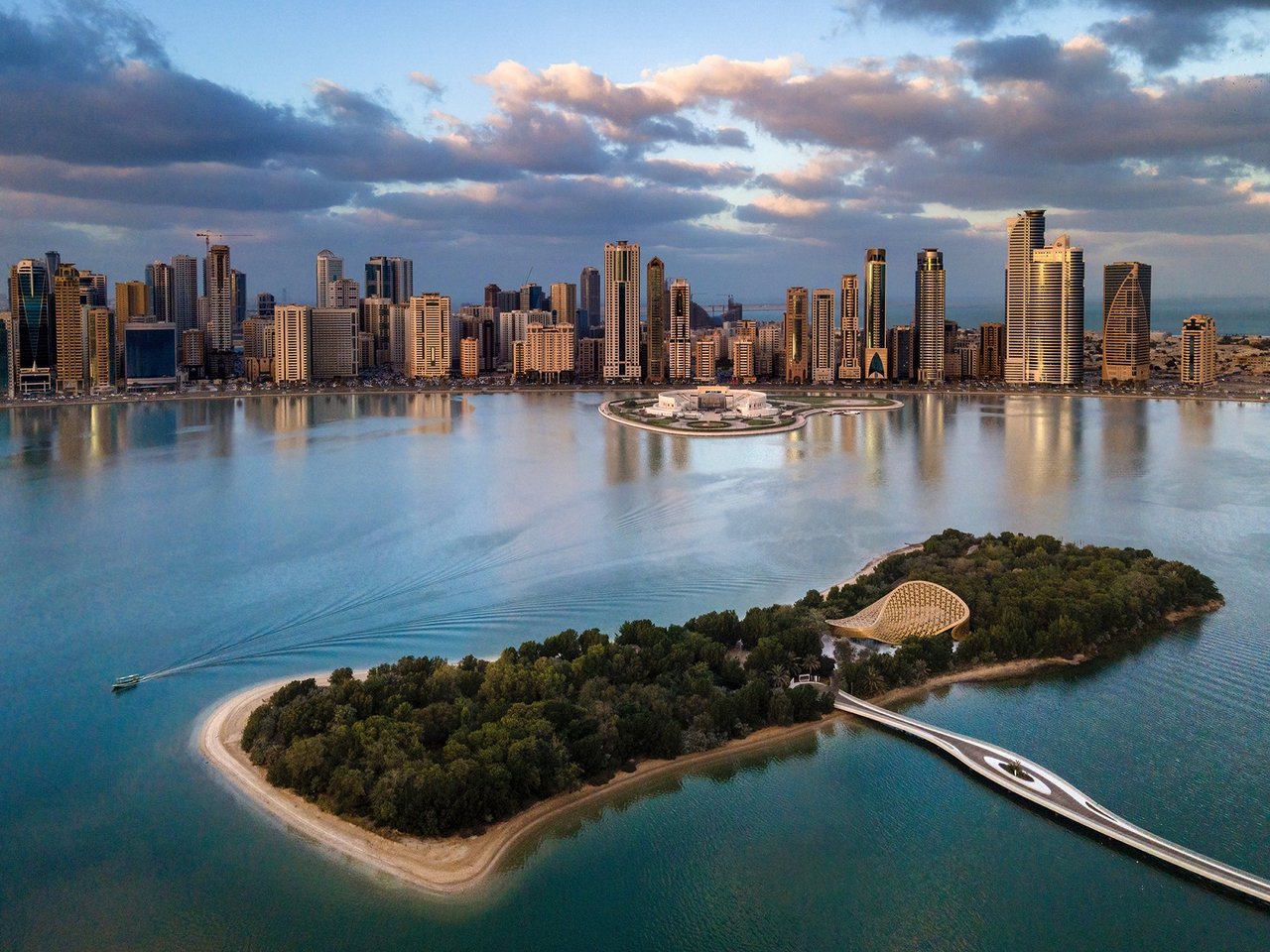
By mid-afternoon, cross over to Al Noor Island in Khalid Lagoon, right next to the Al Noor Mosque. It’s a small landscaped island reached by a pedestrian bridge, and it’s the prettiest hour of the day to be there. The headline act is the Butterfly House, a glass dome where more than 500 butterflies drift through tropical planting — genuinely lovely, and a hit with kids. Around it you’ll find a sculpture park, art installations, and the Literature Pavilion, a quiet open-sided structure designed by Tadao Ando that’s made for sitting with a book.
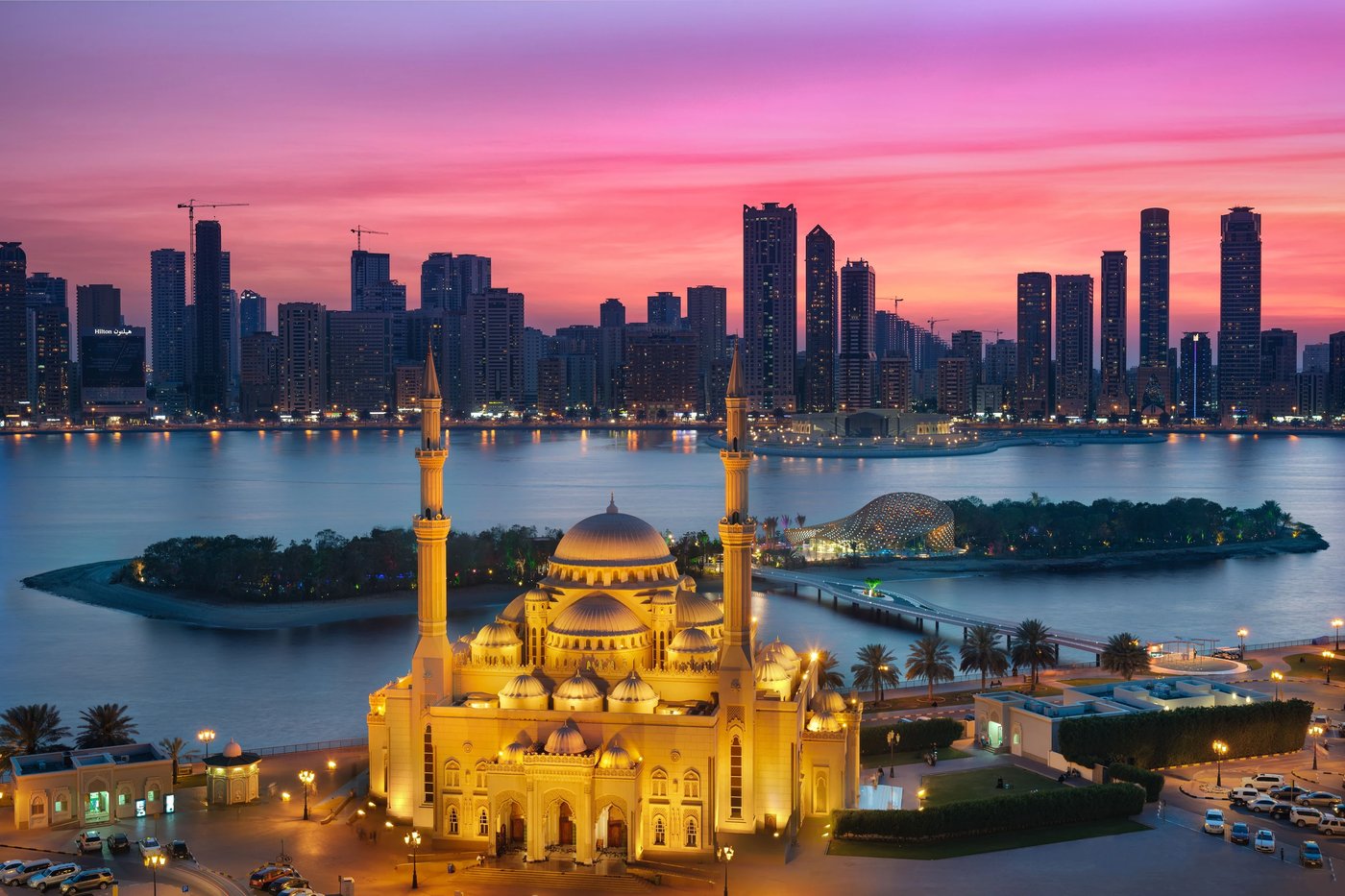
The smart play is to arrive in the late afternoon and stay into the evening: the island is lit after dark, and the light installations along the paths make it feel completely different at night. Tickets are AED 35 for adults and AED 20 for children on a self-guided visit (guided tours cost a little more), with the Butterfly House as a small add-on, and the island stays open until 11 PM. Before you cross the bridge, take a look at the Al Noor Mosque beside it — its Ottoman-style domes and minarets are among the most photographed in the emirate, and it’s one of the few mosques in the UAE that runs guided tours for non-Muslim visitors.
Al Majaz Waterfront and Evening Fountains
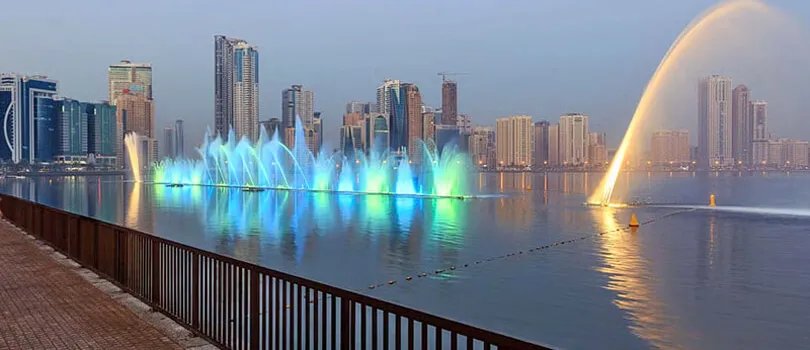
End the day at Al Majaz Waterfront, the promenade along Khalid Lagoon that comes alive after sunset. The musical fountains are the draw — jets of water choreographed to music and light, shooting over the lagoon with the Sharjah skyline behind them. It’s free to watch, and the whole waterfront is built for an evening stroll: jogging tracks, mini-golf, playgrounds and a long line of restaurants and cafés facing the water.
Dinner here is the right call. Sharjah’s restaurants lean cheap and cheerful compared to Dubai — excellent Emirati, Indian, Persian and Levantine food at prices that feel like a throwback. Grab a table with a lagoon view, watch the fountains do their thing, and give the day a proper ending. One thing to remember for the whole trip: Sharjah shares Dubai’s climate, so the same seasonal logic applies — our best time to visit Dubai guide works for Sharjah too, with October to April the sweet spot for walking around outdoors.
Frequently Asked Questions
How far is Sharjah from Dubai?
It’s about 15–20 km depending on where you start in Dubai. The drive takes 30 to 45 minutes outside rush hour, and the RTA buses take 30 to 50 minutes depending on the route.
How much is the bus from Dubai to Sharjah?
RTA intercity buses cost AED 10 to 12 one way — the E306 from Al Ghubaiba is AED 10, the E303 from Union Square is AED 12. You need a nol card; cash isn’t accepted on board.
Is Sharjah really alcohol-free?
Yes. Sharjah is a dry emirate — alcohol isn’t sold or served anywhere, including hotels and restaurants. Plan accordingly and save that part of the evening for back in Dubai.
What should I wear in Sharjah?
Sharjah is more conservative than Dubai. Cover your shoulders and knees in public places, and dress modestly at religious and cultural sites — it’s both respectful and, in some places, required.
Is one day enough for Sharjah?
Yes, for the highlights: the Museum of Islamic Civilization, the Blue Souk and Heart of Sharjah, Al Noor Island and an evening at Al Majaz Waterfront fit comfortably into a full day. Museum lovers could easily fill two. If you’re collecting emirates, our Abu Dhabi day trip guide covers the other classic day trip from Dubai.
0 Comment