



Nothing sours a trip faster than standing at a check-in desk while an airline agent slowly shakes their head at your paperwork. The good news is that a growing number of nationalities can skip the pre-trip visa application entirely — the UAE lets them get their visa stamped right at the border.
This is specifically about visa on arrival: who gets in with just a passport, who needs an extra residence permit to qualify, and what the June 2026 expansion changed. If you need a full tourist visa arranged before you fly, that’s a different process — see our Dubai tourist visa guide for that.
How Visa on Arrival Actually Works at the UAE Border

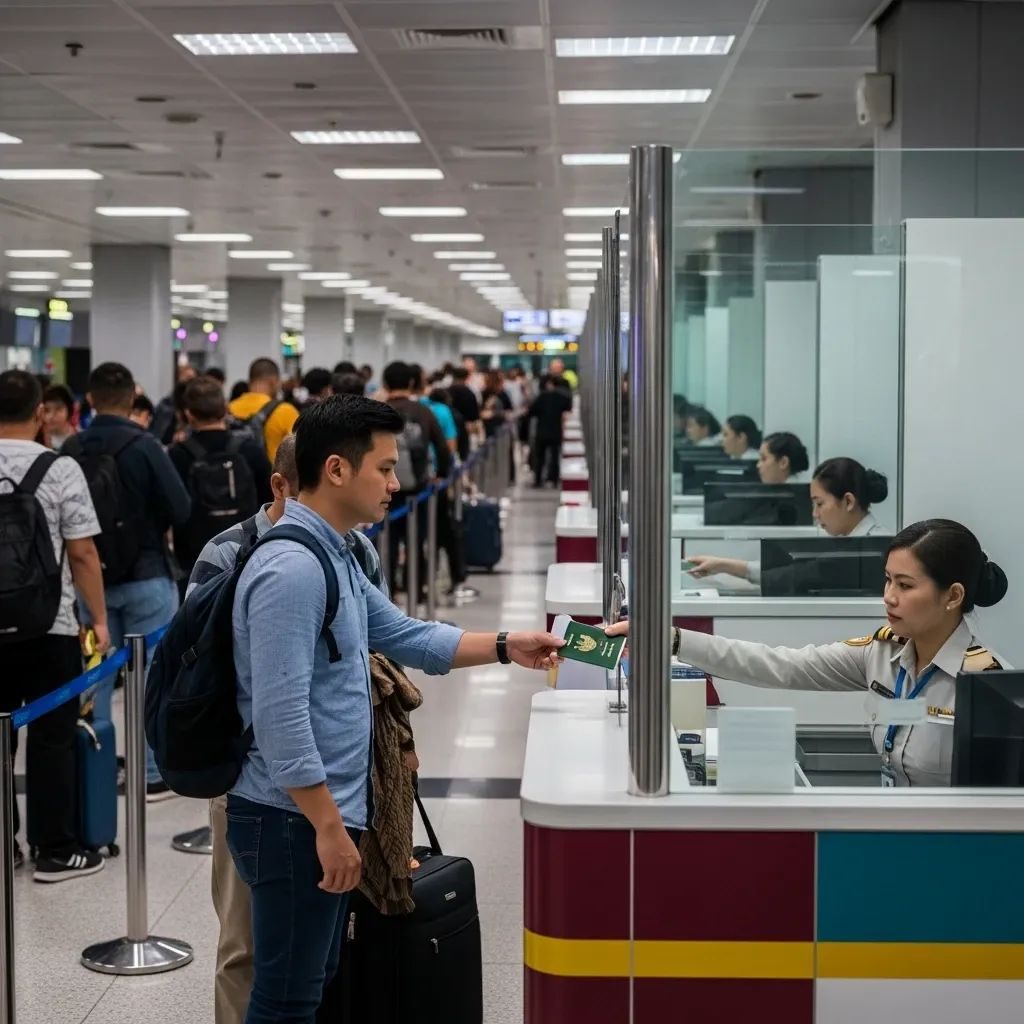
Forget everything you know about applying weeks ahead. With visa on arrival, there is no online form to fill, no embassy visit, and no waiting for an approval email. You land, you walk up to the passport control counter, and the officer issues the visa on the spot.
At Dubai, Abu Dhabi, or Sharjah airports, the routine looks like this: hand over your passport (plus any supporting documents, covered below), answer the standard entry questions, pay the fee at the counter, and you’re through. The whole thing usually takes a few minutes — often less time than waiting for your checked bag.
But — and this is the part people get wrong — visa on arrival is not one single scheme. There are actually two separate routes, with very different eligibility rules:
- The standard route: Citizens of more than 80 countries get a 30-day visa on arrival, free, with no extra documents needed beyond a valid passport.
- The residence-permit route: Citizens of a handful of specific countries (including six added in June 2026) can also get a visa on arrival — but only if they hold a valid visa or residence permit from an approved country like the US, UK, or Canada.
Which route applies to you depends entirely on your passport. Get that wrong and you’ll be turned away at check-in, so read on carefully.
Who Qualifies: The Two Routes In
Route 1: The standard 30-day visa on arrival
This is the one most travellers use. Citizens of the UK, the US, all EU countries, Australia, Japan, Singapore, South Korea, New Zealand, Canada, and dozens more — more than 80 nationalities in total — are stamped in for 30 days free of charge when they arrive. The UAE government publishes the full country list on the official portal u.ae, and it’s worth checking your specific nationality there before you book.
Citizens of GCC countries (Saudi Arabia, Qatar, Kuwait, Bahrain, Oman) have it even easier: they don’t need a visa at all and can enter with just a national ID card or passport.
For this route, your passport generally needs at least six months of validity left, and you may be asked to show proof of onward travel and accommodation. That’s it — no supporting visas, no permits.
Route 2: Visa on arrival via a foreign residence permit
This is the newer, more conditional scheme. If your passport is from India, Indonesia, Vietnam, Thailand, the Philippines, Kenya, or South Africa, you may still get a visa on arrival — but only if you also hold a valid visa, residence permit, or Green Card issued by one of nine approved places: the US, the UK, any EU member state, Canada, Australia, New Zealand, Singapore, Japan, or South Korea.
In practice, this route was built for the diaspora: a Filipino professional living in Canada, an Indonesian resident in Japan, an Indian passport holder with a US visa. The qualifying document must be valid on the day you travel — expired permits don’t count.
Important: if you qualify under Route 2, your visa is paid (unlike the free 30-day route): AED 100 for a 14-day visa or AED 250 for a 60-day visa. More on that in a moment.
The 2026 Expansion: Six New Countries (and the Catch)

In June 2026, the UAE’s Ministry of Foreign Affairs announced that the residence-permit scheme was expanding to Indonesia, Vietnam, Thailand, the Philippines, Kenya, and South Africa, alongside their accompanying family members. India had already been covered under a similar arrangement before this change.
The announcement made headlines as “visa on arrival for six new countries” — and that’s technically true, but here’s the catch most headlines skipped: being a citizen of one of these countries is not enough on its own. The residence-permit condition is mandatory. A Thai citizen living in Thailand, with no US, UK, EU, Canadian, or other qualifying permit, still has to arrange a UAE visa before travelling.
Here are the official terms, per the Federal Authority for Identity, Citizenship, Customs and Ports Security (ICP):
| Visa option | Fee | Stay | Extendable? |
|---|---|---|---|
| Short visa on arrival | AED 100 | 14 days | Yes — once, while in the UAE |
| Long visa on arrival | AED 250 | 60 days | No — single stay only |
Both options are issued at the port of entry — Dubai (DXB), Abu Dhabi (AUH), Sharjah (SHJ), or any other UAE entry point. Overstaying is fined at AED 50 per day with no grace period, so count your days carefully.
14-Day vs 60-Day: Which One Should You Pick?

If you’re on the residence-permit route and get to choose at the counter, the decision mostly comes down to how sure you are about your plans:
Pick the 14-day visa if you’re on a short trip — a week of sightseeing, a business visit, visiting family. It costs just AED 100, and if your plans stretch, you can extend it once for another 14 days while you’re still in the country. For trips under a month, this is the cheapest and most flexible option.
Pick the 60-day visa if you’re settling in for a longer stay — remote work, a long family visit, or you simply don’t want to think about extensions. At AED 250 it’s good value per day, but remember: it can’t be extended, so you must leave when it expires. If there’s any chance you’ll want more than 60 days, arrange a standard tourist visa in advance instead.
One rule that applies to both: you must leave the UAE before the visa expires. There’s no switching to a different visa type at the airport if you change your mind mid-trip.
Before You Fly: Documents & Double-Checks

A little preparation goes a long way here. Run through this checklist before you head to the airport:
- Passport validity: Your ordinary passport should have at least six months left before expiry. Diplomatic or emergency travel documents are treated differently — travel on an ordinary passport.
- Your qualifying permit (Route 2): Carry the physical residence permit or visa card. Some travellers have reported that digital-only copies aren’t always accepted at the counter, so don’t rely on a phone screenshot alone.
- Confirm with your airline: Airlines check your documents before boarding, and they use the same eligibility data as immigration. If you’re unsure, call the airline a few days ahead rather than discovering a problem at the gate.
- Check the official list: Visa rules do change — the June 2026 expansion is proof of that. Verify your nationality on u.ae or the ICP smart services portal close to your travel date, especially if you’re relying on a foreign residence permit to qualify.
- Have your arrival plan ready: Know where you’re staying for at least the first night. For airport logistics, our Dubai International Airport guide covers terminals, transfers, and getting into the city.
Also worth doing before you land: read our tourist SIM card guide so you can get connected the moment you clear immigration, and check the best time to visit Dubai so your visa days land in the best weather of the year.
Frequently Asked Questions

Do Pakistani citizens get a UAE visa on arrival?
Not under the current schemes. Pakistani passport holders need to arrange a visa before travelling — see our Pakistan visa update for the latest requirements. The only exception would be a Pakistani national who also qualifies under another route, which is rare.
Can I get a visa on arrival if my passport is from one of the six new countries but I live elsewhere?
Only if “elsewhere” issued you a valid visa or residence permit from one of the nine approved countries (US, UK, EU state, Canada, Australia, New Zealand, Singapore, Japan, South Korea). The permit is the qualifying document — your country of residence alone doesn’t unlock it.
Is the 14-day visa on arrival really extendable?
Yes — once, while you’re still in the UAE, according to the ICP announcement. The extension fee wasn’t published in the official statement, so confirm the current fee on the ICP smart services portal before relying on it.
What happens if I overstay my visa on arrival?
You’ll be fined AED 50 per day from the day your visa expires, and the UAE enforces overstays strictly. If you think you might need longer, sort out a proper tourist visa before you travel instead of gambling on an overstay.
Where can I verify the current rules before my trip?
The UAE’s official portal u.ae and the ICP smart services are the authoritative sources. For a second opinion on the June 2026 changes, the Envoy Global immigration alert and What’s On’s breakdown both lay out the eligibility details clearly.
0 Comment