

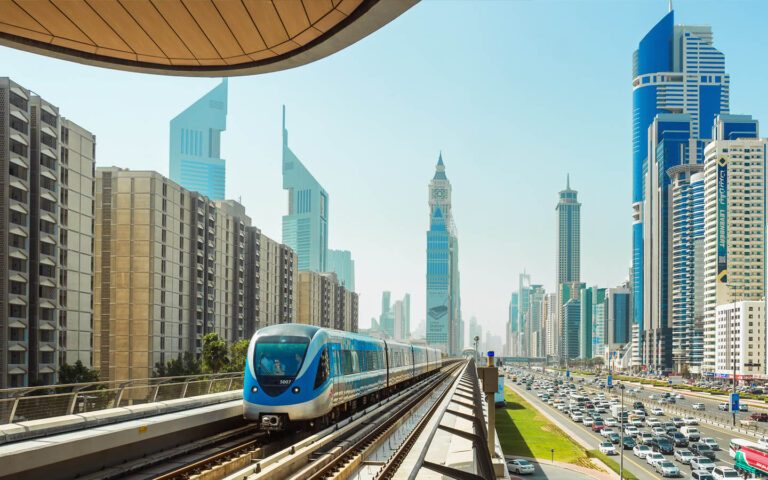

Dubai has a reputation as a car city, and parts of it earn that reputation. But a visitor who chooses the right neighbourhood never needs to rent one: the Metro’s Red and Green lines, the Marina tram and the bus network put most of what you came to see within a short, air-conditioned walk of a station. This guide picks the best areas to stay if you are travelling without a car, explains what “near the Metro” really needs to mean in Dubai heat, and flags the areas that look central on a map but will strand you paying for taxis.
For the full area-by-area overview, see our main guide to where to stay in Dubai.
Why the Metro Map Should Choose Your Neighbourhood
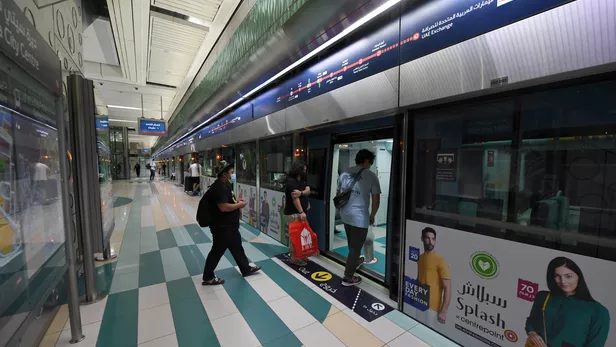
The rule is simple: in Dubai, a hotel 400 metres from a Metro station beats a nicer hotel 2km from one, every time, for a car-free trip. Distances here are deceptive — a “10-minute walk” in July heat, across a wide highway junction with no shade, is not a walk you will do twice. Judge every hotel by the walking route to the nearest station, not the straight-line distance, and favour areas where the station sits inside the neighbourhood rather than across a motorway from it.
The practical kit is a Silver Nol card (AED 25 including AED 19 credit), which covers Metro, tram and buses on one fare system — see our Nol card guide for the details. With that, the areas below are ranked roughly by how completely they work without a car.
Downtown Dubai and Business Bay: The Easiest Car-Free Base
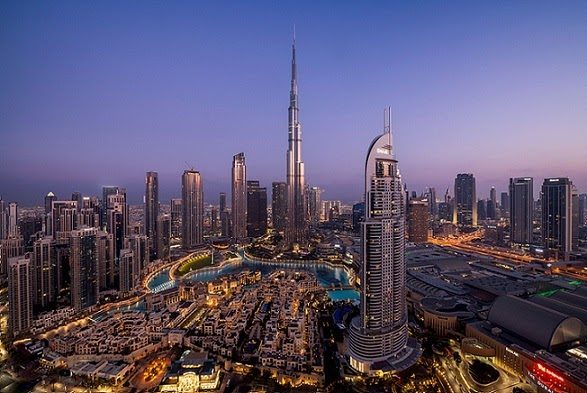
Downtown is the most walkable district in the city by design: Burj Khalifa, Dubai Mall, the Dubai Fountain and Souk Al Bahar all sit within the same pedestrian-friendly pocket, served by Burj Khalifa/Dubai Mall station on the Red Line (with a long, air-conditioned traveller walkway into the mall). Boulevard Point, Mohammed Bin Rashid Boulevard and the Business Bay side add hotels at lower prices than the palace-style properties on the fountain side, and Business Bay station keeps them on the network.
The trade-off is price and evening buzz — Downtown is polished rather than local, and restaurant prices run high. But for a first trip of three or four days without a car, nowhere else is as frictionless. Our round-up of best areas to stay in Dubai for first-timers puts Downtown at the top for the same reason.
Deira and Bur Dubai: Best Value on the Green Line
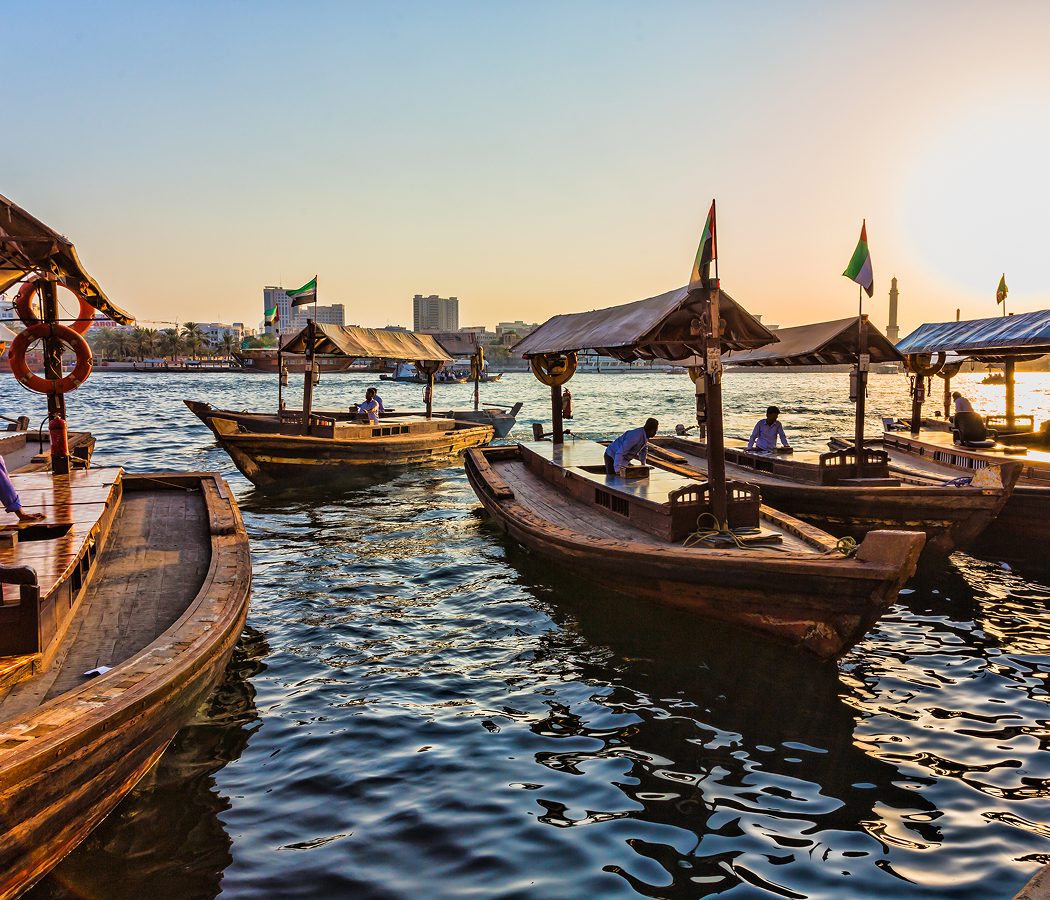
The historic districts either side of the Creek are the cheapest well-connected base in Dubai, and arguably the most interesting. Baniyas Square, Al Rigga and Union stations (where the Red and Green lines meet) serve Deira’s souks, abra stations and hundreds of affordable hotels and restaurants; across the water, Al Fahidi and Al Ghubaiba stations put Bur Dubai’s historic neighbourhood, museums and Meena Bazaar within a short walk.
Daily life here works on foot in a way newer districts do not: breakfast, a pharmacy, a money exchange and a Metro station are all on the same street. The AED 1 abra crossing is part of the transport system, not just a photo stop. Airport access is excellent too — the Red Line runs directly to Terminals 1 and 3. Families weighing this side of town against the beach areas should read our guide to the best areas to stay in Dubai for families.
Dubai Marina and JBR: Tram, Beach and Promenade Living
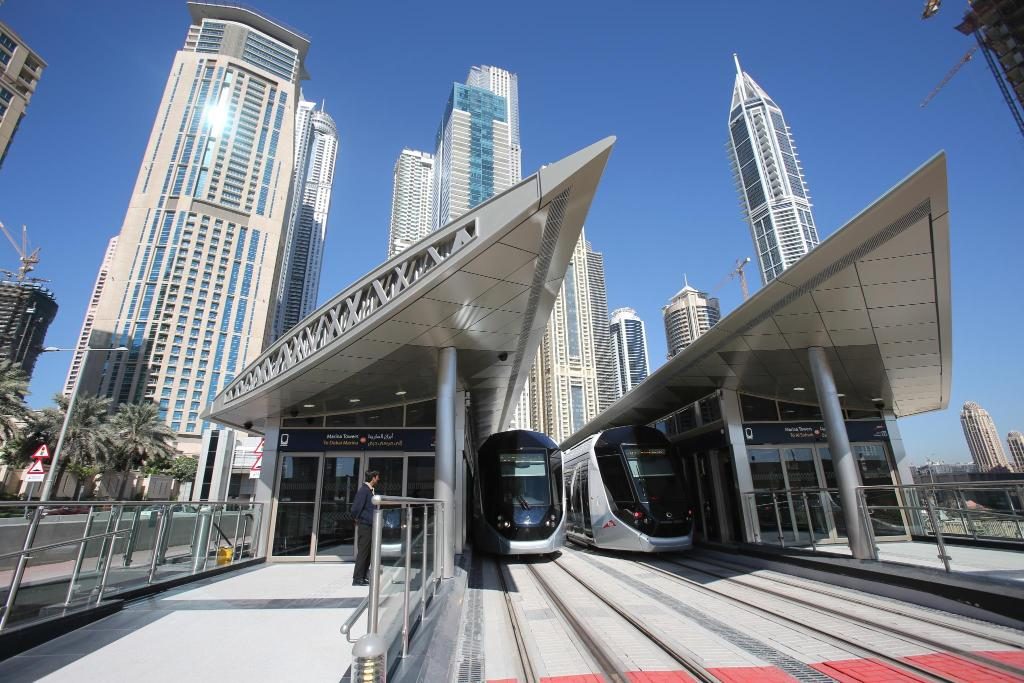
The Marina is the one beach district that genuinely works without a car, because it was built around the tram. The Dubai Tram loops from the DMCC and Sobha Realty Metro stations through Marina Mall and along to JBR and Al Sufouh, so nearly every hotel and apartment in the district is within a short walk of either a tram stop or the 7km Marina promenade. JBR’s The Walk and The Beach are pedestrian by design.
Stay on the Marina side if you want the tram at your door; the towers on the Jebel Ali side of the marina are a longer walk to a station. Evenings are the Marina’s strength — dinner, a boat trip and a promenade stroll need no transport planning at all. See our head-to-head of Dubai Marina vs Downtown vs JBR for the detailed comparison.
Al Barsha: Mall of the Emirates on Your Doorstep

Al Barsha is the pragmatic pick: a grid of mid-range hotels and hotel apartments within walking distance of Mall of the Emirates station on the Red Line. You get one of the city’s biggest malls (and Ski Dubai) as your local shop, straightforward Metro runs to both Downtown and the Marina, and prices a clear step below both. Streets here are more walkable than most mid-city districts, with pavements and crossings on the main routes to the station.
It is not a sightseeing district in itself — you will ride the Metro to everything — but as a sleep-cheap, travel-easy base it is hard to beat. Many of the properties in our best budget hotels in Dubai guide are in Al Barsha or the Creek districts for exactly this reason.
JLT and the Other Good Picks — Plus Areas to Avoid Without a Car
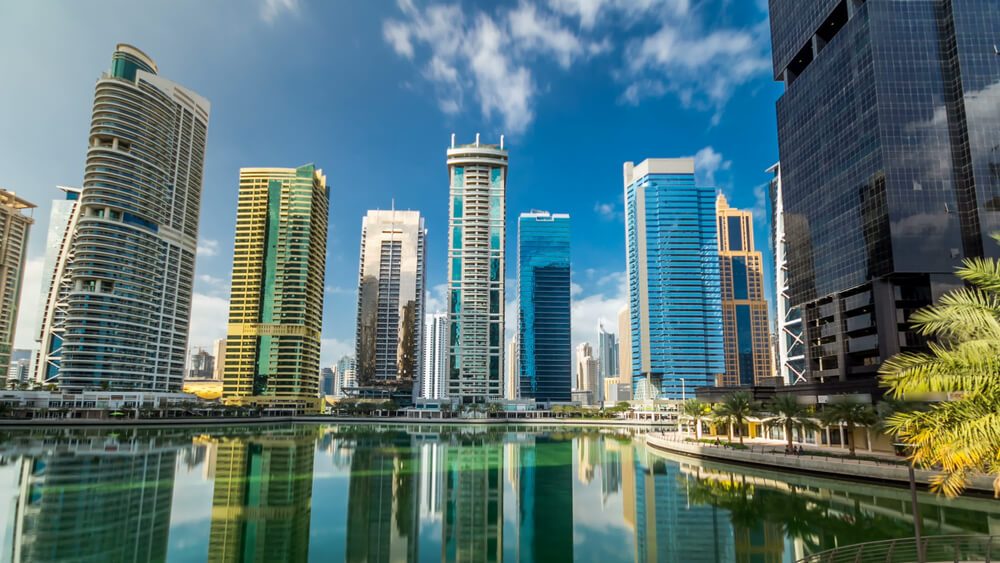
Jumeirah Lake Towers (JLT) sits directly across Sheikh Zayed Road from the Marina, has its own stations (DMCC and Sobha Realty are shared with the Marina side), a lively independent restaurant scene around its lakes, and noticeably lower hotel and apartment prices. It is the smart-money alternative to the Marina for car-free travellers.
Also workable: Al Jaddaf and Festival City for mall-and-Creek trips on the Green Line side; Discovery Gardens and The Gardens near Ibn Battuta for long stays on a budget at the far end of the Red Line.
Avoid without a car: Palm Jumeirah beyond the monorail’s reach (taxis become your transport budget), Jumeirah’s villa streets away from the beach road, Dubai South and Dubailand districts, and anywhere in Jebel Ali’s sprawl. These areas are designed around private cars and it shows within a day. If you do end up needing wheels occasionally, our Dubai taxi guide explains fares and how to hail safely, and this Nol card guide covers the fare zones in depth.
Frequently Asked Questions
Can you visit Dubai without renting a car?
Yes, comfortably — if you stay on the Metro network. Downtown, the Creek districts, the Marina, Al Barsha and JLT all work car-free. The Metro, tram, buses and abras cover the major sights, and taxis fill the gaps cheaply for occasional trips.
Which area in Dubai is most walkable?
Downtown Dubai and JBR/The Walk are the most pedestrian-designed areas; the Creek districts of Deira and Bur Dubai are the most naturally walkable for everyday needs like food and shopping.
How close to a Metro station should my hotel be?
Within about 500 metres by an actual walking route. In Dubai’s heat, and with its wide road junctions, anything over a 10-minute walk to the station stops being a route you will use daily.
Is the Dubai Metro good for tourists?
Yes. It is clean, air-conditioned, signposted in English and Arabic, and connects the airport, Downtown, the Creek, the Marina and Mall of the Emirates. A Silver Nol card is the only ticket most visitors need.
0 Comment