

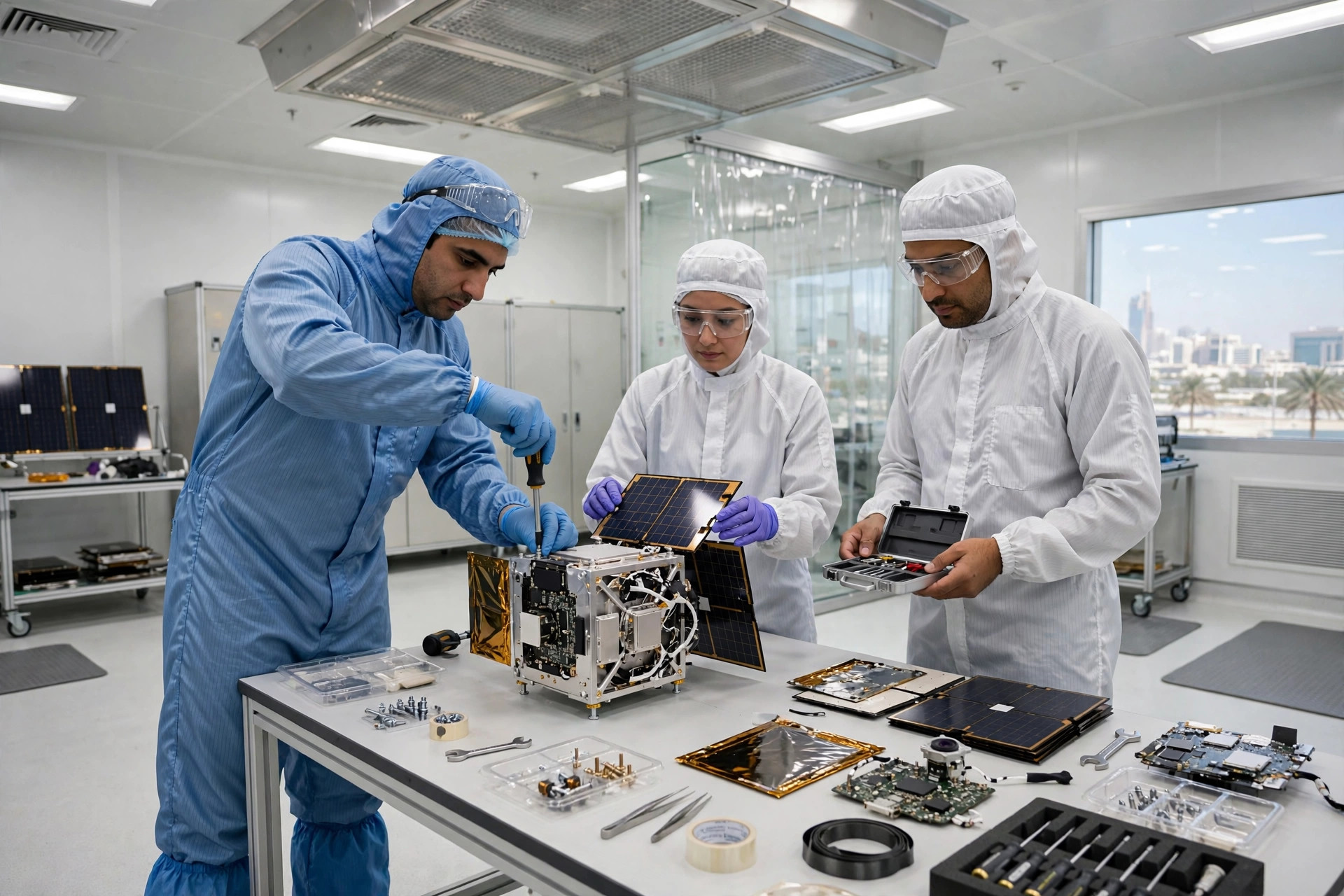

The first commercial satellite built in the UAE is now in orbit. Altair-1, designed, assembled, integrated and tested in Abu Dhabi by Orbitworks, lifted off on 2 October aboard SpaceX’s Transporter-18 rideshare mission from Vandenberg Space Force Base in California. The satellite deployed successfully, acquired a signal and has entered commissioning, with its status described as nominal, according to Devo Dubai’s report on the launch.
For visitors, the story matters less as a rocket launch and more as a sign of where the Emirates is heading: a space programme that now sells analysis-ready intelligence, not just pictures. Coverage in EnterpriseAM UAE framed Altair-1 as the commercial case for that programme, arriving in the same week the UAE unveiled its homebuilt asteroid probe.
What Altair-1 does in orbit
Each Altair satellite carries five integrated sensors, spanning optical, thermal and radio-frequency sensing. Onboard NVIDIA GPUs process data in orbit within minutes, rather than waiting hours for ground-based processing. That speed is the point: the system is described as fast enough to catch a wildfire at its first heat signature or to locate a vessel operating without broadcasting its position.
Planned uses include:
- Disaster response and environmental monitoring
- Maritime awareness and coastal monitoring
- Food security and land-use analysis
- Infrastructure surveillance and national security

First of a 10-satellite constellation
Altair-1 is the first of 10 planned satellites. The remaining nine are due to follow through 2027. At full strength, the constellation is designed to revisit any point on Earth roughly every four hours. The satellite was flown from Dubai World Central to Los Angeles by Emirates SkyCargo ahead of launch, under the carrier’s Aerospace and Engineering vertical, which handles sensitive space cargo under strict environmental controls.
The name draws on the Arabic al-ta’ir, meaning “the flying one” — a navigation star — and nods to the Altair 8800, the 1975 computer for which Microsoft wrote its first BASIC interpreter. If you are planning a trip around the UAE’s science landmarks, pair this story with our guide to places to visit in Dubai and the Museum of the Future.

Why a satellite story belongs in travel planning
Earth-observation data feeds the services travellers use daily — weather forecasting, flood and fire alerts, and maritime safety. Better revisit rates mean faster warnings when conditions change. Keep an eye on conditions before you travel with our best time to visit Dubai guide, and see what else is on this season in our Global Village guide.
FAQs
What is Altair-1?
Altair-1 is the first commercial satellite built in the UAE. It was designed, assembled, integrated and tested in Abu Dhabi by Orbitworks and is the first of a planned 10-satellite Earth-observation constellation.
When did Altair-1 launch?
It launched on 2 October 2026 aboard SpaceX’s Transporter-18 rideshare mission from Vandenberg Space Force Base in California, then deployed and entered commissioning.
What will the Altair constellation be used for?
Disaster response, maritime awareness, environmental monitoring, food security, infrastructure surveillance and national security, using optical, thermal and radio-frequency sensors with onboard AI processing.
How many Altair satellites will there be?
Ten in total. The other nine are scheduled to follow through 2027, giving the constellation a revisit time of roughly four hours for any point on Earth.
0 Comment