

People assume a day of sightseeing in Dubai costs what a single brunch costs. It does not have to. The city’s oldest transport costs one dirham, its best skyline show is free, its public beaches are free, and the Metro crosses town for less than a coffee. This guide builds a full, realistic day — Old Dubai in the morning, cheap eats for lunch, a free beach afternoon and the fountains at night — on a hard budget of AED 100 per person, with the actual numbers shown so you can copy the plan or bend it.
It pairs well with our broader list of free things to do in Dubai and the Dubai on a budget itinerary.
The Ground Rules: What AED 100 Has to Cover
This is a sightseeing-day budget, not a survival budget. The AED 100 covers one day’s transport, food and drink, and activities for one person, assuming your hotel (with breakfast, ideally) is already paid for. It does not include shopping or souvenirs — the souks are in the plan for looking, and if you intend to buy gold or textiles, that money sits outside the 100.
The whole day works because of one decision: base it in Old Dubai and Downtown, where the cheap transport, cheap food and free sights are stacked within a few Metro stops of each other. A day built around the Palm or a desert safari cannot be done for AED 100 honestly; a day built around the Creek, a public beach and the Dubai Fountain can — with change.
Transport: Cross the City for the Price of a Coffee
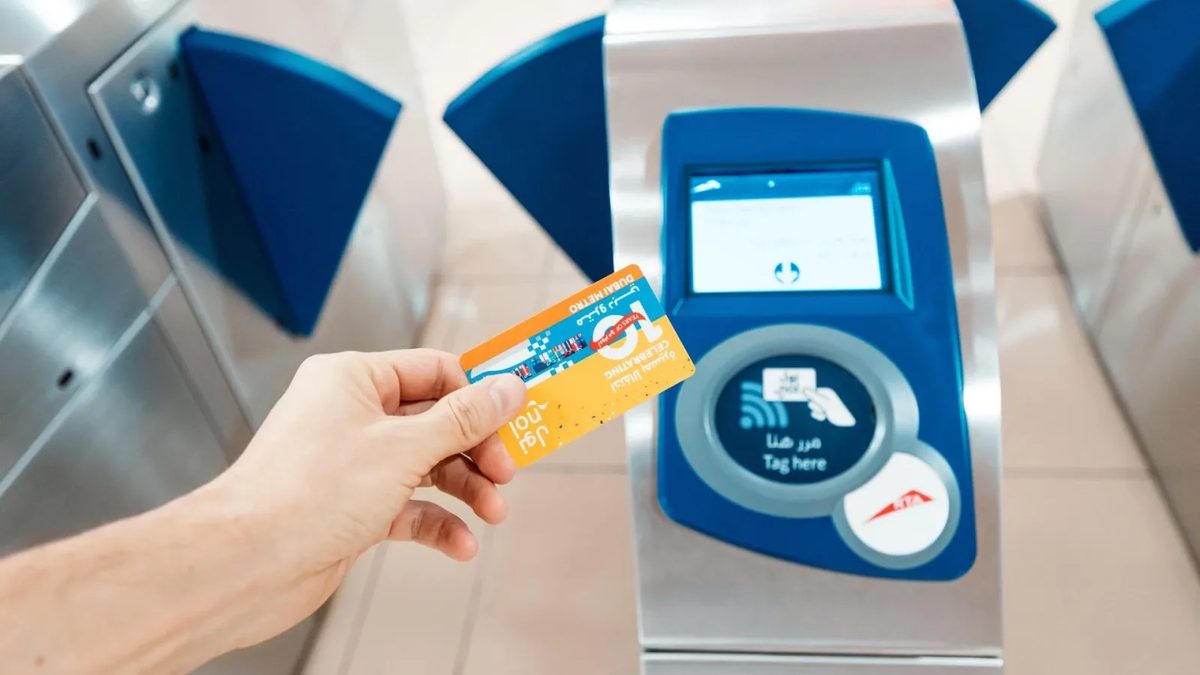
Buy a Silver Nol card if you do not already have one (AED 25 including AED 19 of credit — the credit is what you will spend; our Nol card guide explains the types). Silver fares are charged by zones crossed: AED 3 within one zone, AED 5 across two zones and AED 7.50 for journeys spanning three or more. Today’s plan needs roughly three paid rides — to the Creek area, across to the beach side, and back towards Downtown — so expect AED 15–20 of fares in total. RTA has also offered unlimited day passes on Nol (recently priced around AED 22); check the current options on a fare guide such as this Dubai Metro fares page, as prices are revised from time to time.
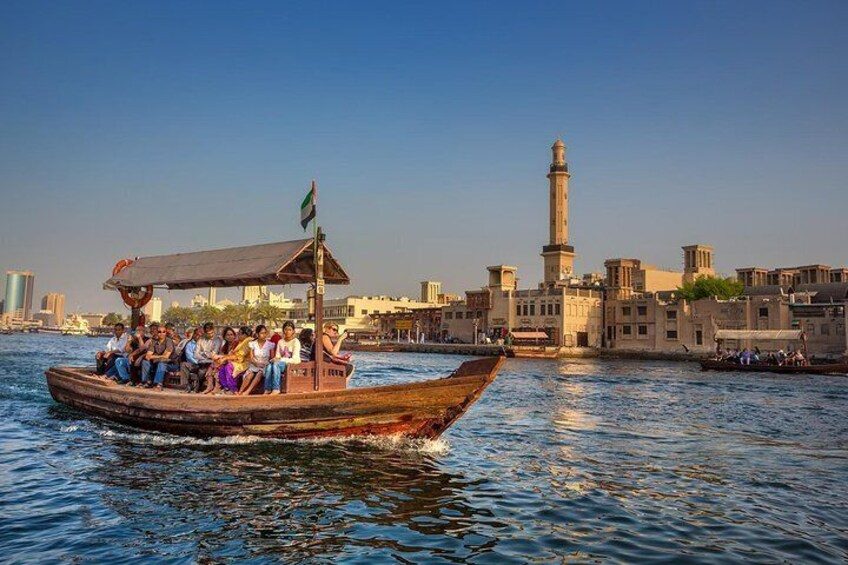
The day’s other transport is the star: the traditional abra across Dubai Creek costs AED 1 per crossing. Budget two crossings — over to Deira in the morning, back whenever you are done with the souks.
Morning: Old Dubai, the Abra and the Souks — For About AED 5
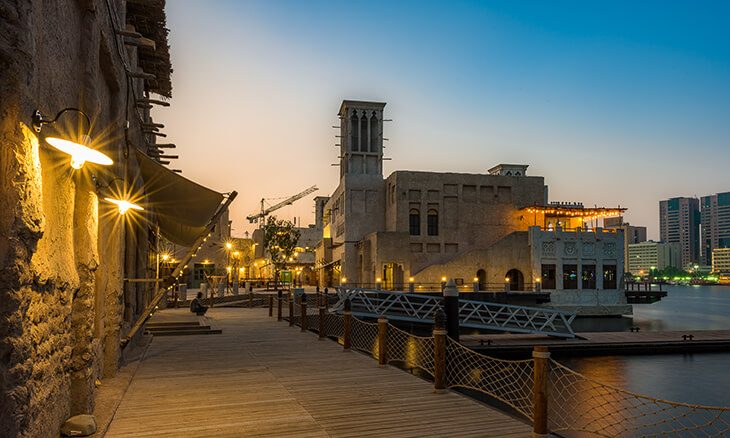
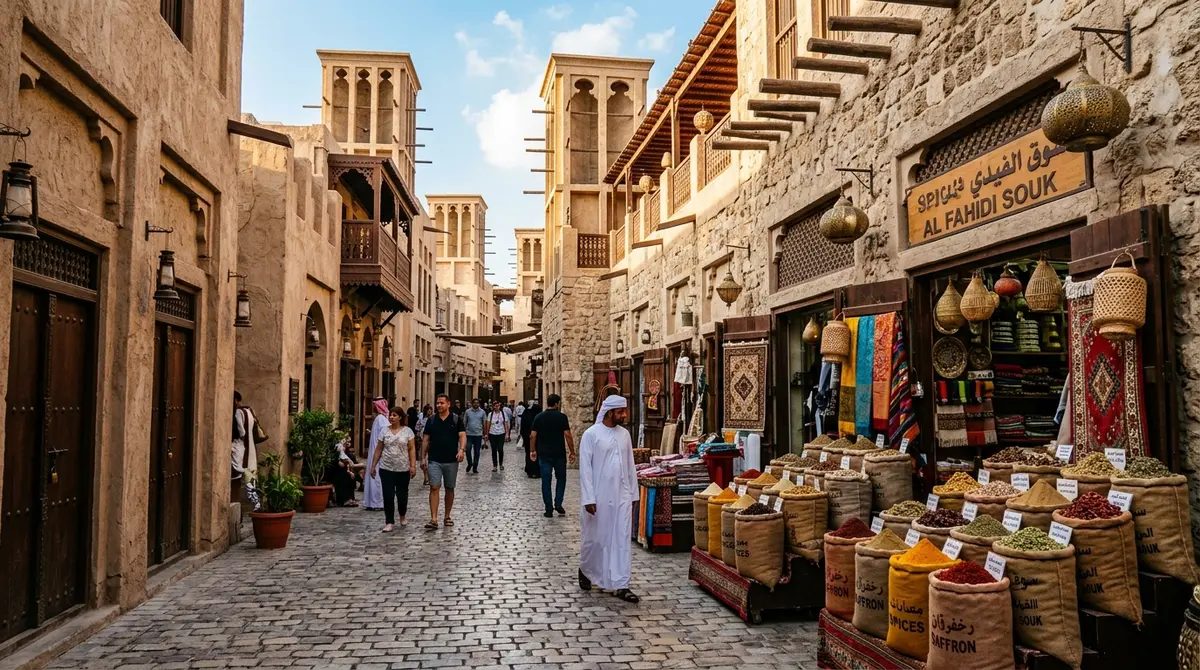
Start around 9am in the Al Fahidi Historical Neighbourhood: the lanes, wind towers and courtyards are free to wander, and the small museums dotted through the district charge only a few dirhams where they charge at all. Walk the Al Seef promenade along the Creek, then take the AED 1 abra from Bur Dubai to the Deira side.
In Deira, the Gold Souk, Spice Souk and Perfume Souk cost nothing to browse — and browsing is the experience: the gold window displays, the sacks of saffron and frankincense, the oud shops. Keep your wallet closed and the whole morning, transport included, has cost you about AED 5 plus whatever you spend on a karak tea (AED 1–2 from a cafeteria) along the way. This route overlaps heavily with the plan in our cheap eats in Dubai guide’s home neighbourhood — which is convenient, because it is lunchtime.
Lunch: Eat Where Dubai Actually Eats
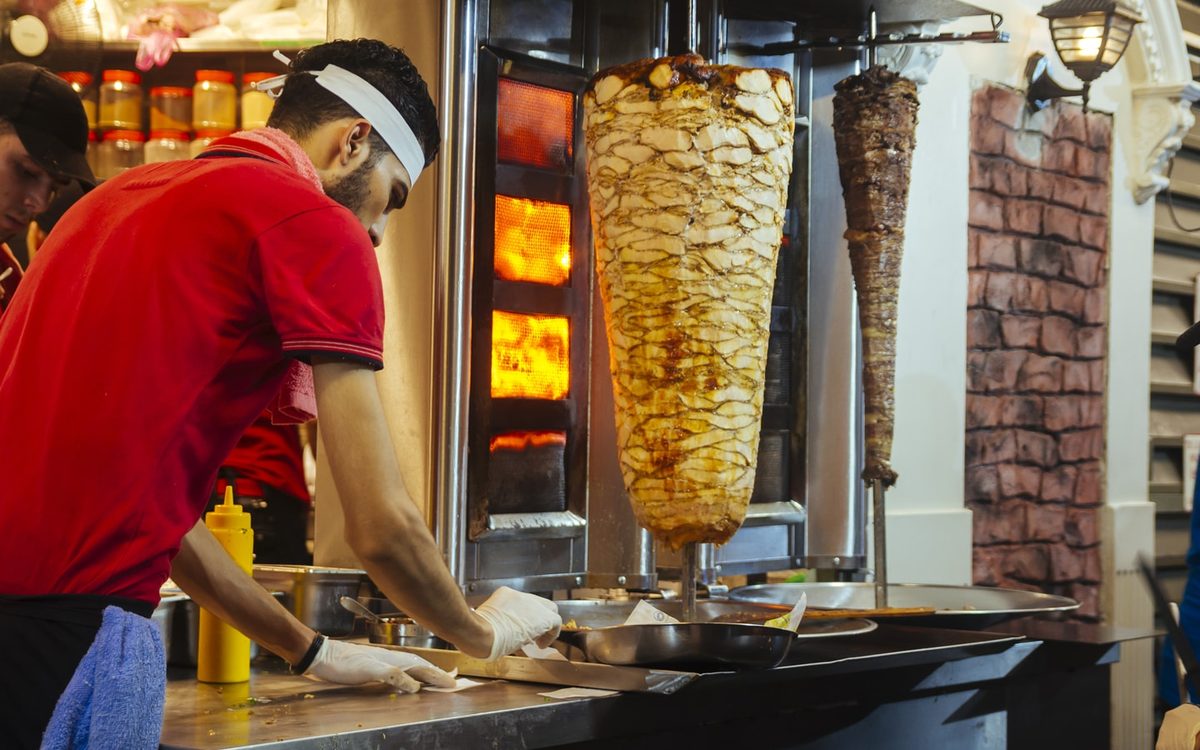
The budget traveller’s rule in Dubai: cafeteria beats food court. In Deira, Bur Dubai, Satwa and Karama, small cafeterias and South Asian, Filipino, Pakistani and Levantine restaurants serve full meals at prices aimed at the people who live and work nearby. Realistic numbers: a chicken shawarma for AED 7–10, a biryani or a thali-style set meal for AED 15–25, a fresh juice for AED 8–12, a filling falafel sandwich for under AED 10.
Budget AED 25 for lunch including a drink and you will eat well, not just adequately. Drink water through the day — a large bottle from a supermarket costs AED 1–2, versus several times that from a sightseeing-area kiosk, and free drinking water is available in many malls. Save the mall food courts for convenience days; today, the cafeteria is both cheaper and better.
Afternoon: A Free Beach and a Slow Down
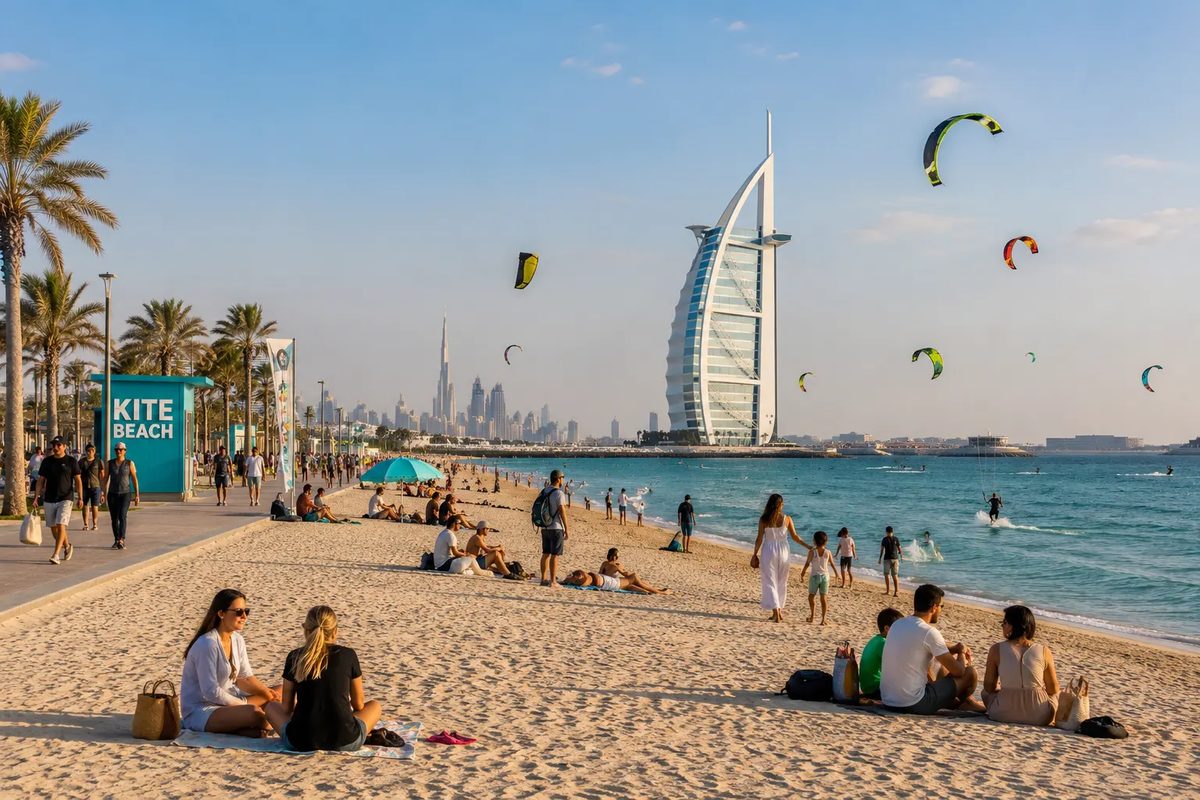
Ride the Metro and a short bus (or one modest taxi split between friends, if you are a group) to the Jumeirah coast. Dubai’s public beaches are free to enter: Kite Beach is the best all-rounder, with a clean stretch of sand, a view of Burj Al Arab, showers and food trucks if the budget stretches; JBR’s The Beach and the Jumeirah Public Beach are equally free alternatives depending on where you are staying. What costs money at the beach is only the extras — sunbeds, umbrellas and watersports — and the plan simply skips them: towel on the sand, swim, walk the track.
If the weather is against the beach (midday summer heat is a genuine reason, not a soft one), swap this block for the free alternative: the air-conditioned Dubai Mall, its waterfall wall and aquarium viewing from the public side, and the Souk Al Bahar bridge. Either way, the afternoon costs AED 0 beyond transport.
Evening: The Fountain Show and the AED 100 Tally
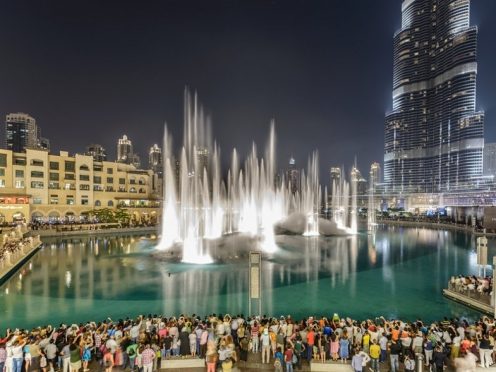
Finish where the city shows off for free. The Dubai Fountain performs every 30 minutes through the evening on the Burj Lake; watch from the waterfront promenade or the Souk Al Bahar bridge, both free. Dinner, if you still need it, is the day’s flex item: a cafeteria meal back near your hotel for AED 15–20 keeps the tally intact, while the fountain-view restaurants do not fit this budget and were never the point of it.
The sample day, added up
- Metro and bus fares (Silver Nol): AED 18
- Abra crossings ×2: AED 2
- Karak tea and water: AED 4
- Lunch (shawarma or set meal + juice): AED 25
- Afternoon beach: AED 0
- Light dinner near the hotel: AED 20
- Small museums and extras buffer: AED 10
- Total: AED 79 — leaving AED 21 of headroom for a coffee, a longer Metro day, or tomorrow
To see how a day like this scales up to a whole trip, read our Dubai trip cost breakdown. The lesson of the AED 100 day is not that Dubai is cheap — it is that Dubai’s prices are a choice, district by district, and travellers who mix the free headline sights with local-priced food spend a fraction of the brochure figure.
Frequently Asked Questions
Is AED 100 a day really enough in Dubai?
For sightseeing days, yes — with your hotel paid separately and breakfast included. Transport on a Silver Nol card, AED 1 abras, free beaches and the fountain, plus cafeteria meals, fit inside AED 100 with room to spare. Paid attractions are what break the budget, so ration them to one every day or two.
What is the cheapest way to get around Dubai?
The Metro and buses on a Silver Nol card (AED 3–7.50 per ride by zones) and the AED 1 abra across the Creek. Taxis are the budget-killer; use them rarely and for short hops only.
Which sights in Dubai are completely free?
The Dubai Fountain shows, public beaches such as Kite Beach and JBR, the Al Fahidi lanes and Al Seef promenade, the souks (to browse), the Dubai Mall waterfall and public aquarium viewing, and the Marina promenade, among others.
Where can I eat in Dubai for under AED 25?
The cafeteria districts: Deira, Bur Dubai, Satwa, Karama and Al Barsha’s local streets. Shawarmas, biryanis, thalis and falafel sandwiches at local cafeterias sit comfortably in the AED 7–25 range.
0 Comment