

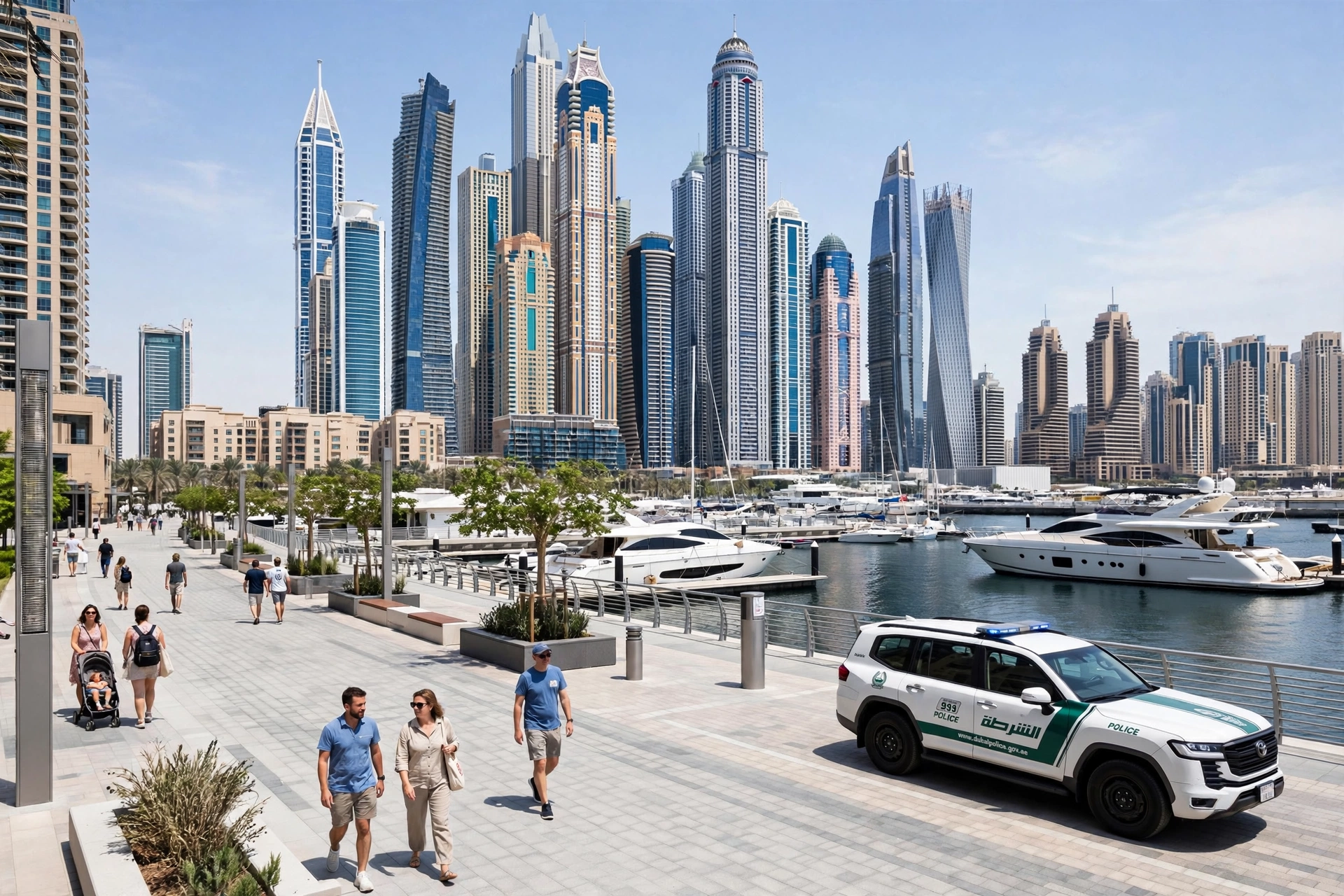

Is Dubai Safe for Tourists? Essential Safety Tips
Short answer: yes. Dubai is consistently ranked among the safest cities in the world for travelers, with very low rates of violent and street crime. Heavy police presence, strict laws, and severe penalties keep the city remarkably secure. But “safe” doesn’t mean “anything goes” — Dubai’s safety comes from its laws, and those laws apply to tourists just as strictly as residents. This guide covers the rules that actually catch visitors out, the scams to watch for, and the practical tips that keep your trip smooth.
How Safe Is Dubai, Really?
Petty crime like pickpocketing and bag-snatching is rare by global big-city standards, though it can happen in crowded spots like busy souks or packed metro cars — the usual big-city vigilance applies. Violent crime against tourists is extremely uncommon. Taxis are regulated and metered, public transport is clean and monitored, and emergency services respond quickly.
The main risks for tourists aren’t criminal — they’re legal and environmental. Unwittingly breaking a local law or underestimating the heat causes far more ruined holidays than theft does.
Laws Every Tourist Must Know
This is the section that matters most. UAE laws are strict, and “I didn’t know” is not a defense.
Alcohol: Licensed Venues Only
Alcohol is only legal in licensed bars, restaurants, clubs, and hotels. Drinking in public — on the street, at the beach, in parks — is illegal, as is being drunk and disorderly in public. Never drink and drive: the UAE has zero tolerance, and penalties are severe.
Drugs: Absolute Zero Tolerance
The UAE has some of the world’s toughest drug laws. Possession of even tiny amounts — including residue — can lead to imprisonment. This extends to certain prescription medications: some common medicines are controlled substances in the UAE, so check with the UAE embassy or your airline before traveling and carry prescriptions and a doctor’s letter for anything you bring.
Public Behavior and Affection
Public displays of affection beyond hand-holding are frowned upon and can attract police attention. Swearing, rude gestures, aggressive behavior, and public intoxication are all offenses. Keep conduct in public spaces respectful and low-key — this applies on the beach and in malls as much as anywhere.
Photography Rules
Dubai’s privacy laws are stricter than most visitors expect. Never photograph people — especially women and children — without their permission. Posting such photos online can lead to serious legal consequences. Also avoid photographing government buildings, military installations, airports, and some infrastructure. When in doubt, ask or put the camera away.
Dress Code
Dubai is more relaxed than its reputation suggests, but modest dress is expected in public areas: cover shoulders and knees in malls, souks, and cultural sites. Swimwear belongs at beaches and pools only. Nudity and topless sunbathing are illegal everywhere. See our full what to wear in Dubai as a tourist guide for details.
Online Conduct
The UAE’s cybercrime laws cover social media too. Posting insults, defamatory comments, or offensive content about people, organizations, or the country itself can have legal consequences — even for content posted before you arrived. Keep your feeds respectful while you’re here.
Common Scams and How to Avoid Them
Serious scams are uncommon, but tourists do encounter these:
- Unlicensed taxis and “helpful” drivers at the airport offering rides. Use official metered taxis, the metro, or booked transfers only.
- Overcharging in souks. Haggling is expected in traditional markets — the first price is never the final price. In malls, prices are fixed.
- Fake tour operators selling desert safaris or dhow cruises on the street or via messaging apps. Book through licensed, well-reviewed companies.
- Card and online fraud. Use secure payment methods, shield your PIN, and be cautious with unsolicited messages offering deals or prizes.
- “Free” gifts and timeshare pitches near tourist areas — the gift always comes with a high-pressure sales presentation attached.
Emergency Numbers in Dubai
Save these in your phone before you land. Operators speak English.
| Service | Number |
|---|---|
| Police | 999 |
| Ambulance | 998 |
| Fire / Civil Defence | 997 |
Use these only for genuine emergencies. For non-urgent police matters, Dubai Police also runs online and app-based services. It’s also wise to save your country’s embassy or consulate number — your hotel can help with that.
Is Dubai Safe for Women Traveling Alone?
Yes — Dubai is widely considered one of the safest cities in the world for solo female travelers. Harassment is rare and taken seriously by law. Practical comforts exist too: women-only sections on the metro, women-only taxis, and ladies’ nights at many venues.
That said, cultural awareness makes the experience smoother. Dressing modestly in public areas reduces unwanted attention, and it’s sensible to avoid isolated areas late at night — the same advice you’d follow in any major city. If anyone harasses you, report it: police take such complaints seriously.
Practical Safety Tips for Your Trip
- Respect the heat. Dubai’s climate is extreme for much of the year. Drink water constantly, wear sunscreen, and schedule outdoor sightseeing for mornings or evenings. Heat exhaustion sneaks up fast.
- Get travel insurance. Healthcare in Dubai is excellent but expensive without coverage. Make sure your policy covers medical emergencies.
- Carry ID copies. Keep a copy of your passport and visa on your phone and one in your hotel safe. You’re legally required to be able to identify yourself.
- Use official transport. Metered taxis, the metro, and ride-hailing apps are safe and affordable. Avoid unmarked cars offering rides.
- Secure your valuables. Use the hotel safe for passports and excess cash. Petty theft is rare, but don’t invite it.
- Jaywalking is illegal. Use designated crossings — fines apply, and Dubai’s wide roads are genuinely dangerous to cross casually.
- Desert activities need licensed operators. Dune bashing and quad biking should only be done with licensed companies that brief you and provide safety gear.
FAQs: Is Dubai Safe for Tourists?
Is Dubai safe for tourists at night?
Yes. Well-lit main areas, malls, the Marina, and Downtown stay lively and well-policed late into the night. Stick to populated areas and use official transport after dark, as you would anywhere.
What is the emergency number in Dubai?
Dial 999 for police, 998 for ambulance, and 997 for fire. Operators speak English and response times are fast.
Can tourists drink alcohol in Dubai?
Yes, in licensed venues such as hotel bars, restaurants, and clubs. Drinking in public places or being intoxicated in public is illegal.
Is Dubai safe for solo female travelers?
Yes — it’s considered one of the safest destinations for women traveling alone, with women-only metro sections and taxis available. Modest dress and standard awareness make the trip even more comfortable.
What should tourists avoid in Dubai?
Avoid drugs entirely (zero tolerance), public drinking, photographing strangers without permission, public displays of affection, rude gestures, and unlicensed taxis or tour operators.
Do I need travel insurance for Dubai?
It’s strongly recommended. Dubai’s healthcare is high quality but costly without insurance, and a good policy also covers trip disruptions and lost belongings.
For official guidance, check the UAE government portal (u.ae) and Visit Dubai before you travel. Also see our Dubai tourist visa guide and facts about Dubai to arrive fully prepared.
0 Comment