


Dubai Food Guide: What to Eat & Where to Find It
Dubai’s food scene is a study in contrasts. Gleaming malls house restaurants from every corner of the planet, yet the city’s oldest flavors come from Bedouin desert traditions — slow-cooked wheat and meat, fragrant spiced rice, and sweets soaked in date syrup. This guide walks you through the essential dishes, where the food cultures collide, and how to eat safely and confidently.
What Is Emirati Food?
Emirati cuisine grew out of desert and coastal life. Bedouin traditions favored ingredients that traveled well and kept without refrigeration: rice, wheat, dried limes, dates, camel and goat meat, and seafood from the Gulf. Persian, Indian, and Levantine traders left their mark too, which is why you’ll taste saffron, cardamom, turmeric, and dried lime (loomi) across the menu.
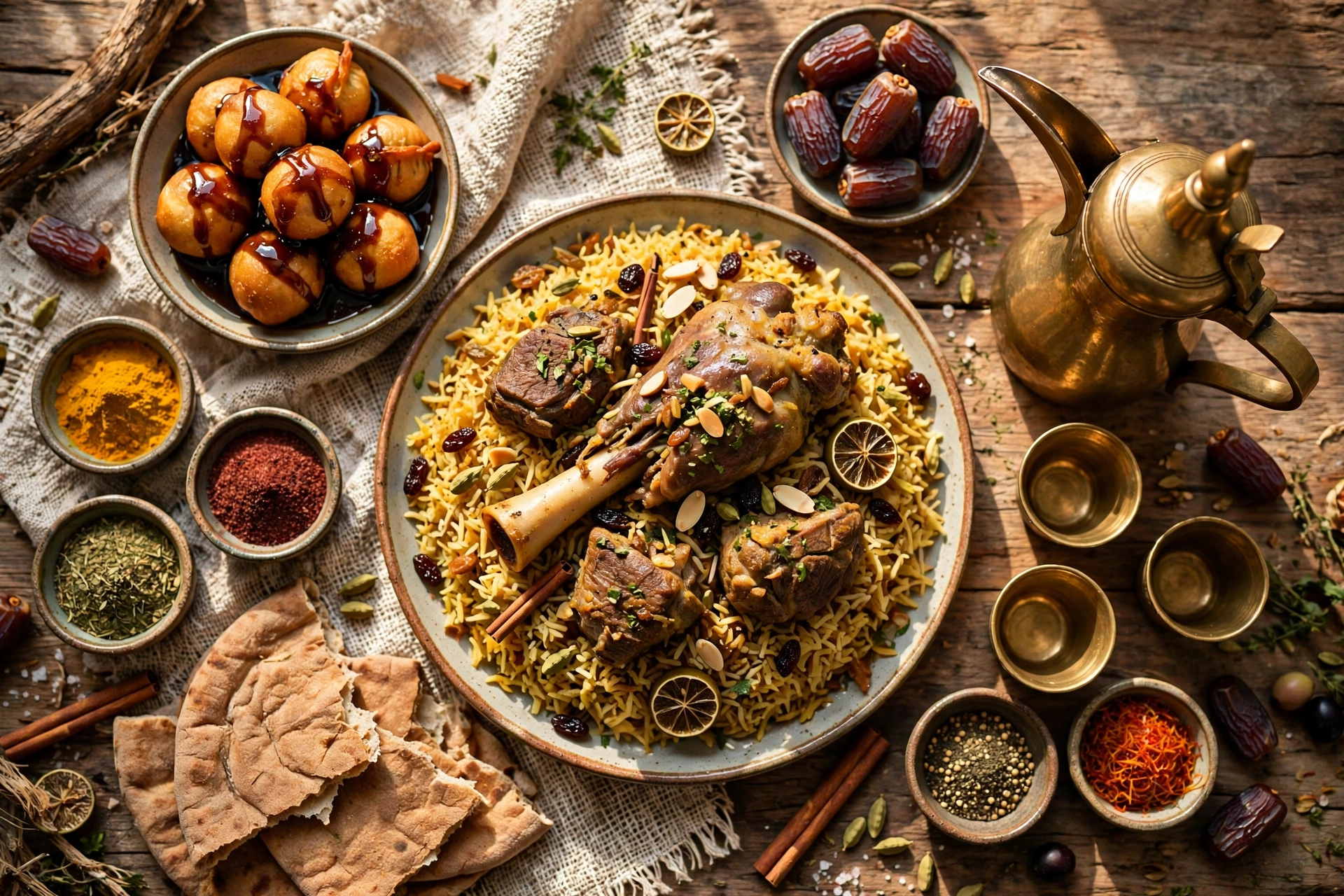
Meals are generous and communal. Being welcomed with qahwa — Arabic coffee brewed with cardamom, served in tiny handle-less finjan cups — alongside dates is the signature gesture of Emirati hospitality. Accept it whenever it’s offered.
Essential Emirati Dishes You Have to Try
Machboos — The National Dish
If you try one Emirati dish, make it machboos. Fragrant rice cooked with meat (chicken, lamb, or fish), dried lime, and a deep blend of spices. Think of it as biryani’s Emirati cousin — similar comfort, but the dried lime gives it a distinctive tangy, almost smoky edge. It’s served everywhere from humble cafeterias to upscale Emirati restaurants.
Harees — Slow-Cooked Comfort
Harees is simplicity perfected: cracked wheat and meat (usually chicken or lamb) simmered for hours until it melts into a smooth, porridge-like dish, finished with ghee. It’s a staple at weddings, family gatherings, and during Ramadan. Rich, warming, and deeply satisfying.
Luqaimat — Golden Date-Syrup Dumplings
These crisp-on-the-outside, fluffy-on-the-inside fried dough balls are drizzled with dibs (date syrup) and scattered with sesame seeds. You’ll find them at festivals, souks, and dessert counters across the city. Order them fresh and hot — they lose their magic as they cool.
Balaleet — The Sweet-Savory Surprise
Balaleet confuses first-timers in the best way: sweetened vermicelli noodles flavored with cardamom and saffron, topped with a thin savory omelet. Traditionally a breakfast dish, it’s the kind of sweet-savory combination that converts skeptics.
Khameer, Chabab, and Regag — Emirati Breads
Bread is the backbone of the Emirati table. Khameer is a soft, sesame-topped flatbread served with cheese or honey. Chabab is a spiced, slightly sweet pancake-like bread flavored with cardamom and saffron. Regag is paper-thin and crisp, often spread with cheese or egg. Try them at breakfast with qahwa.
Samboosa and Other Snacks
The Emirati samboosa — small, crisp, triangular pastries filled with spiced meat, cheese, or vegetables — is a fixture at gatherings and during Ramadan evenings. You’ll also spot aseeda (a sweet wheat-flour pudding) and umm ali (a rich bread-and-milk pudding with nuts) on dessert menus.
Camel Meat and Camel Milk
Camel has deep roots in Emirati food culture — slow-cooked in stews, grilled, or minced. Modern Dubai has given it a twist: camel burgers appear on contemporary menus, and camel-milk chocolate is a popular souvenir.
Shawarma, Falafel & Co.: Dubai’s Adopted Street Food
Here’s important local context: shawarma, falafel, hummus, and manakish are not Emirati dishes — they arrived with Levantine, Egyptian, and other Arab communities and became everyday Dubai staples. That doesn’t make them any less essential to the Dubai food experience. Some of the city’s most beloved meals cost just a few dirhams: a chicken shawarma wrapped to order at a Deira cafeteria, or falafel and foul (fava beans) for breakfast.
The rule of thumb: Emirati food tells you about heritage; the shawarma shops and cafeterias tell you about the Dubai of today. Eat both.
Where Food Cultures Meet: Deira and Karama
Skip the mall food courts and head to the old neighborhoods. Deira, on the north side of Dubai Creek, is the city’s historic trading quarter — its streets are lined with cafeterias serving Yemeni, Pakistani, Indian, and Filipino food alongside Emirati spots, all at local prices. The nearby spice souk is worth a visit for saffron, dried limes, and spice blends to take home.
Karama is another budget-food stronghold, famous for South Indian restaurants, Iranian kebab houses, and late-night cafeterias. Both neighborhoods reward wandering — follow the crowds.
For the heritage side of the city, pair your food exploration with a walk through old Dubai — our places to visit in Dubai guide covers the historic districts.
Street Food and Food Safety in Dubai
Dubai takes food hygiene seriously — restaurants and cafeterias are inspected and graded by the municipality, and tap water is desalinated and safe, though most people drink bottled or filtered water. A few practical rules:
- Eat where it’s busy. High turnover means fresh food, especially at cafeterias and shawarma stands.
- Watch the grading. Many outlets display their food-safety inspection results — it’s a reliable quality signal.
- Go easy on day one. Rich, unfamiliar food plus heat and jet lag can unsettle your stomach. Ease in.
- Carry water. Dubai’s climate is dehydrating; drink steadily through the day, especially when exploring on foot.
- Check the spice level. “Spicy” in a South Asian cafeteria means something different than in a hotel restaurant. Ask first.
How to Eat Like a Local
- Eat with your right hand when sharing communal dishes — the left hand is considered unclean.
- Accept qahwa and dates when offered; it’s hospitality, not a sales pitch. Shake the cup gently when you’ve had enough.
- Share. Emirati meals are communal — big platters in the center, everyone digging in. Don’t wait for your own plate.
- Dress appropriately for traditional restaurants. Modest clothing is the norm; check our what to wear in Dubai guide.
- Friday brunch is an institution. The weekend brunch scene is legendary — book ahead, arrive hungry.
FAQs: Dubai Traditional Food
What is the most famous traditional food in Dubai?
Machboos — spiced rice with meat and dried lime — is widely considered the national dish of the UAE. Harees and luqaimat are the other two must-tries.
Is Emirati food spicy?
It’s aromatic rather than fiery. Expect warm spices like cardamom, saffron, turmeric, cinnamon, and dried lime rather than chili heat. Dishes from South Asian cafeterias are the spicy ones.
Where can tourists try authentic Emirati food in Dubai?
Look for dedicated Emirati restaurants in heritage areas and malls, cultural dining experiences in the historic districts, and iftar tents during the holy month. Deira and Karama offer the most authentic budget options.
Is street food safe to eat in Dubai?
Generally yes. Dubai’s municipality inspects food outlets and many display hygiene grades. Eat at busy places with high turnover, and stick to freshly cooked items.
What do Emiratis eat for breakfast?
Balaleet (sweet vermicelli with omelet), khameer bread with cheese or honey, chabab pancakes, and foul (fava beans) — always with qahwa or karak chai.
What is qahwa?
Qahwa is traditional Arabic coffee, lightly roasted and brewed with cardamom (and sometimes saffron), served unsweetened in small finjan cups with dates. It’s the centerpiece of Emirati hospitality.
Planning the rest of your trip? Check how much a Dubai trip costs and the tourist visa guide before you fly.
0 Comment