

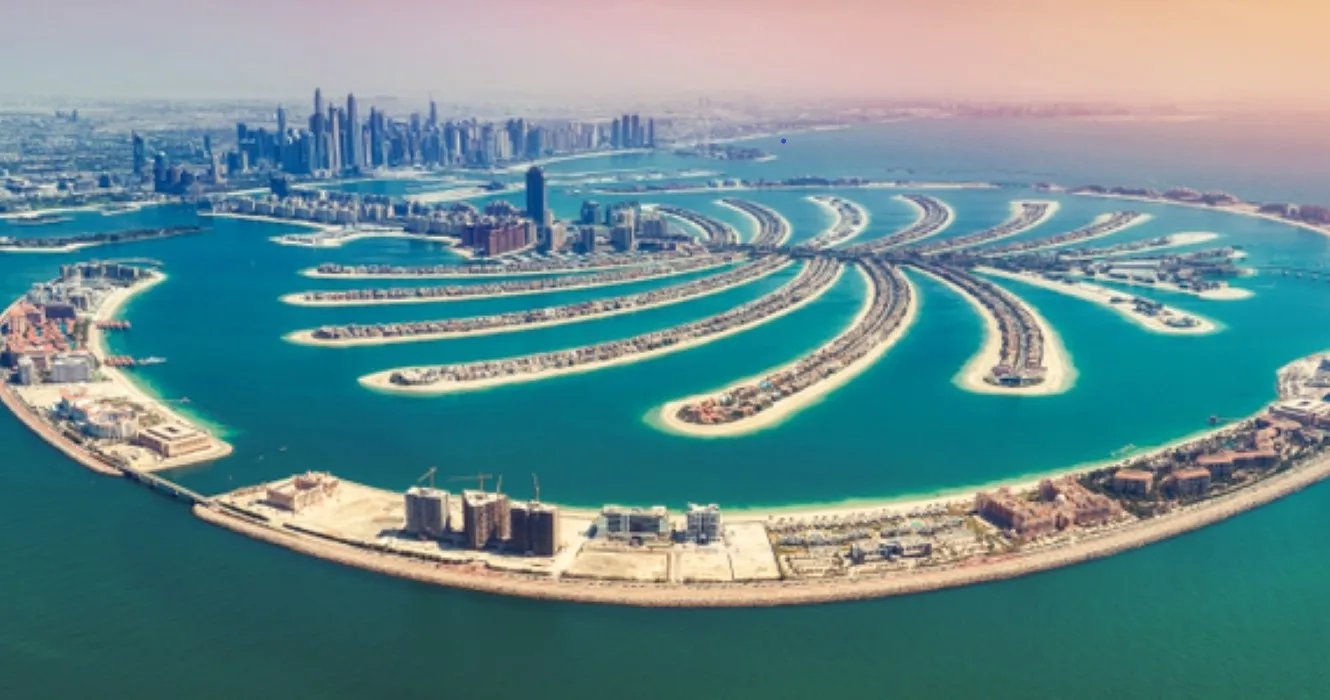

Palm Jumeirah is the island most Dubai visitors picture before they arrive: a palm tree traced onto the sea, fringed with private beaches and stacked with some of the best-known resort hotels on the planet. If you are planning a beachfront stay in Dubai, this is the shortlist that matters. Here are the five Palm Jumeirah beachfront hotels worth your money in 2026, plus honest advice on couples versus family stays, getting around, and booking at the right price.
Why Palm Jumeirah Is Dubai’s Best Beachfront Base
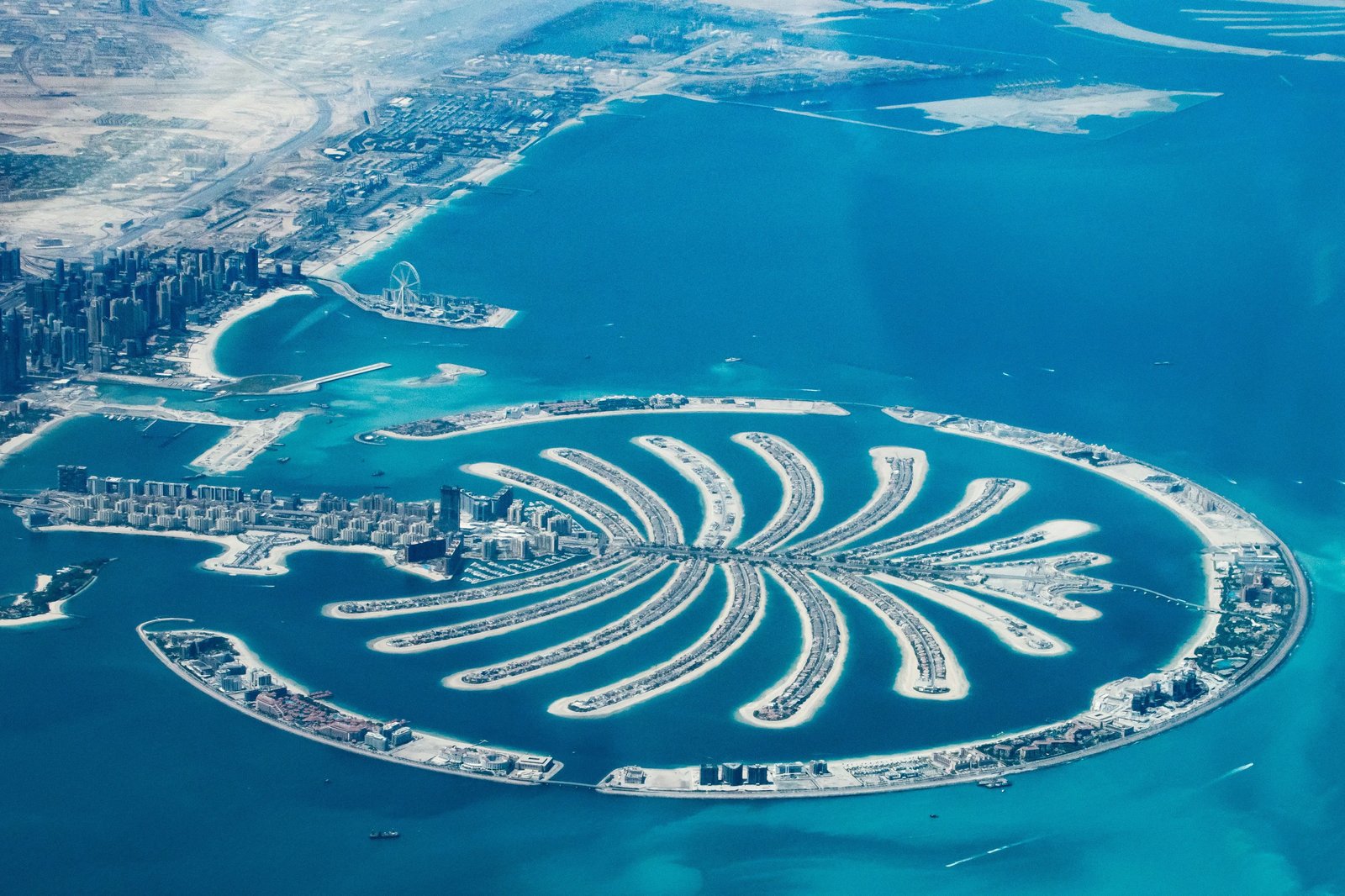
The first thing to understand is that the Palm is not one beach. The island has a trunk, sixteen fronds and an outer crescent, and the flagship hotels sit on the crescent, where the sand faces open water and the views stretch to the Dubai Marina skyline. Staying here puts you on a private beach — every hotel on this list has its own stretch of sand.
As a base, the Palm trades a little convenience for a lot of atmosphere. You are roughly 20–30 minutes by car from Dubai Marina, JBR and the Mall of the Emirates, and a bit further from Downtown and the airport. What you get in return is the classic Dubai resort experience: morning swims in calm, warm water, sunset views from a private lounger, and restaurants you do not need to leave the island for. If your trip centres on the beach plus a day at Atlantis Aquaventure, the Palm is hard to beat. See our roundup of things to do on Palm Jumeirah to fill the days between beach sessions.
The Mega-Resorts: Atlantis The Palm and Atlantis The Royal
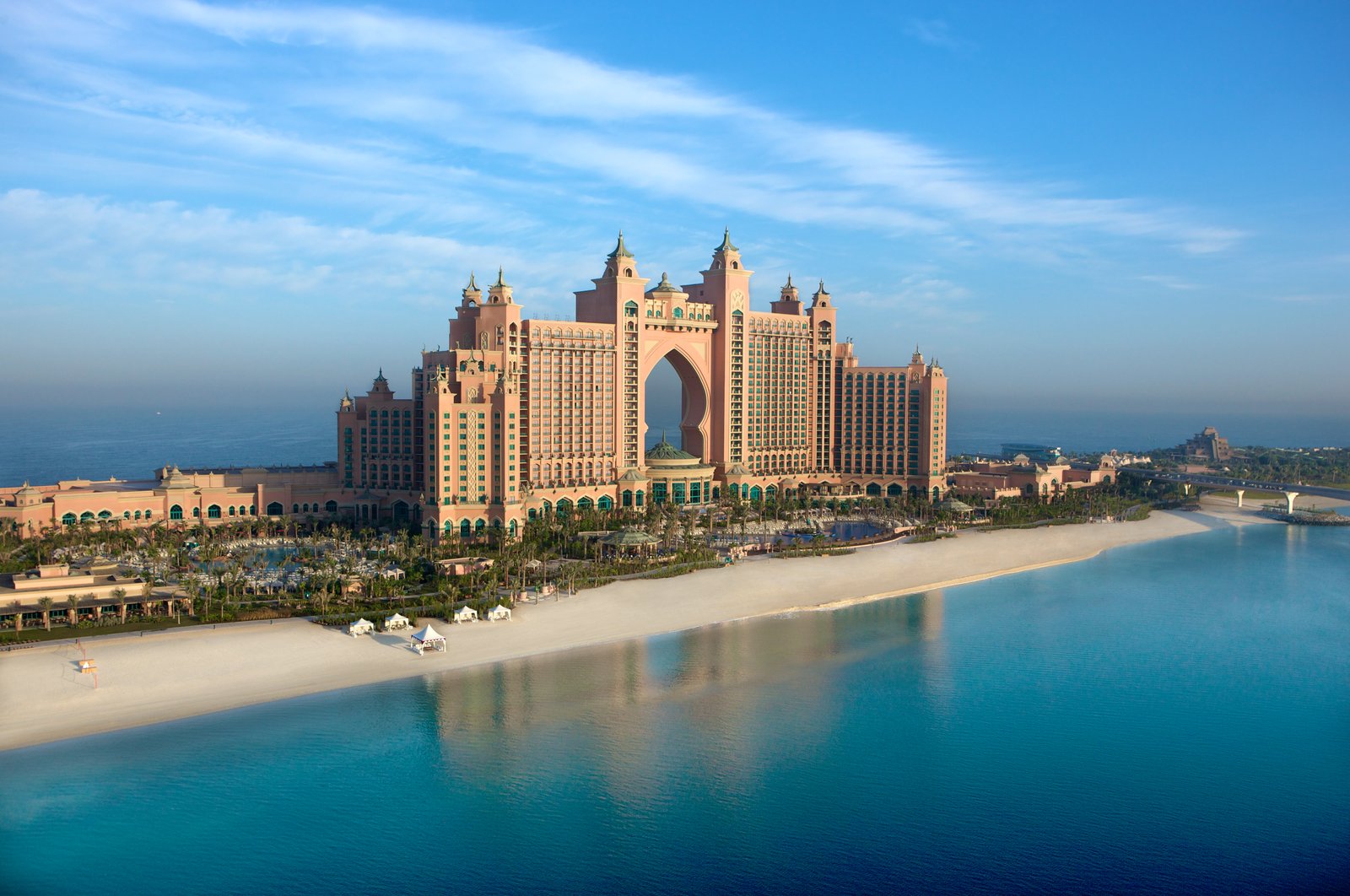
The two Atlantis resorts sit side by side at the apex of the crescent, and they are very different holidays. Pick the wrong one and you will feel it.
Atlantis The Palm
The original, opened in 2008, is the grand pink palace you have seen in every Dubai brochure. With around 1,540 rooms it is one of the largest resorts in the region, and it functions almost as a destination on its own: the Aquaventure waterpark, the Lost Chambers Aquarium, and a dining list that runs from Gordon Ramsay’s Bread Street Kitchen to Nobu and the underwater restaurant Ossiano. For families this is the default answer on the Palm — kids’ clubs, a vast pool scene and a waterpark on the doorstep mean you can easily spend four or five days without leaving. The trade-off is scale: peak-season lobbies are busy, and room rates swing hard with demand.
Atlantis The Royal
Opened in February 2023 next door, The Royal is the grown-up sibling: around 760 rooms in a stacked, fountain-fronted tower, with the Cloud 22 sky pool, Nobu by the Beach and a string of celebrity-chef restaurants. It is priced a clear tier above The Palm and aimed squarely at couples and luxury travellers who want the Atlantis name without the family-resort bustle. Guests get Aquaventure and aquarium access too, and the nightly fountain show outside the tower is worth seeing.
Luxury Beachfront Hotels Worth the Splurge
Beyond the two Atlantis giants, three hotels define the Palm’s luxury tier. All three sit on the crescent, all three have proper private beaches, and each has a distinct personality.
Jumeirah Zabeel Saray
On the west crescent, this is the most theatrical hotel on the island — an Ottoman-palace fantasy of domes, murals and hand-painted detail, run by Jumeirah. The headline is the Talise Ottoman Spa, one of the largest in the Middle East at around 8,000 square metres, with Turkish hammams, a snow room and dozens of treatment rooms. There is a 59-metre infinity pool, a private lagoon, and a kids’ club with a splash park, so it works for families too. Book direct through Jumeirah’s official site to compare seasonal offers.
Waldorf Astoria Dubai Palm Jumeirah
The east-crescent Waldorf is the refined choice: 317 rooms in a six-storey, low-rise layout that feels calmer than the tower resorts, with around 200 metres of private beach and two temperature-controlled pools (one for adults, one for families). Dining is a draw in itself — Social by Heinz Beck and Vietnamese restaurant LAO among six restaurants and lounges. A solid pick for couples who want five-star polish without the mega-resort energy.
Anantara The Palm Dubai Resort
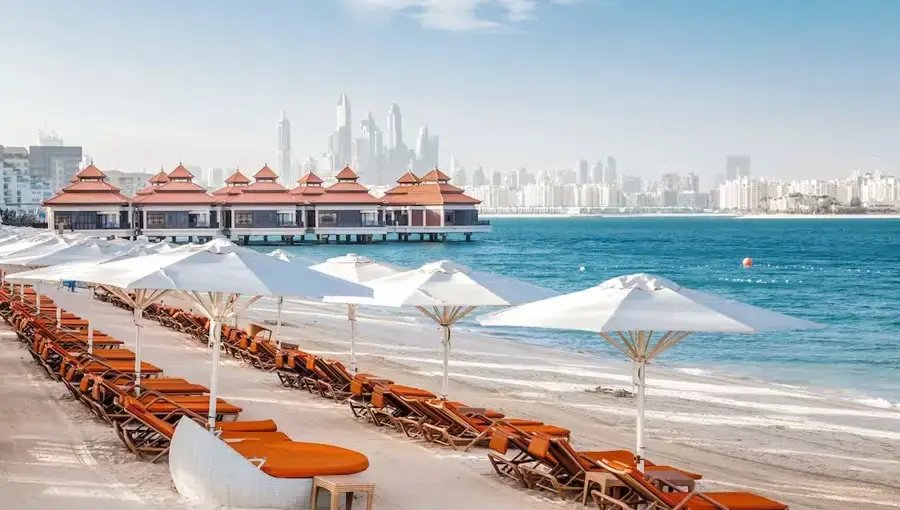
The Thai-inspired Anantara, also on the east crescent, is the most resort-like of the three: low-rise, lagoon-wrapped and spread across 293 rooms and villas with around 400 metres of private beach. Its calling card is the over-water villas — among the first of their kind in the UAE — plus pool villas for travellers who want their own plunge pool. It is genuinely good for both audiences: adults-only Lotus Lagoon rooms for couples, and free kids’ and teens’ clubs for families. Check current rates on Anantara’s official page.
Best Palm Jumeirah Hotels for Couples vs Families
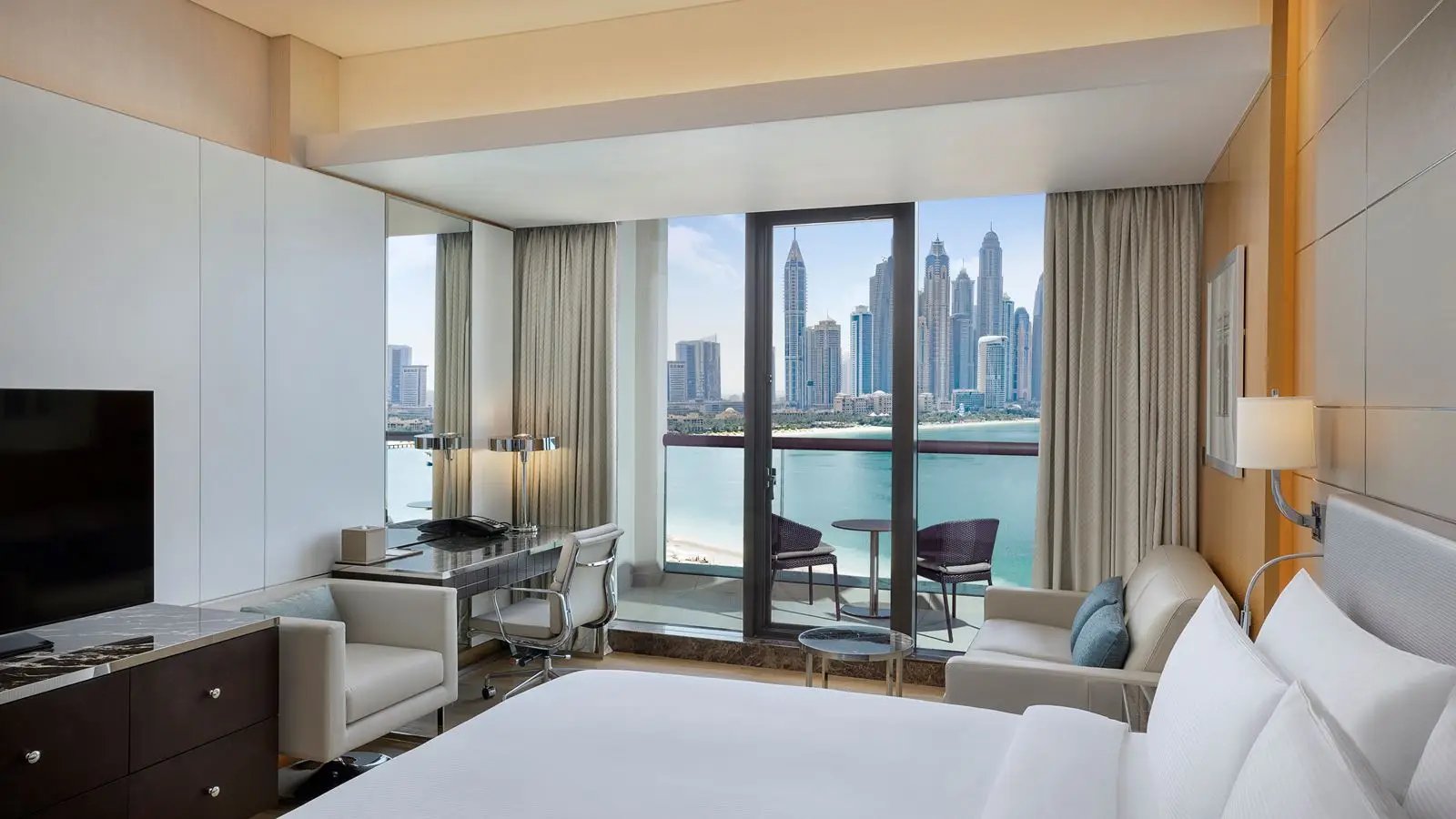
If you are choosing between these five, the couples-versus-families question usually settles it.
Best for couples: Atlantis The Royal leads for special occasions — sky pool, fine dining and an adults-focused atmosphere. The Waldorf Astoria is the quieter luxury alternative, while Anantara’s adults-only Lotus Lagoon rooms and Zabeel Saray’s hammam-heavy spa are built for two-person trips. At all three, ask for a sea-facing room; the Palm-facing rooms look inland and the price difference is usually worth paying.
Best for families: Atlantis The Palm is the obvious first choice — the waterpark, aquarium and sheer number of kid-friendly pools make it the easiest family week on the island. Anantara runs strong second with its kids’ and teens’ clubs, and Zabeel Saray’s splash-park kids’ club plus lagoon pools keep younger children happy. Book connecting rooms and family suites early — they sell out first during school holidays.
Getting Around Palm Jumeirah: Monorail, Tram and Taxis

The Palm Monorail runs 5.5 km along the trunk from Gateway station (at the island’s entrance) to Atlantis Aquaventure, stopping at Al Ittihad Park and Palm Jumeirah Mall on the way. Tickets can be bought online, and single trips start from around AED 10 — check the current fare and timetable on Visit Dubai’s monorail page before you ride.
In practice, most hotel guests move by taxi or Careem: the monorail does not reach the crescent hotels directly, so you will still need a car for dinners on the mainland. The Dubai Tram connects with the monorail at Gateway and runs down to Dubai Marina and JBR, which is useful if you want a night out off the island without a taxi queue. Read our Dubai taxi guide for fares and app tips. Nearly all five hotels also run complimentary shuttles to spots like the Mall of the Emirates and Dubai Mall — ask the concierge on arrival, since schedules change by season.
Booking Tips for Palm Jumeirah Hotels
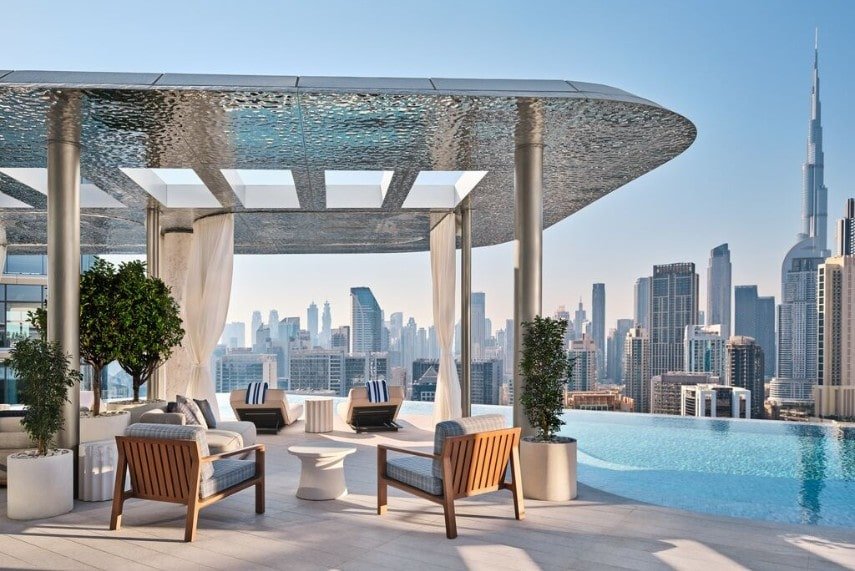
A few things worth knowing before you pay. First, timing: Dubai’s peak season runs roughly October to April, when beach weather is at its best and rates are highest. Summer (June to September) brings steep discounts — sometimes 40% or more off peak — but expect serious heat; the pools are cooled and the sea is bath-warm, so it still works if you plan around midday. Our best time to visit Dubai guide breaks this down in detail.
Second, room category matters more on the Palm than almost anywhere in Dubai. Sea-facing rooms cost more for a reason — the inland-facing alternatives can look at car parks or construction. Third, compare half-board rates: eating in-house is tempting but expensive, and a breakfast-included or half-board package can pay for itself quickly. Finally, book direct when you can — the hotels regularly run “stay 4, pay 3” style offers and flexible cancellation that third-party sites do not always match — and always confirm what beach and pool access your rate includes, since some entry-level rooms at the big resorts have restricted pool areas.
FAQs: Palm Jumeirah beachfront hotels
Which is better, Atlantis The Palm or Atlantis The Royal?
It depends on your trip. Atlantis The Palm is the family pick — bigger, livelier, with the waterpark and aquarium built for kids. Atlantis The Royal is newer, smaller and more expensive, aimed at couples and luxury travellers who want fine dining, the Cloud 22 sky pool and a calmer scene. Both sit on the same stretch of the crescent.
Can you walk between hotels on Palm Jumeirah?
Not really. The crescent is a long road built for cars, the hotels are set back behind private grounds, and the heat makes walking impractical most of the year. Use taxis, hotel shuttles or the monorail (for the trunk) instead.
Do Palm Jumeirah hotels have private beaches?
Yes — all five hotels in this guide have their own private beach with loungers, towels and food service. That is one of the main reasons to stay on the Palm rather than in Dubai Marina or Downtown, where beach access usually means a public beach or a shuttle.
Is Palm Jumeirah a good base for first-time visitors to Dubai?
It is excellent if your priority is a beach resort holiday with a few sightseeing days mixed in. If you plan to be out exploring the city every day, somewhere like Dubai Marina or Downtown puts you closer to the metro. Compare the options in our where to stay in Dubai guide.
0 Comment