

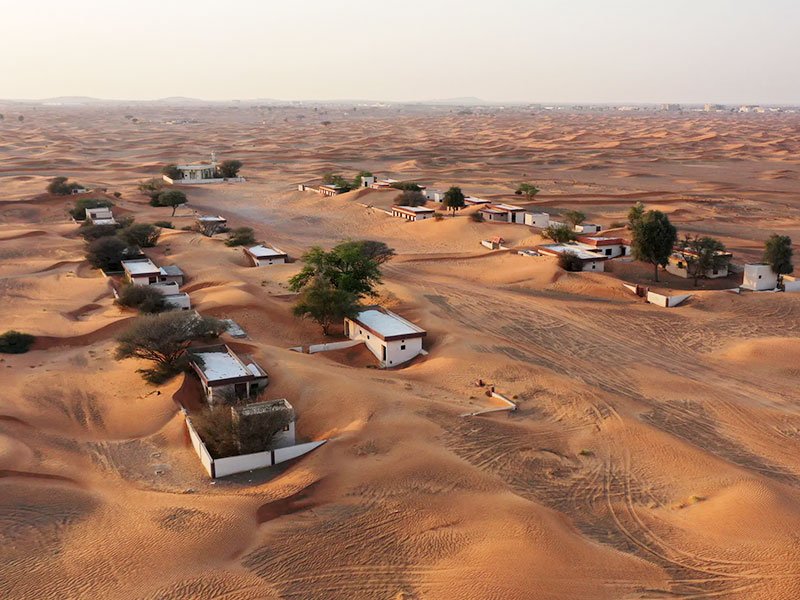

An hour from Dubai’s towers, a whole village is being swallowed by the desert. Al Madam’s buried village — two rows of houses and a mosque built in the 1970s and abandoned within about two decades — now stands with sand piled to the windowsills and dunes drifting through doorways. It is one of the strangest, quietest day trips in the UAE, and it costs nothing to visit.
This is a self-drive trip with no facilities at the end of it, so the guide below covers the practical side carefully: how to reach the village without getting stuck, what to combine it with on the Sharjah desert road, and how to stay respectful at a site that was once people’s homes. For a fuller desert day, pair it with our Mleiha day trip guide — the archaeology centre there is on the same road.
What Al Madam’s Buried Village Actually Is

The village was built in the early 1970s as a small public housing project for local families, including members of the Al Kutbi tribe, near the town of Al Madam in Sharjah emirate, close to the Dubai border. Families lived here for roughly twenty years before leaving — the standard explanations are the harsh conditions, drifting sand and the pull of newer housing with better services. Local storytelling adds another layer: tales of jinn are still repeated by visitors and some former residents, and tour guides lean into them. Treat the folklore as part of the place’s atmosphere rather than its history.
What remains is remarkably intact: houses with decorative tilework and painted walls still visible, a small mosque, and sand that behaves almost like water — level in some rooms to the ceiling beams, barely ankle-deep in others. There is no ticket office, no signage of consequence and no interpretation centre. That rawness is the appeal, and also why you should read the access notes below before setting out.
Getting There Without Getting Stuck
Drive time from Dubai is roughly 50–70 minutes depending on your starting point. The standard route is Emirates Road (E611) or the Dubai–Al Ain corridor towards Al Madam town, then local roads to the village, which sits just beyond the town’s edge (approximate coordinates 24.8946, 55.7637 are widely shared by visitors). The tarmac ends before the houses: the final approach is on sand tracks.
That last stretch is the one decision that matters. A 4×4 or high-clearance SUV handles it comfortably. A normal saloon car can reach the firmer parking area near the site in dry conditions if driven carefully, but soft patches catch out visitors every season — if the sand looks deep and trackless, park earlier and walk the last few minutes rather than testing it. There is no public transport to the village; organised ghost-town and desert tours from Dubai include it if you are not driving, often combined with dune activities. Mobile signal is patchy, so download the map area offline before leaving the highway.
What to See: The Houses, the Mosque and the Sand Lines
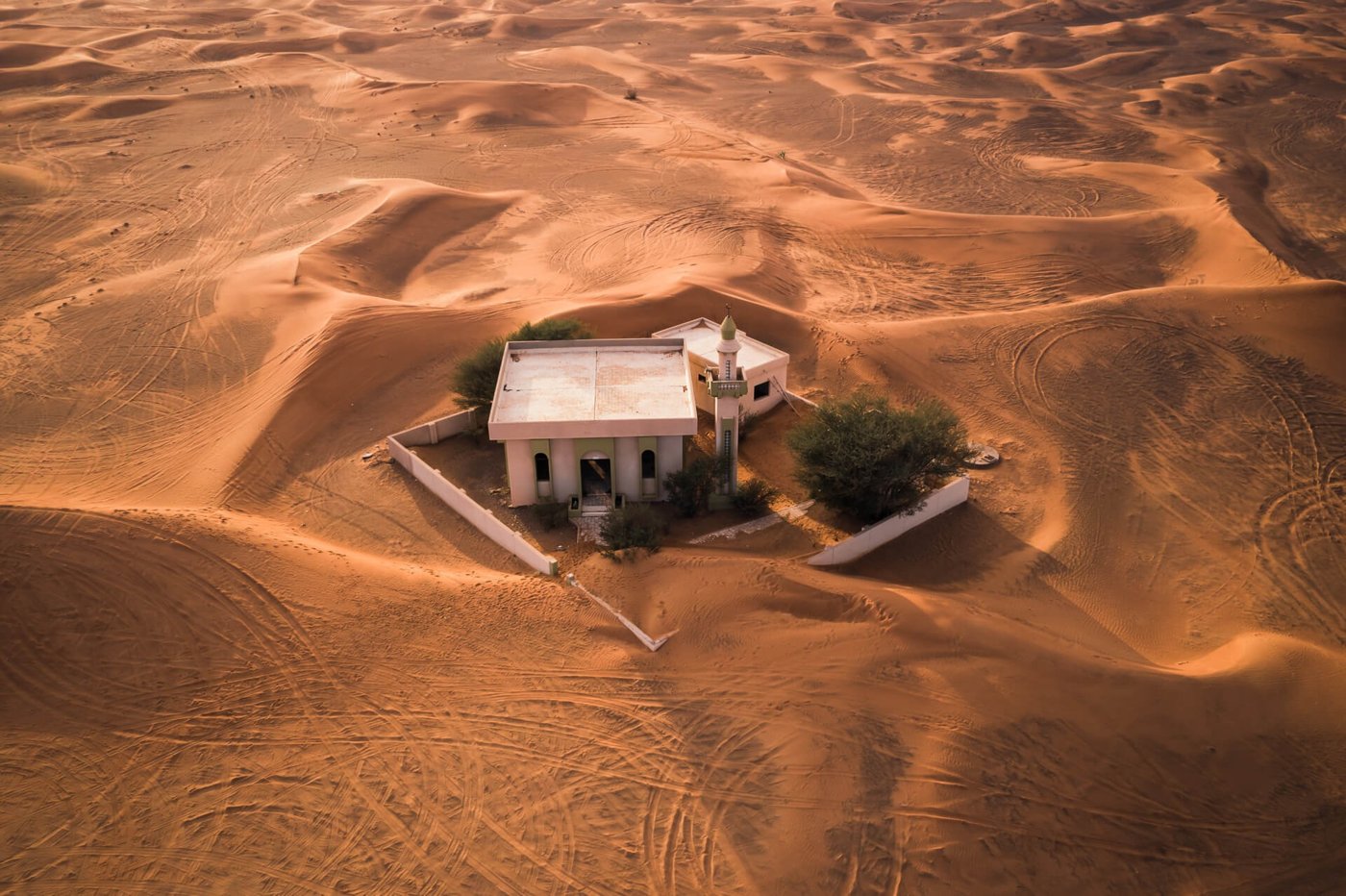
Give the village itself an hour to ninety minutes. Walk both streets slowly: the interest is in the details — tiled floors reappearing where wind has swept a room clean, carved doors, a school-sized building, and the mosque with its small minaret, which is the image most visitors come for. Photographers should aim for the first or last light of the day, when the low sun rakes across the facades and the sand inside the rooms glows; midday light flattens everything and the heat from October to April is manageable, but in summer this stop is only realistic at dawn.
Stay off fragile roofs and out of any room where the structure looks cracked or undercut by sand. Take nothing away, leave nothing behind, and keep the site as you found it — it survives precisely because visitors have mostly treated it gently.
Facilities: There Are None
No toilets, no shop, no shade structures, no water. Al Madam town, a few minutes back along the road, has fuel, groceries and cafeterias. Bring at least a litre of water per person even in winter, a hat, and a power bank — this is a site where a flat phone and a stuck car would compound quickly.
Combine It: Fossil Rock, Mleiha and the Sharjah Desert Road
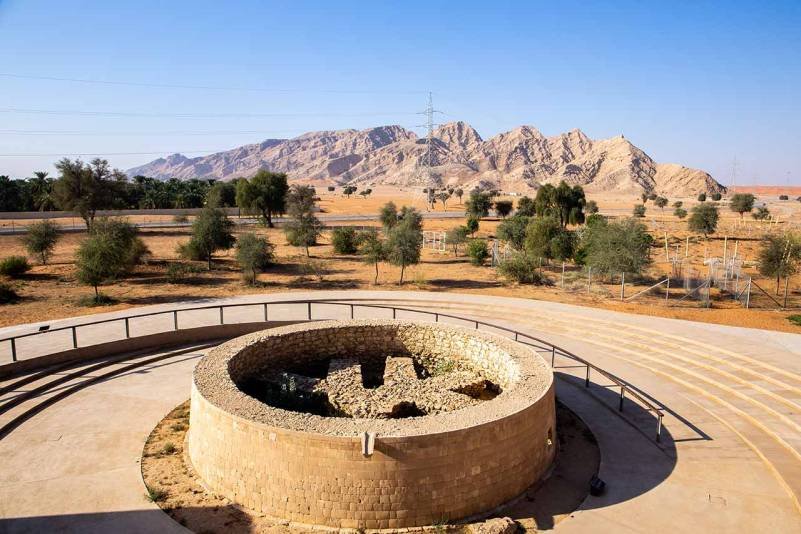
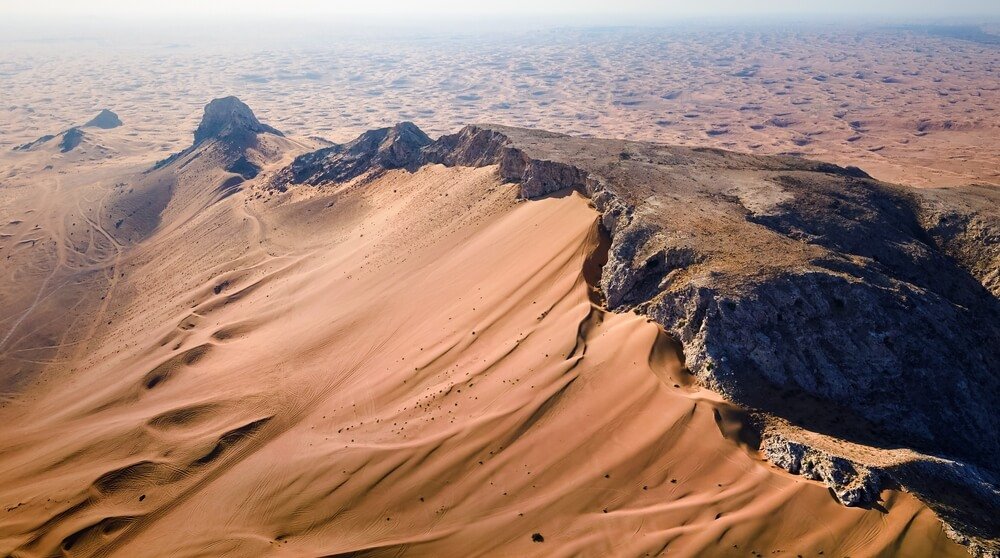
The Dubai–Sharjah desert road is dense with half-day stops, and Al Madam works best as the first of two or three. Fossil Rock, a distinctive rust-red outcrop rich in marine fossils from when this was seabed, sits further along the same general corridor and pairs naturally with the Mleiha Archaeological Centre, which has a museum, guided walks and a cafe — the facilities Al Madam lacks. Our Mleiha guide details the centre’s tours and the nearby tomb sites.
A clean itinerary: leave Dubai by 8am, Al Madam by 9am while the light is good, Mleiha centre and lunch by late morning, Fossil Rock viewpoint mid-afternoon, and back in Dubai before dark. If you would rather someone else drives the sand, the combined ghost-village plus desert-safari tours sold by operators such as Civitatis package the village with dune driving and sandboarding.
Best Time to Go and How Long You Need

October to March is the comfortable window, with November to February ideal. In those months a morning visit is pleasant and an afternoon visit ending an hour before sunset gives the best photographs of the whole trip — just time the drive back so the sandy stretch is done in daylight. From May to September, go at sunrise only, and shorten the stop.
As a standalone trip, allow four hours door to door from Dubai including the village itself. Combined with Mleiha, it becomes a relaxed full day. Weekdays are quietest; on winter weekends you will share the site with a handful of other cars and the occasional tour group, which slightly changes the mood but not the experience.
Staying Safe and Respectful in an Abandoned Place

Al Madam is a real place with real former residents, close to a living town whose people you may meet at the site. Dress modestly, keep noise down, and do not treat the mosque as a photo prop — photograph it from outside and do not climb on it. If a caretaker or security guard is present near the entrance, a greeting and a quick word about your visit is both polite and normal.
On the driving side: tell someone your plan, keep fuel above half, and if you do get stuck, stay with the vehicle and call for help rather than walking into the desert. First-time desert drivers should read up before attempting sand — our Dubai safety tips cover the general ground rules, and the Visit Sharjah site lists the emirate’s official attractions along the same route if you want to extend the day.
Frequently Asked Questions
Is Al Madam ghost village free to visit?
Yes. There is no entry fee, ticket or booking — it is an open, abandoned site. Organised tours charge for transport and guiding, but independent visitors pay nothing.
Can I reach Al Madam in a normal car?
Most of the way, yes, but the final approach is sand. A 4×4 is strongly recommended; in a saloon car, park on firm ground near the site and walk the last stretch rather than risk getting stuck.
How far is Al Madam from Dubai?
About 60 km — roughly 50 to 70 minutes by car depending on where in Dubai you start and on traffic leaving the city.
Why was Al Madam abandoned?
The village was 1970s public housing left behind as families moved to newer homes with better services, while drifting sand made upkeep harder. Stories about jinn are popular folklore around the site, not a documented cause.
What should I bring to Al Madam?
Water, a hat, sunscreen, a charged phone with offline maps, and fuel in the tank. There are no facilities at the village; the nearest shops and toilets are in Al Madam town.
0 Comment