

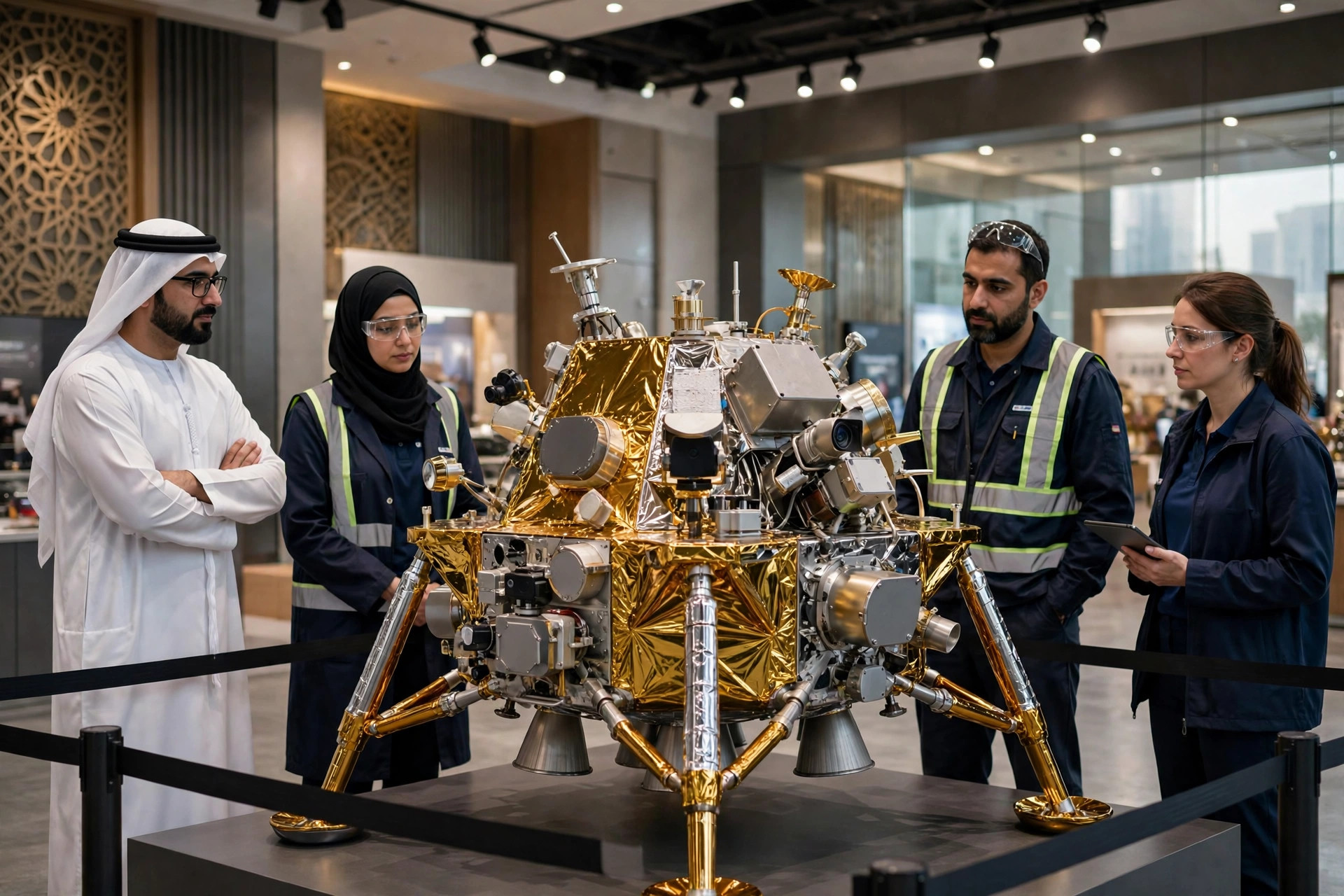

The UAE has unveiled the probe for the Emirates Mission to the Asteroid Belt, its second interplanetary mission. Developed, assembled and tested in the UAE, the probe reached flight readiness in less than two years. Sheikh Hamdan bin Mohammed bin Rashid Al Maktoum, Crown Prince of Dubai and Chairman of the Supreme Space Council, witnessed the unveiling, according to the WAM report carried by The Gulf Time.
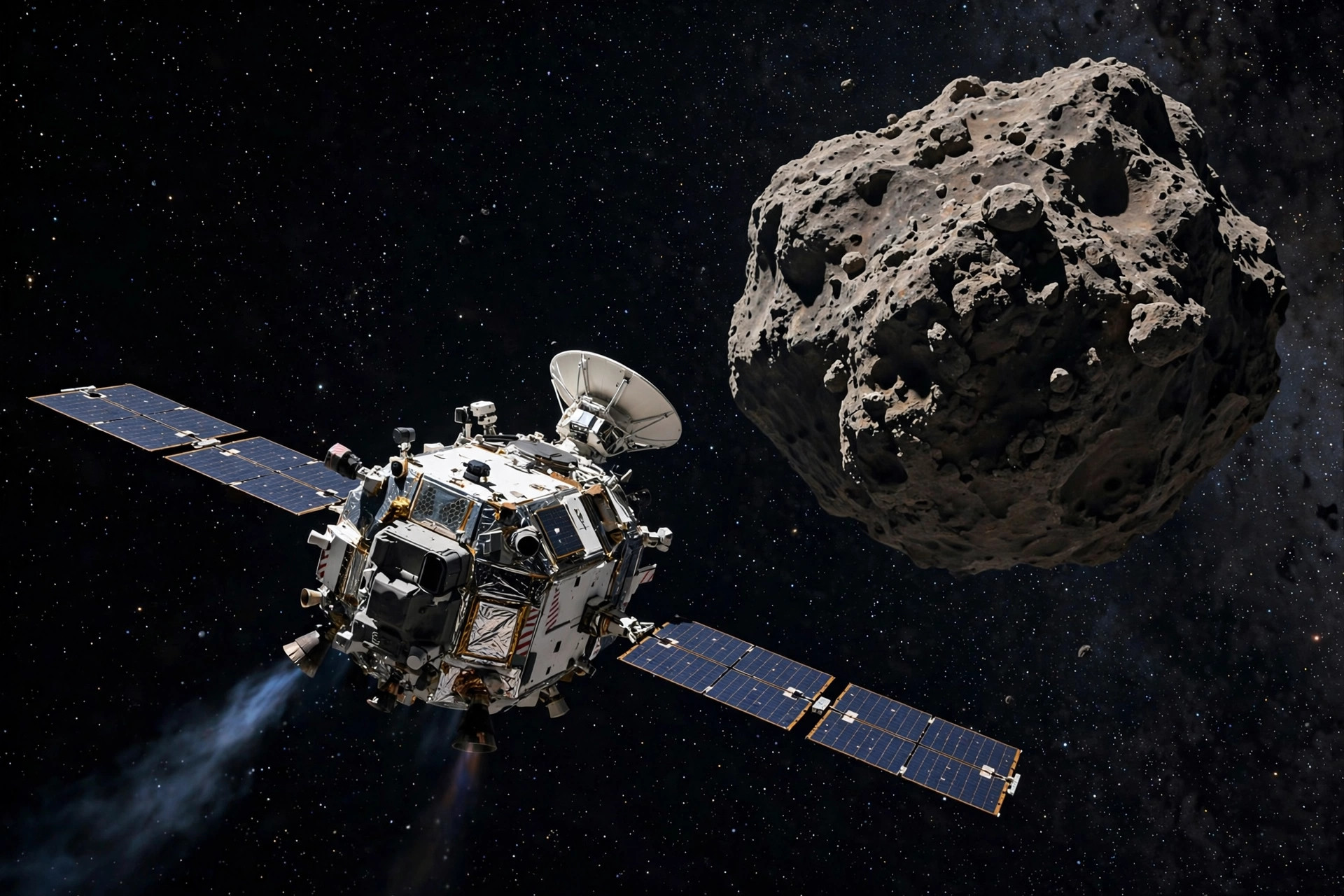
The probe will ride aboard the MBR Explorer spacecraft on a journey of about 5 billion kilometres. Launch is planned for the first quarter of 2028, with gravity-assist manoeuvres around Venus, Earth and Mars carrying the spacecraft to the main asteroid belt between Mars and Jupiter, as summarised by Virgin Radio Dubai.
A 5-billion-kilometre route to seven asteroids
- Launch: first quarter of 2028 aboard MBR Explorer
- First asteroid encounter: expected February 2030
- Seven asteroids studied during flybys
- Final phase in 2034: the lander separates and touches down on 269 Justitia
Scientists believe Justitia may have formed in the outer solar system before migrating inward. Studying its surface, organic materials and signs of water could show how water and the building blocks of life were distributed early in the solar system’s history.
Built by a national team of more than 150 specialists
The project brings together the UAE Space Agency, the Technology Innovation Institute (TII), HEX20, Khalifa University and the National Space Science and Technology Center at UAE University. Sheikh Hamdan noted the UAE’s space sector is now valued at more than AED 44 billion, with an aim to double the space economy’s returns by 2031 and rank among the world’s top 10 space economies.
Since the Space Agency was established in 2014, the UAE has launched satellites, put the Hope Probe into orbit around Mars and sent Emirati astronauts to the International Space Station. For space-minded visitors, Dubai’s Museum of the Future is the natural first stop, alongside our wider list of places to visit in Dubai.

What happens next for the mission
The probe is flight-ready and will now be integrated with MBR Explorer ahead of the 2028 launch window. The mission runs for years, not months, so expect milestone coverage at each flyby. If you are timing a trip, our best time to visit Dubai guide and Dubai trip cost breakdown will help you plan around the winter season.
FAQs
What is the Emirates Mission to the Asteroid Belt?
It is the UAE’s second interplanetary mission. The MBR Explorer spacecraft will travel about 5 billion km, study seven asteroids, and deploy a lander onto 269 Justitia.
When will the asteroid mission launch?
Launch is planned for the first quarter of 2028. The first asteroid encounter is expected in February 2030, with the Justitia landing in the mission’s final phase in 2034.
Who built the probe?
The probe was developed, assembled and tested in the UAE by a national team of more than 150 engineers and scientists, working with the UAE Space Agency, TII, HEX20, Khalifa University and UAE University.
Why study asteroid 269 Justitia?
Scientists think Justitia formed in the outer solar system and migrated to the belt. Its surface, organics and possible water traces may explain how water and life’s building blocks spread early on.
0 Comment