
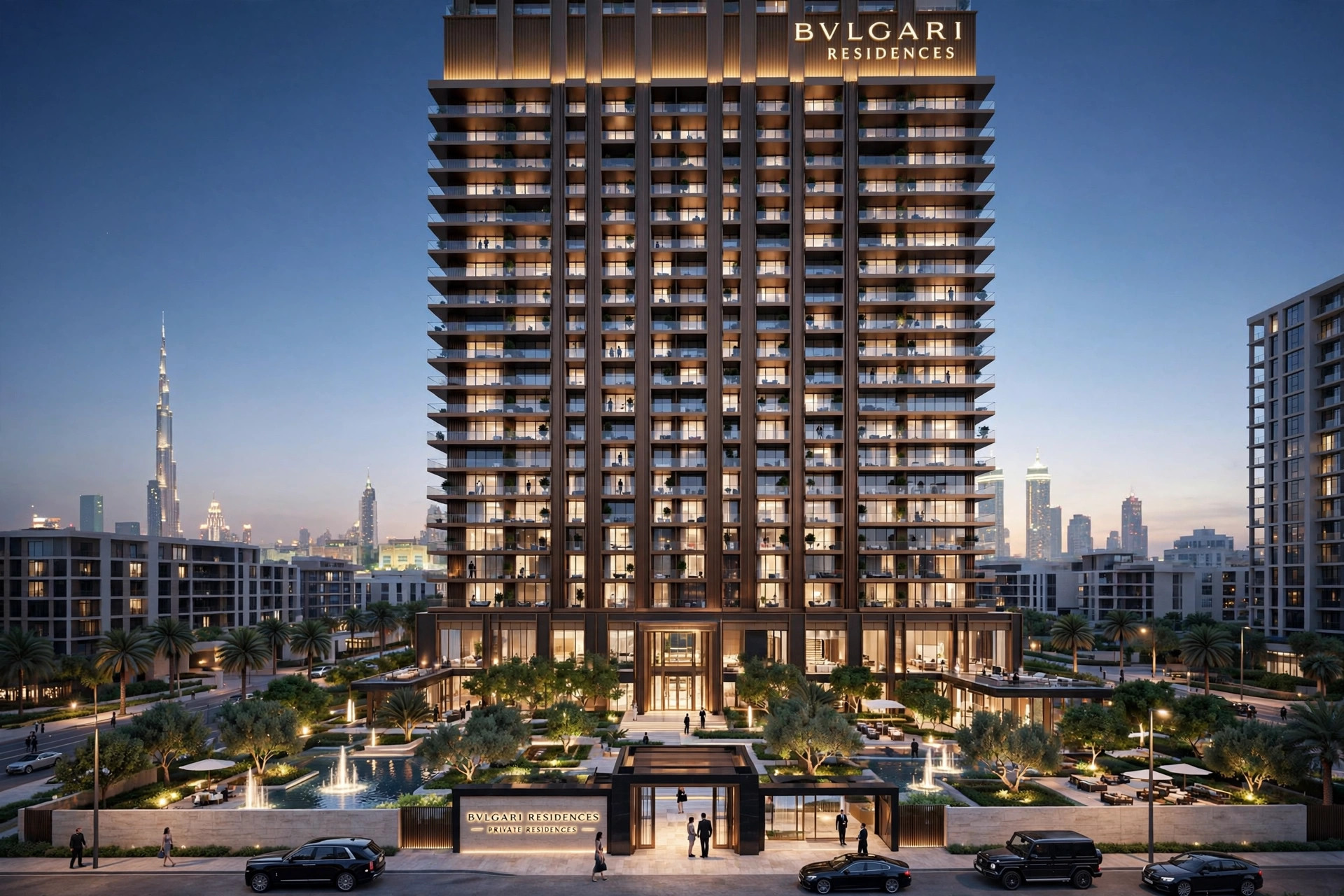

Dubai has held its crown as the world’s leading market for branded residences, with 175 live and pipeline schemes — more than any other city on the planet, according to Knight Frank’s Residence Report 2026/27. For a city already synonymous with luxury living, the numbers confirm it has no real rival in this niche.
A sector that has nearly tripled in a decade
Globally, Knight Frank has verified nearly 1,800 live and pipeline branded residence schemes from more than 200 brands across 90 countries. The sector has grown at a remarkable pace: from just 354 schemes in 2015 to 903 at the end of 2025. It is expected to cross 1,000 developments during 2026 and could potentially reach 1,800 schemes and more than 300,000 units by 2031.
Branded residences — private homes carrying the name of a luxury hotel, fashion house, car maker or lifestyle brand — were once a curiosity. In Dubai they have become a defining feature of the skyline, from hotel-brand towers on the Palm to fashion-house apartments in the city centre.
The Middle East is the sector’s biggest growth engine
The Middle East accounts for 20% of all branded residence projects and about 25–29% of the global pipeline, making it the sector’s biggest growth engine. The US still retains the largest concentration of operational stock, but the momentum has clearly shifted east.
Within the region, Abu Dhabi and Ras Al Khaimah are capturing a rising share of future activity, suggesting the boom is spreading beyond Dubai’s borders. For travellers, this means the next wave of luxury hotel stays in Dubai — and across the Emirates — will increasingly be attached to branded residential towers.
The new look of branded living
Two notable shifts stand out in the Knight Frank findings. First, more than half of new schemes are now being developed outside major cities, a share projected to reach 57% by 2028 — the concept is moving to resorts, islands and quieter locations.
Second, non-hotel brands are muscling in. Fashion houses, automotive names and lifestyle brands are expected to account for nearly 40% of supply by 2028, up from about 30% in 2025. If you are choosing where to stay in Dubai for the first time, you may well find your options wearing a designer label.
What it means for visitors
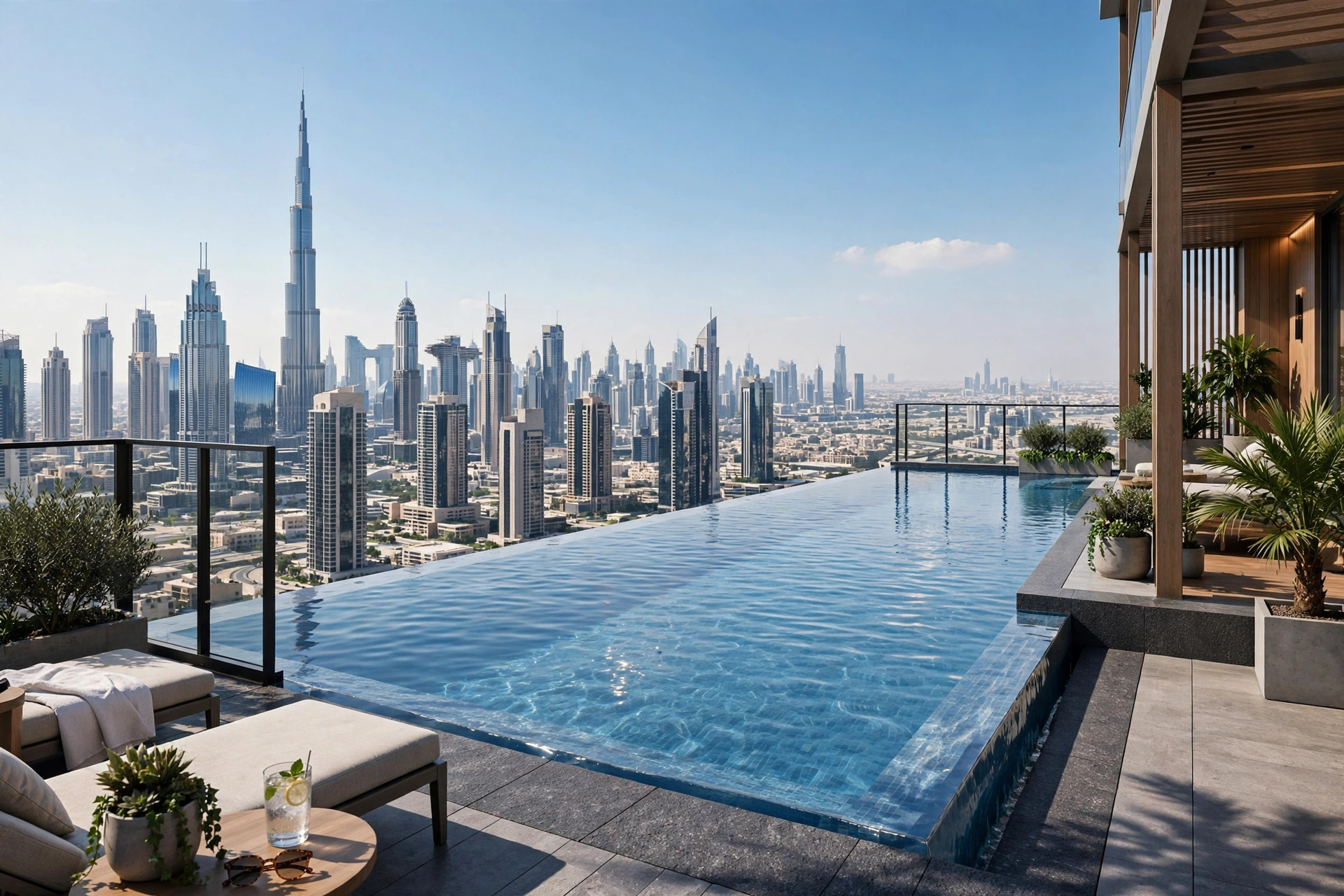
Branded residences matter to tourists as well as buyers. Many schemes include serviced apartments and hotel-style operations, expanding the range of upscale places to stay. Dubai’s dominance in this space is one reason the city keeps appearing on every list of the top places to visit in Dubai for luxury travellers.
Luxury in Dubai comes at a price, of course — see our Dubai trip cost guide to budget realistically. The report was covered by Knight Frank’s newsroom and Consultancy-ME.
FAQs
What is a branded residence?
A branded residence is a private home developed in partnership with a luxury brand — most commonly a hotel group, but increasingly fashion houses, automotive brands and lifestyle companies. Residents get brand-associated design, amenities and services.
Which city has the most branded residences?
Dubai, with 175 live and pipeline schemes, making it the world’s leading city market for branded residences according to Knight Frank’s Residence Report 2026/27.
How big is the global branded residences sector?
Knight Frank has verified nearly 1,800 live and pipeline schemes from more than 200 brands across 90 countries. The sector grew from 354 schemes in 2015 to 903 at the end of 2025 and is expected to cross 1,000 developments during 2026.
Which region is driving growth?
The Middle East is the sector’s biggest growth engine, accounting for 20% of all projects and about 25–29% of the global pipeline. Abu Dhabi and Ras Al Khaimah are capturing a rising share of future activity.
Are non-hotel brands entering the market?
Yes. Non-hotel brands — fashion houses, automotive names and lifestyle brands — are expected to account for nearly 40% of supply by 2028, up from about 30% in 2025.
0 Comment