


Sorting out your entry requirements is the first real step of planning a Dubai trip, and the good news is the system is far simpler than most travelers expect. The United Arab Emirates offers a range of tourist visas — from free visa-on-arrival stamps to 30-day and 60-day pre-arranged visas — and most applications are decided within days, not weeks.
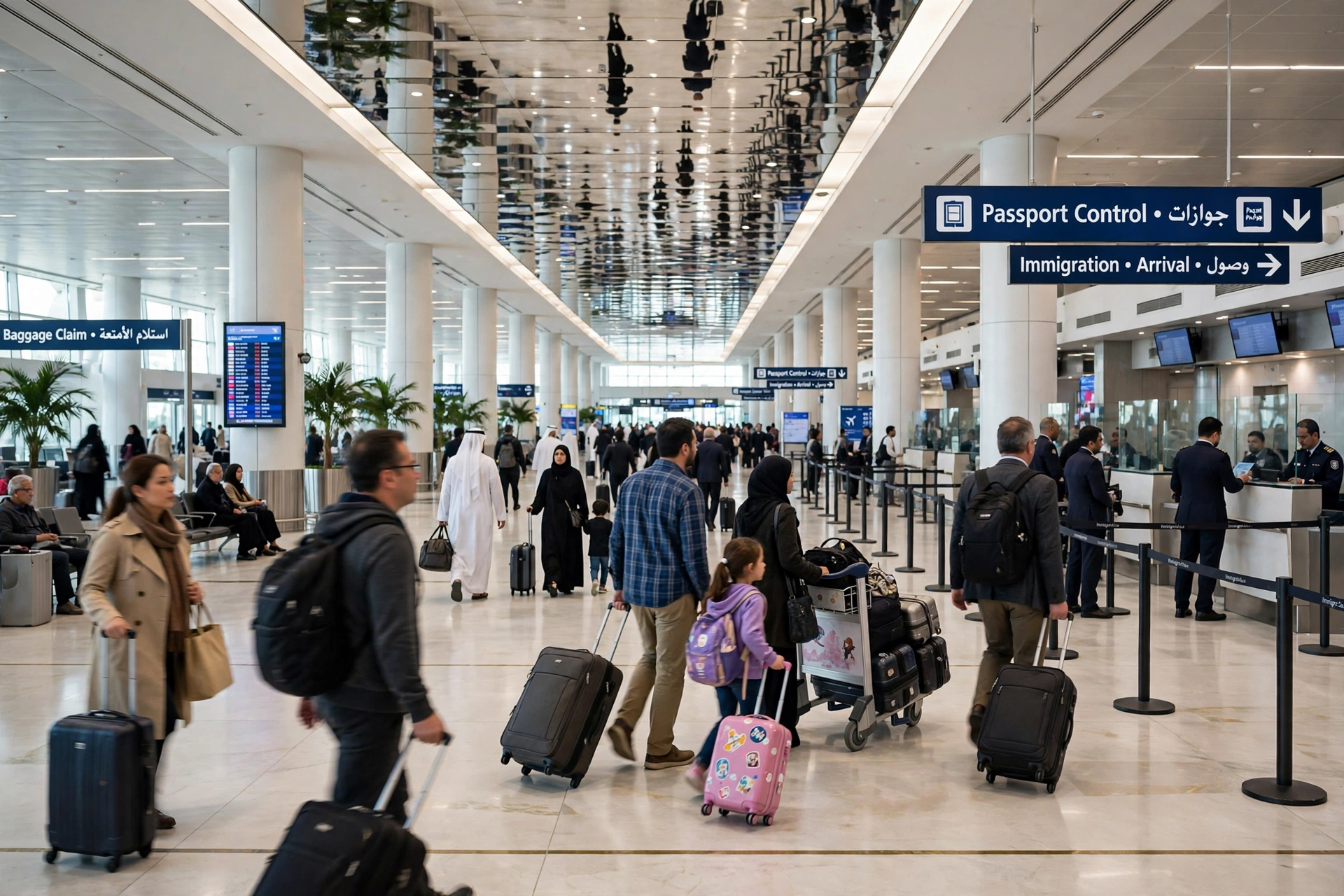
Below: the visa types available, what each costs, where to apply, and the documents you’ll need. Fees are shown as typical ranges — the final price depends on your application channel.
Do You Even Need a Dubai Tourist Visa?
Possibly not. Citizens of many countries — including the United States, United Kingdom, and most EU member states — receive a free visa on arrival at Dubai airports. The immigration officer stamps your passport, and you walk through. No application, no fee, no prior paperwork.
The eligible-nationalities list does change from time to time, so the only reliable move is to check the official UAE government portal before you book flights: u.ae keeps the current list under its visa services pages. It’s worth sorting early — visa timing can shape your travel dates, as our best time to visit Dubai guide explains.
Dubai Tourist Visa Types and Fees in 2026
There are three main tourist visa options for Dubai, plus a transit visa for short layovers. Government base fees for the standard 30-day and 60-day single-entry visas are roughly AED 230 and AED 340 respectively, including VAT — but most travelers apply through an airline, hotel, or agency, where service and insurance charges push the total higher.
| Visa Type | Stay Allowed | Entry | Typical Total Fee (approx.) | Best For |
|---|---|---|---|---|
| Visa on arrival | 30 days | Single | Free | Eligible nationalities |
| Tourist 30-day | 30 days | Single | AED 400–600 | Short holidays |
| Tourist 30-day multiple entry | 30 days per entry | Multiple | AED 900–1,200 | Regional hopping (Oman, Qatar side trips) |
| Tourist 60-day | 60 days | Single | AED 650–900 | Longer stays, family visits |
| Tourist 60-day multiple entry | 60 days per entry | Multiple | AED 1,100–1,500 | Extended multi-country travel |
| 5-year multiple-entry | Up to 90 days per visit | Multiple | ~AED 2,500–3,000 | Frequent visitors (no local sponsor needed) |
| Transit 48/96-hour | 48 or 96 hours | Single | AED 100–250 | Long layovers at DXB |
The 5-year multiple-entry tourist visa suits regular visitors. It allows up to 90 days per visit (capped at 180 days per year), needs no local sponsor, and typically requires a bank balance of at least USD 4,000 over the previous six months, valid UAE health insurance, and a return ticket.
How to Apply for a Dubai Tourist Visa
A Dubai tourist visa must be sponsored — you can’t apply as a lone individual directly. In practice, that just means you apply through one of these channels:
- Your airline. Emirates and flydubai (and Etihad for Abu Dhabi entry) offer visa services to passengers with a confirmed booking. This is the smoothest route for most travelers.
- Your hotel. Many Dubai hotels arrange visas for guests with confirmed reservations, sometimes bundled into the booking.
- A licensed travel agency or tour operator. Dubai-based agencies process visas daily; useful if you booked flights and hotels separately.
- Official digital portals. GDRFA Dubai’s website and smart app (gdrfad.gov.ae) handle applications made through accredited tourism establishments, with processing typically completed within 48 hours of a complete submission.
The process itself is straightforward: choose your visa type, fill in the application with passport details exactly as printed, upload your documents, and pay the fee online. The approved e-visa arrives by email as a PDF — save it to your phone and print a copy as backup.
Apply at least a week before departure. Airlines may ask to see your visa before boarding, and immigration officers can request your return ticket and accommodation details on arrival. Our Dubai International Airport guide walks through what to expect at passport control and after landing.
Documents You’ll Need
You’ll typically need:
- Passport valid for at least six months beyond your travel dates, with a clear scan of the photo page
- A recent passport-style photograph with a white background
- Confirmed return or onward flight booking
- Hotel reservation or your host’s accommodation details
- Travel or health insurance valid in the UAE (often bundled by the agency)
- Proof of funds if requested — typically bank statements covering the last three to six months
Make sure your name and passport number match exactly across every document. Mismatches are the single most common reason applications get held up.
Processing Time and Visa Validity
Standard processing runs 24–72 hours once a complete application is submitted, with express options (often same-day) available at a premium. GDRFA Dubai lists roughly 48 hours for applications through its digital services.
Two validity details catch people out. First, the entry permit is usually valid for 60 days from the date of issue — your window to enter the country. Second, your allowed stay (30 or 60 days) counts from the date you land, not the date of issue. If the permit expires before you travel, you’ll need to apply again.
Overstay Fines and Extensions
This is the section to read twice. The UAE standardized overstay penalties in February 2026: the fine is now a flat AED 50 per day, and there is no grace period for tourist visas. Fines start accruing the day after your visa expires — a 10-day overstay costs AED 500, a 30-day overstay AED 1,500, with no cap.
If you want to stay longer, extend before your visa expires. Most tourist visas can be extended from inside the UAE without leaving the country, typically for 30 days at a time. The base government fee is around AED 600 plus VAT, with in-country processing bringing the total to roughly AED 1,150 — dramatically cheaper than overstaying, and an overstay record can complicate future applications.
Dubai Tourist Visa FAQs
How much does a Dubai tourist visa cost in 2026?
The government base fee is about AED 230 for a 30-day visa and AED 340 for a 60-day visa, but most travelers pay more through an airline, hotel, or agency. Typical all-in costs run AED 400–600 for 30 days and AED 650–900 for 60 days, including service and insurance charges.
Which nationalities get a Dubai visa on arrival?
Citizens of the US, UK, EU countries, and many others receive a free 30-day visa on arrival. The list changes periodically, so confirm your eligibility on the official UAE portal u.ae before booking.
How long does it take to get a Dubai visa?
Standard processing takes 24–72 hours after a complete application is submitted; GDRFA Dubai quotes around 48 hours through its digital services. Express processing can be same-day. Apply at least a week before travel to be safe.
Can I extend my Dubai tourist visa without leaving the UAE?
Yes. Most tourist visas can be extended from inside the country, usually for 30 days per extension, applied for before the current visa expires. The base fee is around AED 600 plus VAT, with in-country charges on top.
What happens if I overstay my Dubai visa?
You face a flat fine of AED 50 per day with no grace period, starting the day after expiry. Pay fines through the GDRFA or ICP portals before departing to avoid issues at the airport — and check the expiry date on your visa rather than guessing.
Do I need travel insurance for a Dubai visa?
Valid health or travel insurance covering the UAE is commonly required, especially for the 5-year multiple-entry visa. Many agencies bundle it into their fee; check before buying a separate policy.
Once your visa is approved, the fun part starts: deciding when to go and what to pack. Check our guides to the best time to visit Dubai and what to wear in Dubai as a tourist to round out your planning.
0 Comment