

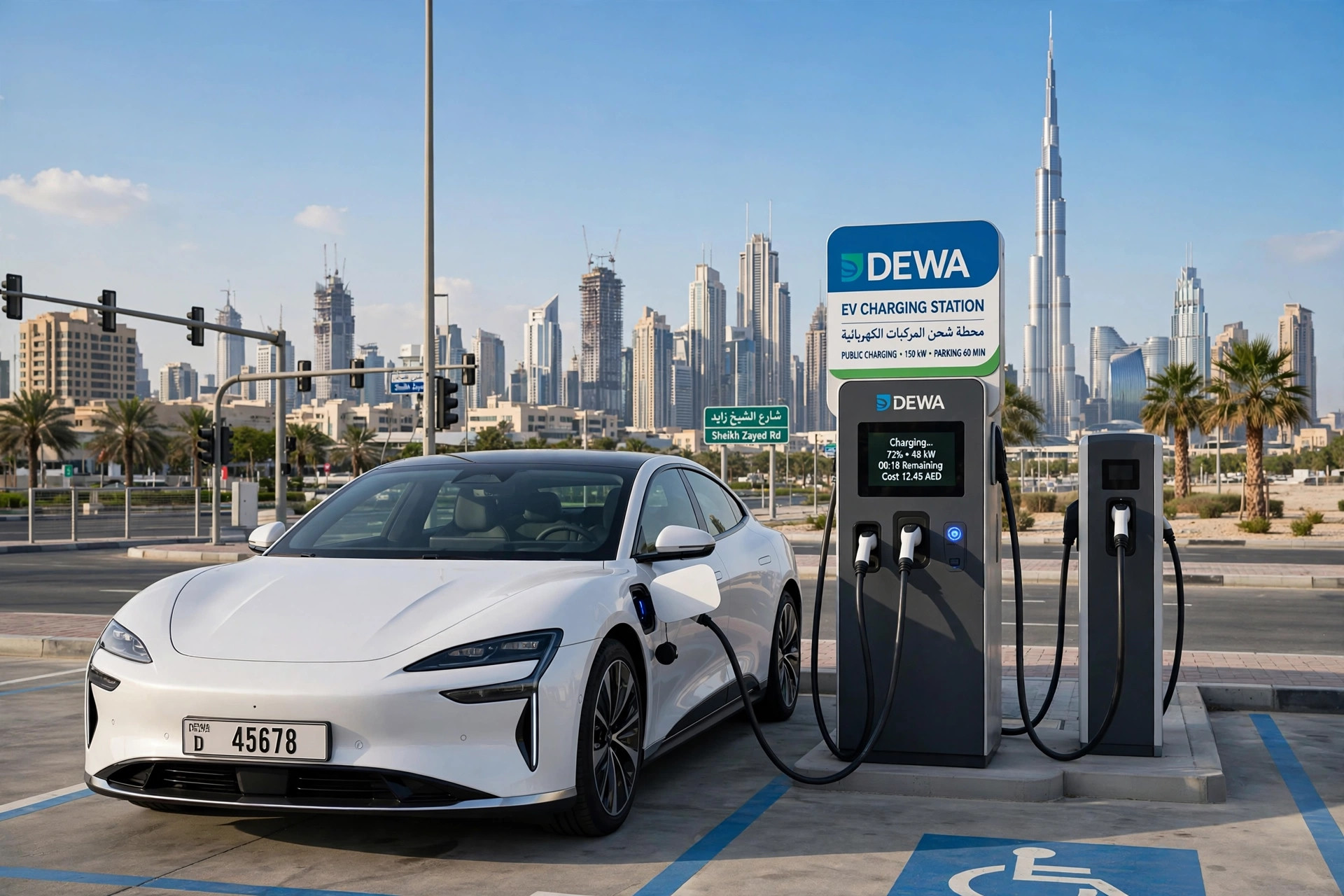

The UAE has been named the most electric-mobility-ready market in the Gulf, taking 22nd place worldwide in Arthur D. Little’s Global Electric Mobility Readiness Index (GEMRIX) 2026 with a score of 53 points. It is the strongest showing in the region for a country that is betting heavily on an electric future.
How the UAE scored in GEMRIX 2026
The index assesses 31 markets across five dimensions: macroeconomic factors, the EV market and competition, customer readiness, public charging infrastructure, and total cost of ownership and regulation. A score of 100 indicates broad parity between EVs and petrol cars.
China topped the global table with 106, followed by Norway at 103 — the only two markets to score above 100. Singapore (96) and the Netherlands (90) rounded out the top four. The UAE’s score of 53 puts it well ahead of its GCC peers, though still some way off the most mature EV markets in the world.
EVs now account for around 9% of new UAE vehicle sales
The report notes that electric vehicles accounted for around 9% of new vehicle sales in the UAE in 2025, with battery electric vehicles making up roughly 6–8% and plug-in hybrids about 2.5%. That is a notable share for a region where petrol has long been cheap, and it suggests driver attitudes are shifting.
For visitors, the change is already visible on the roads: renting or hailing an EV in Dubai is increasingly easy, and running costs for travellers choosing electric options are among the cheapest ways to get around Dubai.
Charging network reaches around 2,800 points
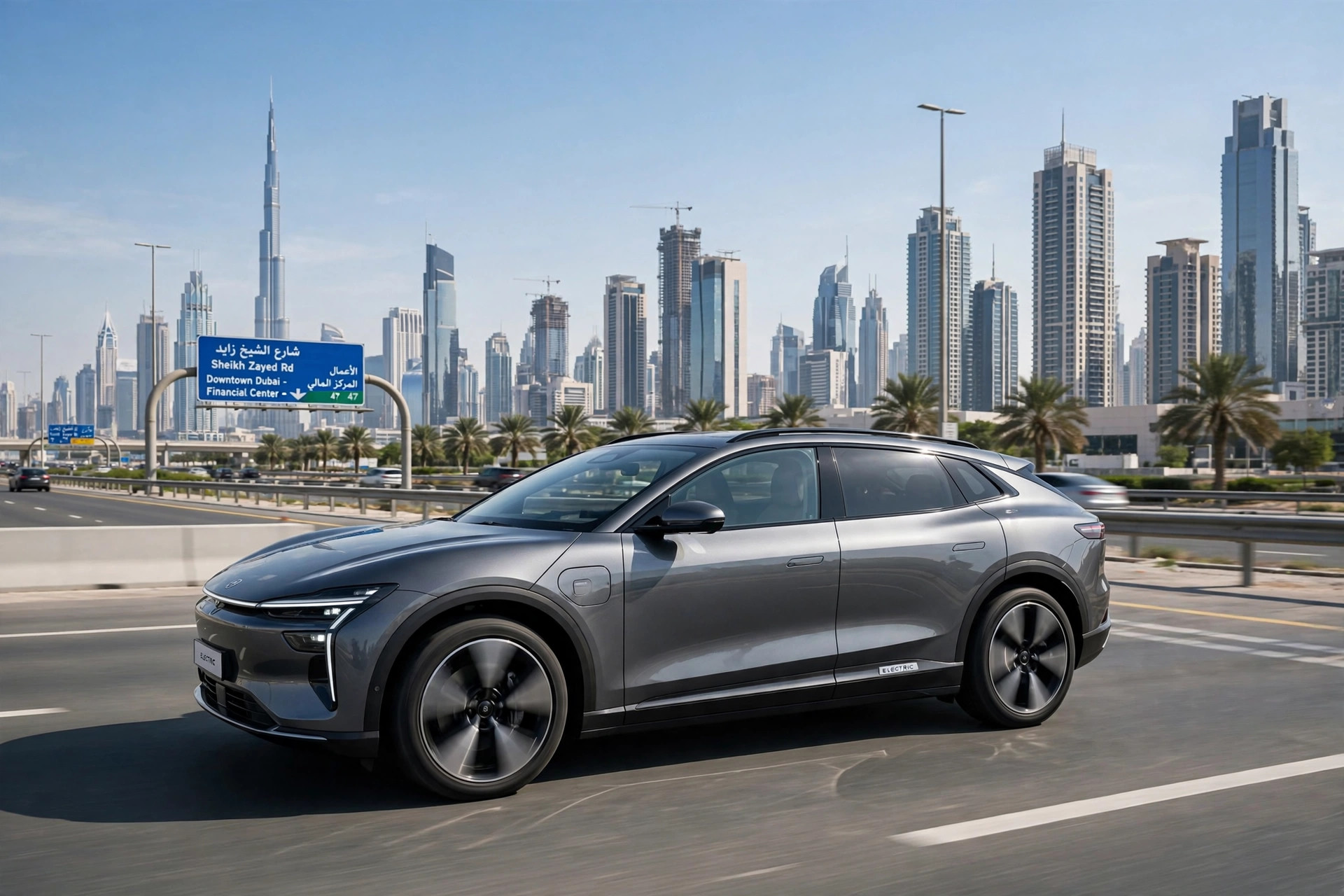
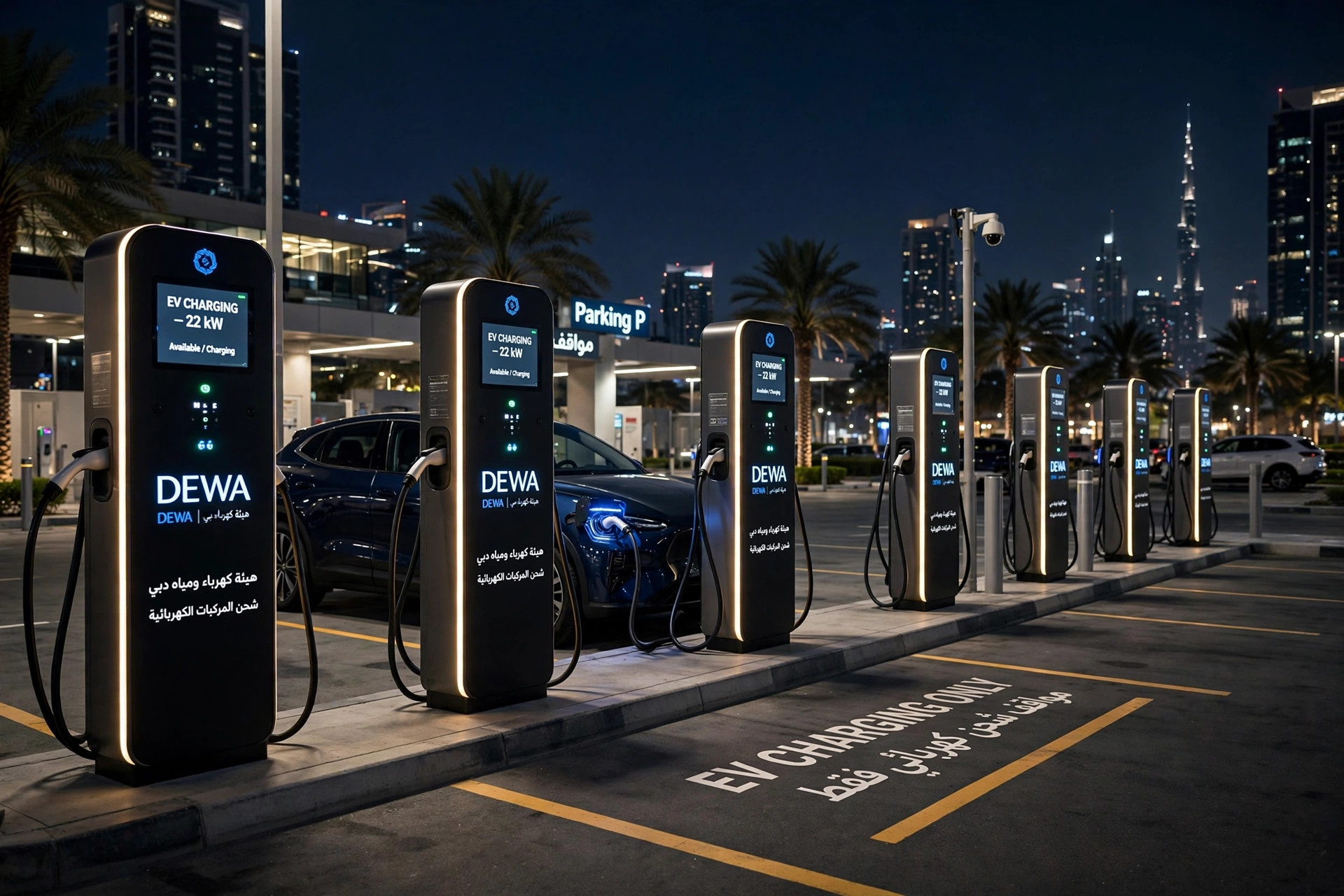
The UAE’s charging infrastructure has grown to around 2,800 charging points, including about 1,250 direct-current chargers and 350 high-power units. A dense charging network is one of the main reasons tourists and residents feel confident making the switch, and continued expansion will be needed to support the country’s targets.
Joseph Salem, Partner and Middle East Lead for Travel, Transportation and Hospitality at Arthur D. Little, said the ranking reflects growing momentum in the UAE’s EV market and a clear direction towards an integrated ecosystem.
What comes next: 50% of vehicles electric or hybrid by 2050
The UAE aims for electric and hybrid vehicles to make up 50% of vehicles on its roads by 2050. Dubai has set its own nearer-term target: EVs as more than 15% of its vehicle fleet by 2030.
Hitting those goals will mean more charging points, more affordable models, and the kind of supporting policy that has worked elsewhere. For now, the GEMRIX ranking shows the Emirates have the strongest foundations in the GCC to build on.
Planning your transport budget for a trip? See our breakdown of what a Dubai trip costs, the Dubai taxi guide, and some surprising facts about Dubai for more context on getting around the emirate.
The findings were reported by Gulf Time (via WAM) and Gulf Business.
FAQs
What is the GEMRIX index?
The Global Electric Mobility Readiness Index (GEMRIX), published by Arthur D. Little, scores 31 markets on five dimensions: macroeconomic factors, EV market and competition, customer readiness, public charging infrastructure, and total cost of ownership and regulation. A score of 100 means EVs have broadly reached parity with petrol cars.
Where did the UAE rank in GEMRIX 2026?
The UAE ranked 22nd globally and first among GCC markets, with a score of 53 points.
Which countries topped the GEMRIX 2026 ranking?
China topped the index with 106, followed by Norway at 103. They were the only two markets above 100, with Singapore (96) and the Netherlands (90) next.
How many electric vehicles are sold in the UAE?
Electric vehicles accounted for around 9% of new UAE vehicle sales in 2025 — battery electric vehicles roughly 6–8% and plug-in hybrids about 2.5%.
What are the UAE’s EV targets?
The UAE aims for electric and hybrid vehicles to make up 50% of vehicles on its roads by 2050, while Dubai targets EVs as more than 15% of its vehicle fleet by 2030.
0 Comment