

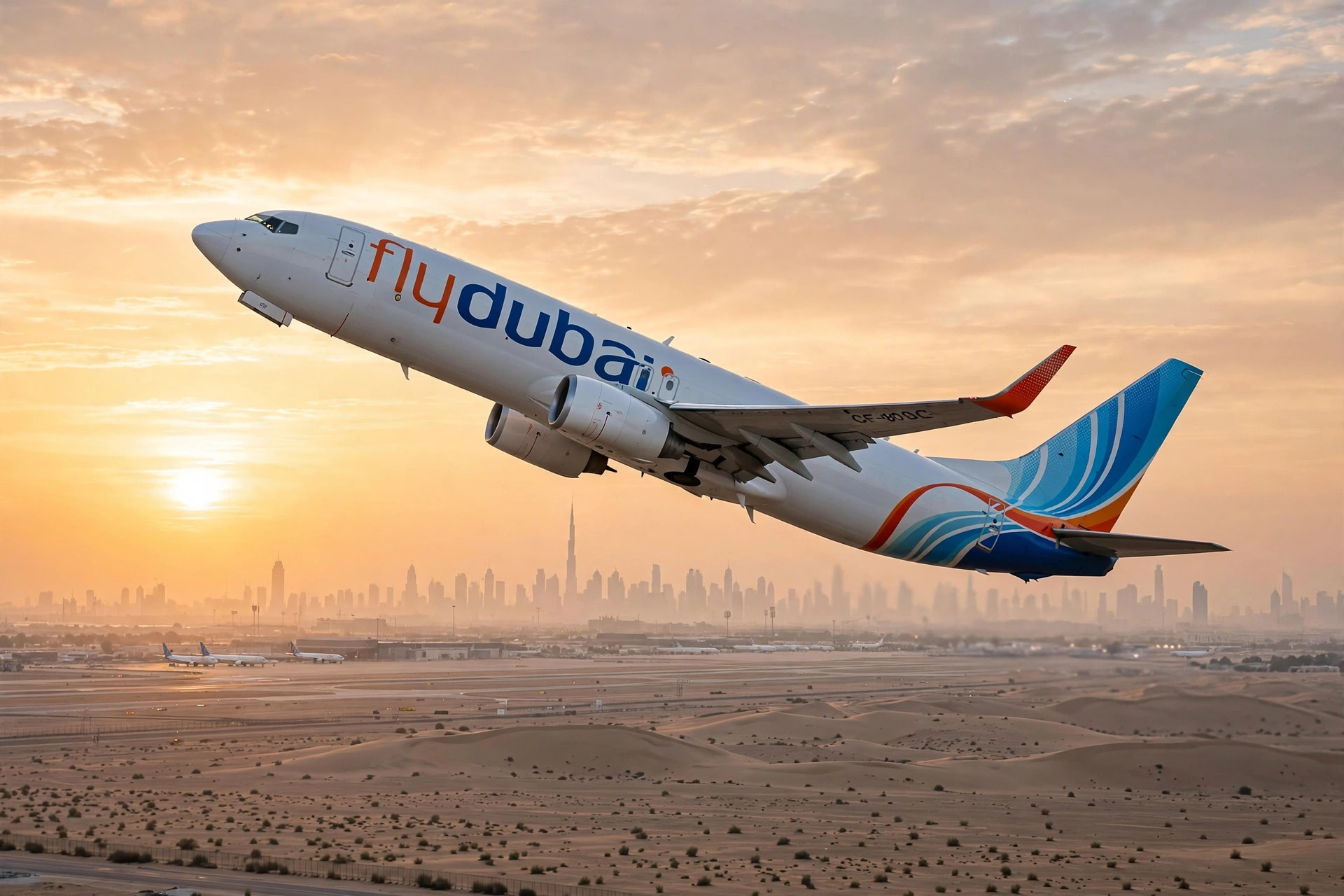

From today, October 1, 2026, flydubai is no longer just a passenger airline that happens to carry cargo in the spare space under its customers’ feet. The carrier’s dedicated freighter operations go live today with three Boeing 737-800 freighter aircraft flying under a wet-lease agreement with SolitAir — a quiet but significant moment for the emirate’s logistics ambitions.
What flydubai Is Launching Today
The setup is straightforward. Starting today, three Boeing 737-800 freighters join flydubai’s fleet through a wet-lease deal with SolitAir, each delivering 23,000 kg of additional payload capacity per flight, according to the airline’s official announcement. The dedicated capacity complements the belly-hold cargo space across flydubai’s fleet of 98 Boeing 737 passenger aircraft.
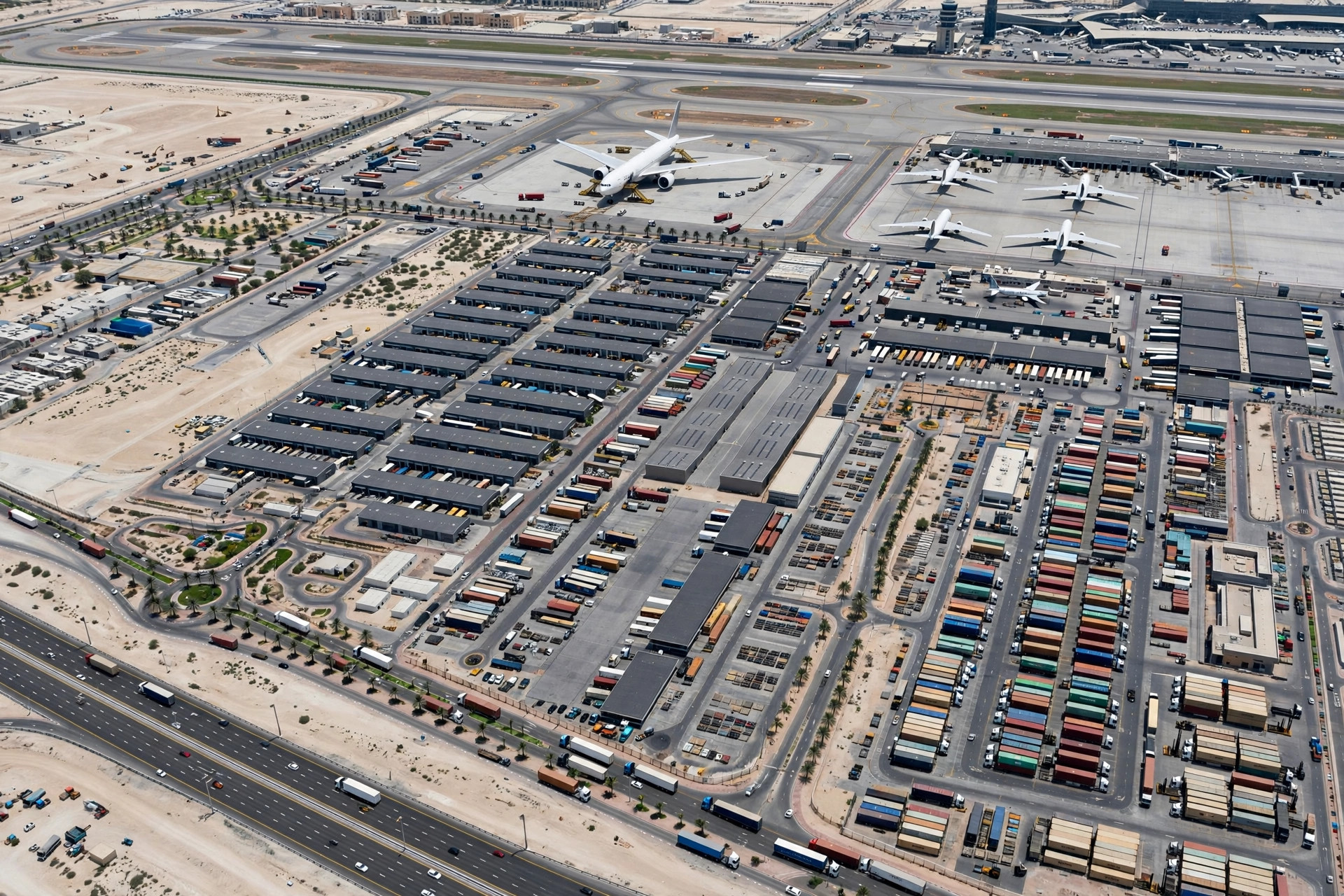
The timing is deliberate: the freighters arrive just ahead of the fourth-quarter peak season, when e-commerce and retail shipments into the region surge. The operation also introduces specialised freight capabilities the airline couldn’t offer before — handling pharmaceuticals, perishables, live animals, dangerous goods and aerospace components. The flights operate out of Al Maktoum International Airport (DWC), where flydubai Cargo has dedicated airside infrastructure and direct multimodal access via Dubai South.
The move builds on steady network growth, letting flydubai serve cargo demand on lanes that don’t fit a passenger schedule.
Belly Cargo vs Dedicated Freighters: What’s the Difference?
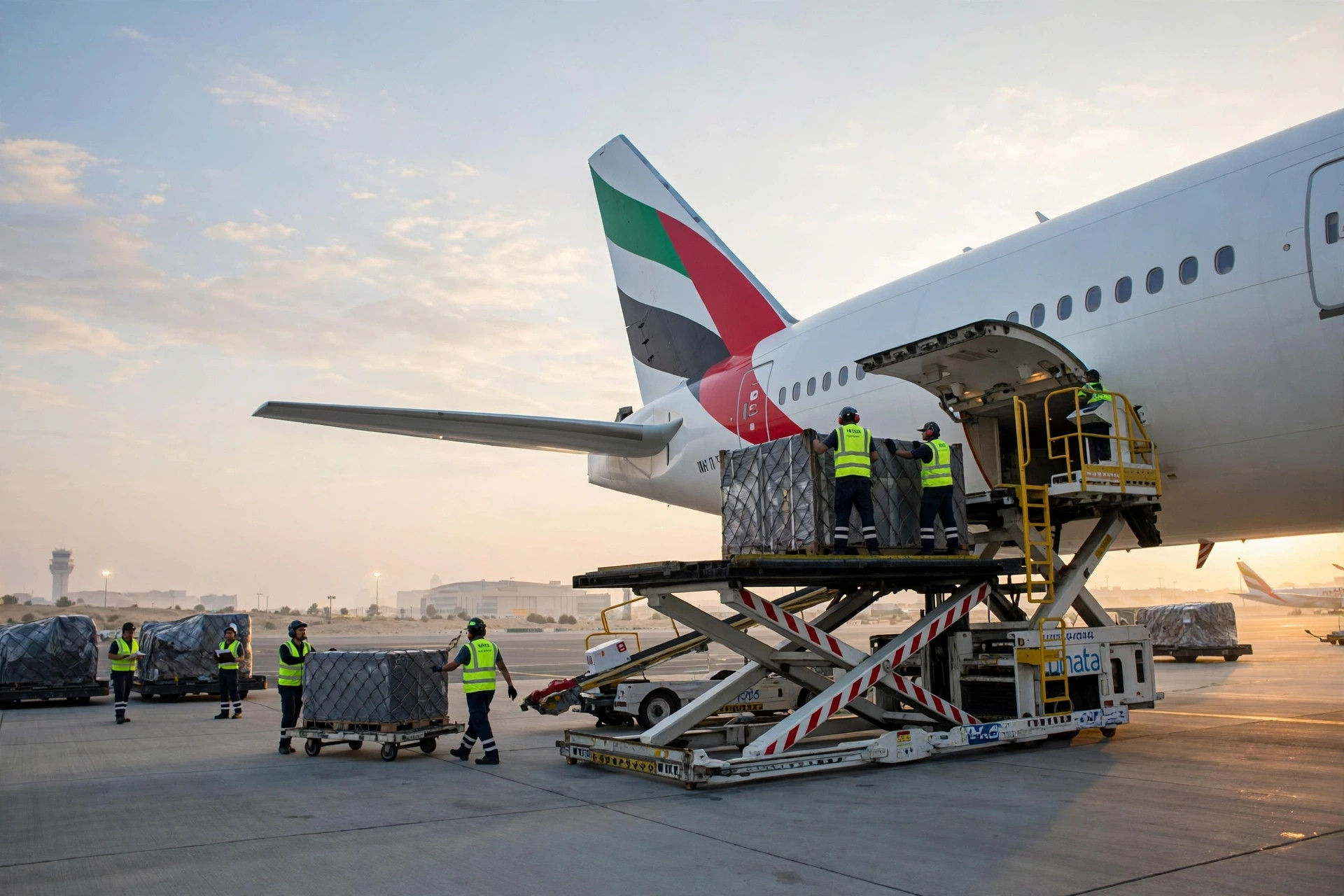
Every passenger flight already carries freight — the “belly cargo” sitting in the hold beneath the passenger cabin alongside checked baggage. But belly space is limited, shared with luggage, and only goes where passenger schedules go. A dedicated freighter changes the equation:
- Full main deck for cargo. The entire aircraft is configured for freight, with far more than 23 tonnes of payload per flight — no seats, no baggage compromise.
- Point-to-point charters. Freighters can be dispatched on demand for a single customer or trade lane, rather than waiting for a passenger route to line up.
- Scheduled cargo routes. The airline can now run repeat freight services to the destinations businesses actually ship to, on cargo’s timetable rather than travellers’.
- Specialised handling. Pharmaceuticals, perishables and live animals need controlled conditions and handling processes that a passenger operation can’t always guarantee.
For businesses shipping in and out of the UAE, the practical difference is capacity and reliability: more space, more schedule options, and aircraft designed for the job. For the curious, our Dubai airport guide explains how the city’s airports are organised — including DWC, the freighters’ new home.
Why This Matters for Dubai’s Trade Ambitions
The launch lands squarely in the middle of the Dubai Economic Agenda D33, the emirate’s plan to double the size of its economy and cement its place as a global trade and logistics hub. As reported by Gulf Business, flydubai CEO Ghaith Al Ghaith tied the move directly to that vision: “Dubai has established itself as one of the world’s most connected hubs for e-commerce, trade and logistics, and its ambitions under the Dubai Economic Agenda D33 continue to create new opportunities for businesses to reach global markets.”
Dubai already runs on logistics — from same-day deliveries to the heavy-goods rules that keep the city’s roads moving. The new freighters let flydubai offer charter and scheduled cargo services across more than 125 destinations, spanning Africa, Central Asia, the Caucasus, Europe, the GCC, the Middle East and South and Southeast Asia.
What Comes Next for flydubai Cargo
Three freighters are only the starting point. flydubai expects its cargo capacity to grow significantly once its 30 Boeing 787 Dreamliner aircraft are delivered, and the airline says it will evaluate converting some of its own passenger aircraft to freighters from 2029 onwards.
The passenger operation is unaffected — the freighters are a separate fleet. But for UAE businesses and online shoppers, flydubai’s entry into dedicated cargo is one more reason parcels keep landing on time.
Frequently Asked Questions
When do flydubai’s freighter operations start?
October 1, 2026. The airline announced the launch on September 11, 2026, and the three aircraft begin operations today.
What does a wet-lease mean?
SolitAir provides the aircraft with crew, maintenance and insurance; flydubai runs the commercial side — routes, customers and cargo. It’s a common way for airlines to add capacity fast.
Where will flydubai’s freighters operate from?
Al Maktoum International Airport (DWC) in Dubai South, where flydubai Cargo has dedicated airside infrastructure and direct multimodal road connections.
Will this affect flydubai passenger flights?
No. The freighters are a separate fleet supplementing — not replacing — the belly cargo on flydubai’s 98 Boeing 737 passenger aircraft. Passenger schedules are unchanged.
0 Comment